
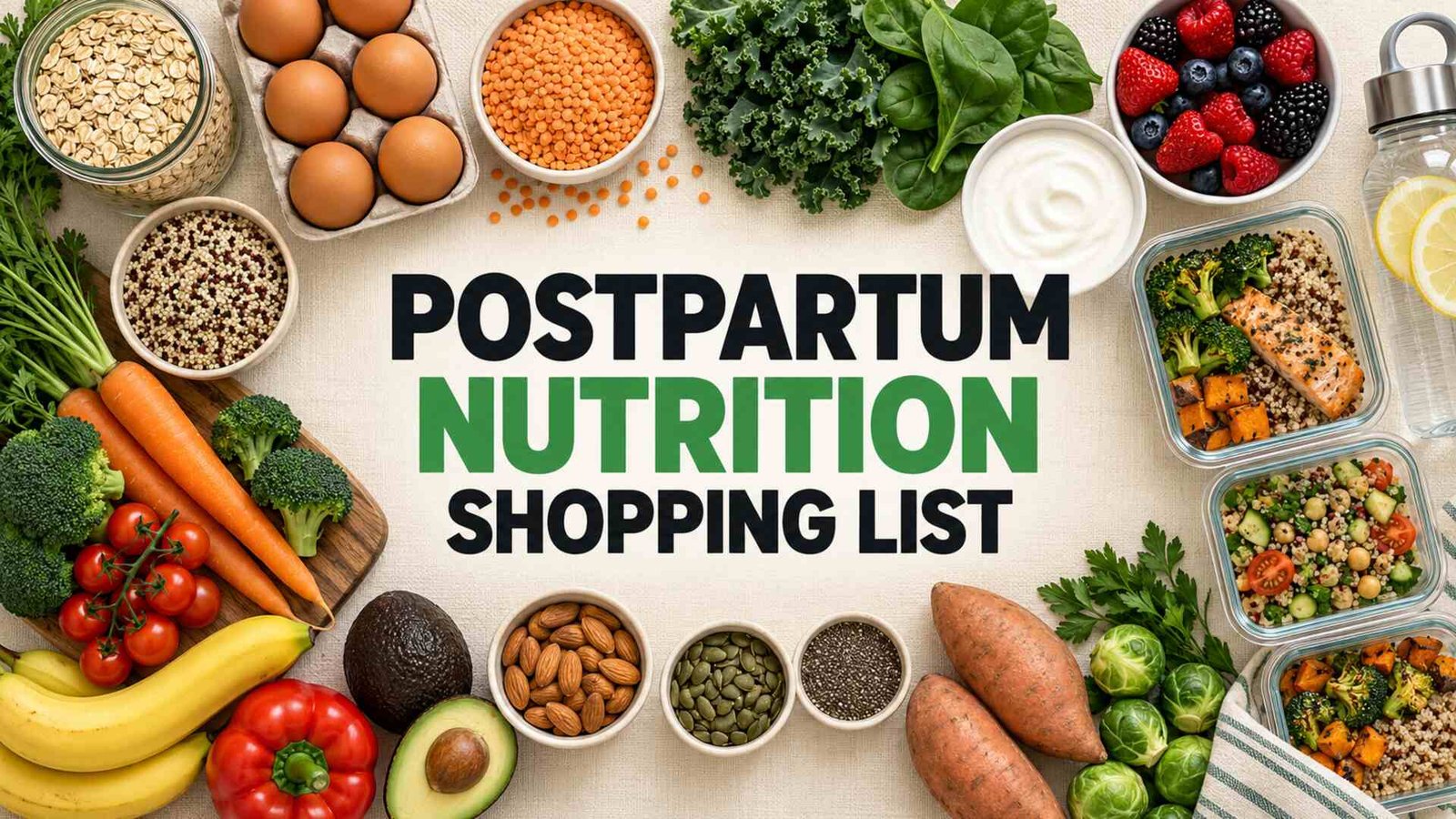
A flexible postpartum nutrition shopping list can make meals easier after birth without promising faster healing, improved mood or increased milk production. Recovery needs vary with delivery, feeding method, culture, appetite, medical conditions and household support.
Postpartum nutrition shopping list essentials
- Protein: eggs, fish, poultry, beans, lentils, tofu, yogurt or suitable alternatives.
- Grains and starches: oats, rice, bread, pasta and potatoes.
- Produce: varied fresh, frozen or canned vegetables and fruit.
- Fats: olive oil, avocado, nuts and seeds where safe.
- Convenience foods: soups, frozen meals and prepared ingredients with labels checked for dietary needs.
Prepare flexible meals and snacks
Useful combinations include oats with yogurt and fruit, lentil soup with bread, eggs with vegetables, or rice bowls with tofu, fish or poultry. Keep convenient snacks within reach, but adapt hard or round foods if children may access them.
See the postpartum freezer-prep checklist for safe batch planning.
Hydration and breastfeeding
Drink according to thirst and clinical guidance. Rigid fluid or calorie targets are not appropriate for everyone. Oats, brewer’s yeast, herbs and special teas are not guaranteed to increase milk supply, and some supplements can interact with medicines or be unsuitable.
Food safety and medical care
- Follow local advice for fish, unpasteurized foods and reheating.
- Ask a clinician about iron supplementation after blood loss or diagnosed deficiency.
- Check allergens and choking risks in one-handed snacks.
- Seek prompt help for concerning physical or mental-health symptoms.
The breastfeeding grocery list offers additional flexible meal ideas.
A supportive conclusion
A postpartum nutrition shopping list should reduce household workload and provide varied, appealing food. Practical help with shopping, cooking and cleanup can matter as much as any individual ingredient.