
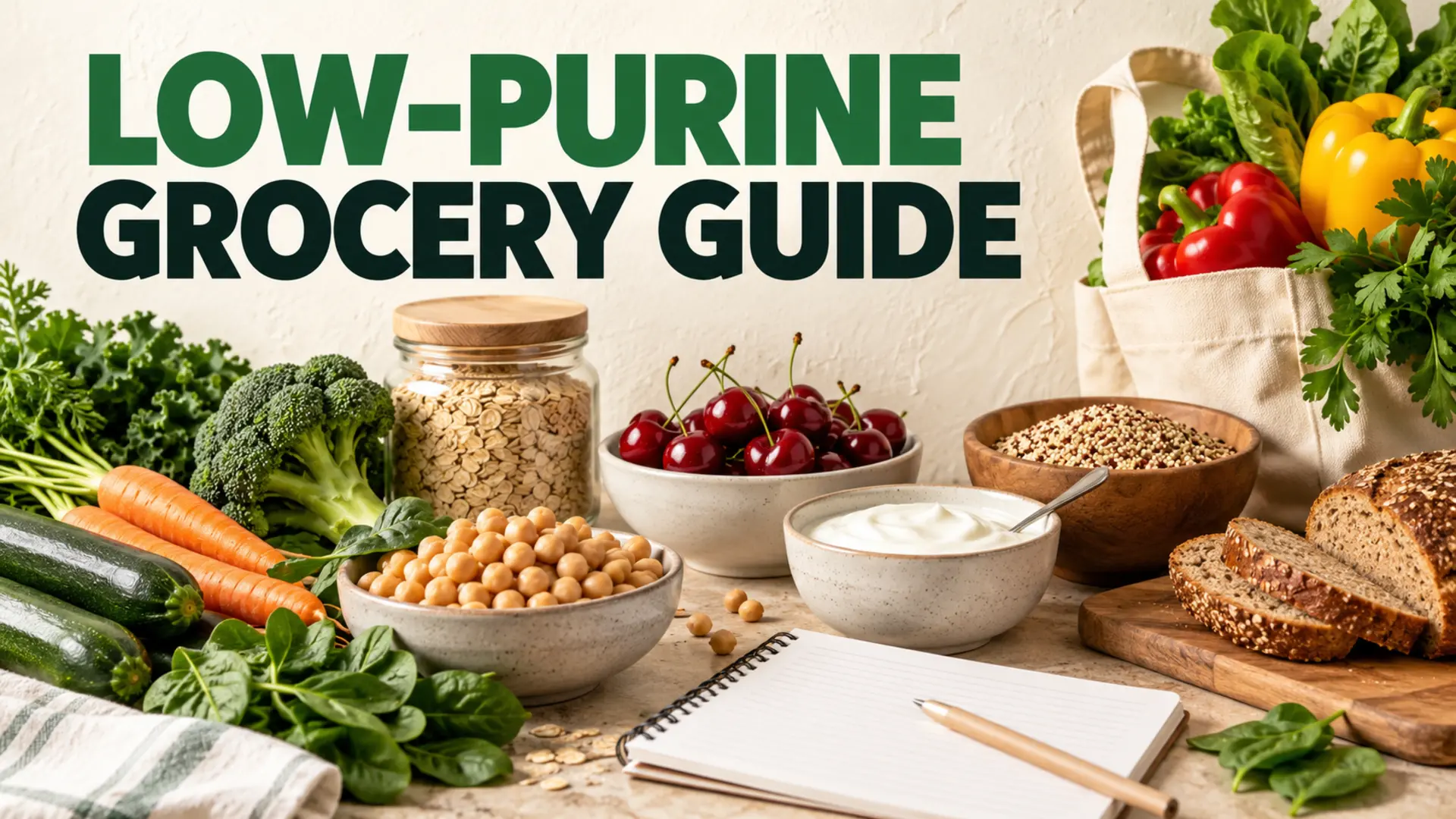
A low-purine grocery guide can make shopping for gout management easier, but food choices are only one part of care. Gout risk and treatment vary, so use this list alongside advice from your clinician—especially if you take urate-lowering medicine or have kidney disease.
Low-purine grocery guide: what to prioritize
- Vegetables and fruit: choose a varied mix of fresh, frozen or canned options without unnecessary added sugar or salt.
- Whole grains and starches: oats, rice, barley, potatoes, whole-grain bread and other familiar staples can anchor meals.
- Protein foods: eggs, tofu, beans in portions that suit you, and plain dairy or fortified alternatives can provide practical variety.
- Fluids: keep water and other unsweetened drinks available if your care team has not advised a fluid restriction.
Foods and drinks to compare carefully
Organ meats and some seafood are especially high in purines. Alcohol and sugar-sweetened drinks may also be relevant for some people. You do not need to label every food “good” or “bad”; frequency, portion, symptoms, medication and overall eating pattern all matter.
Read labels for added sugars and sodium, and compare similar products using our guide to reading nutrition labels. For more ideas on choosing lower-sodium staples, see the DASH diet shopping guide.
Build simple, balanced meals
- Oats with yogurt or a fortified alternative and fruit
- Rice, roasted vegetables and tofu or egg
- Whole-grain toast with a vegetable soup and a suitable protein
- Potatoes, salad and a modest portion of fish or poultry if appropriate for you
When to seek medical guidance
Diet cannot dissolve an acute flare on demand or replace prescribed treatment. Seek medical advice for a new, severe or unexplained painful swollen joint, and discuss recurrent attacks, medicines and laboratory results with a qualified professional.
Conclusion
Use this low-purine grocery guide as a flexible starting point: emphasize varied plant foods, compare drinks and higher-purine choices, and adapt the list to your diagnosis, treatment and preferences.