
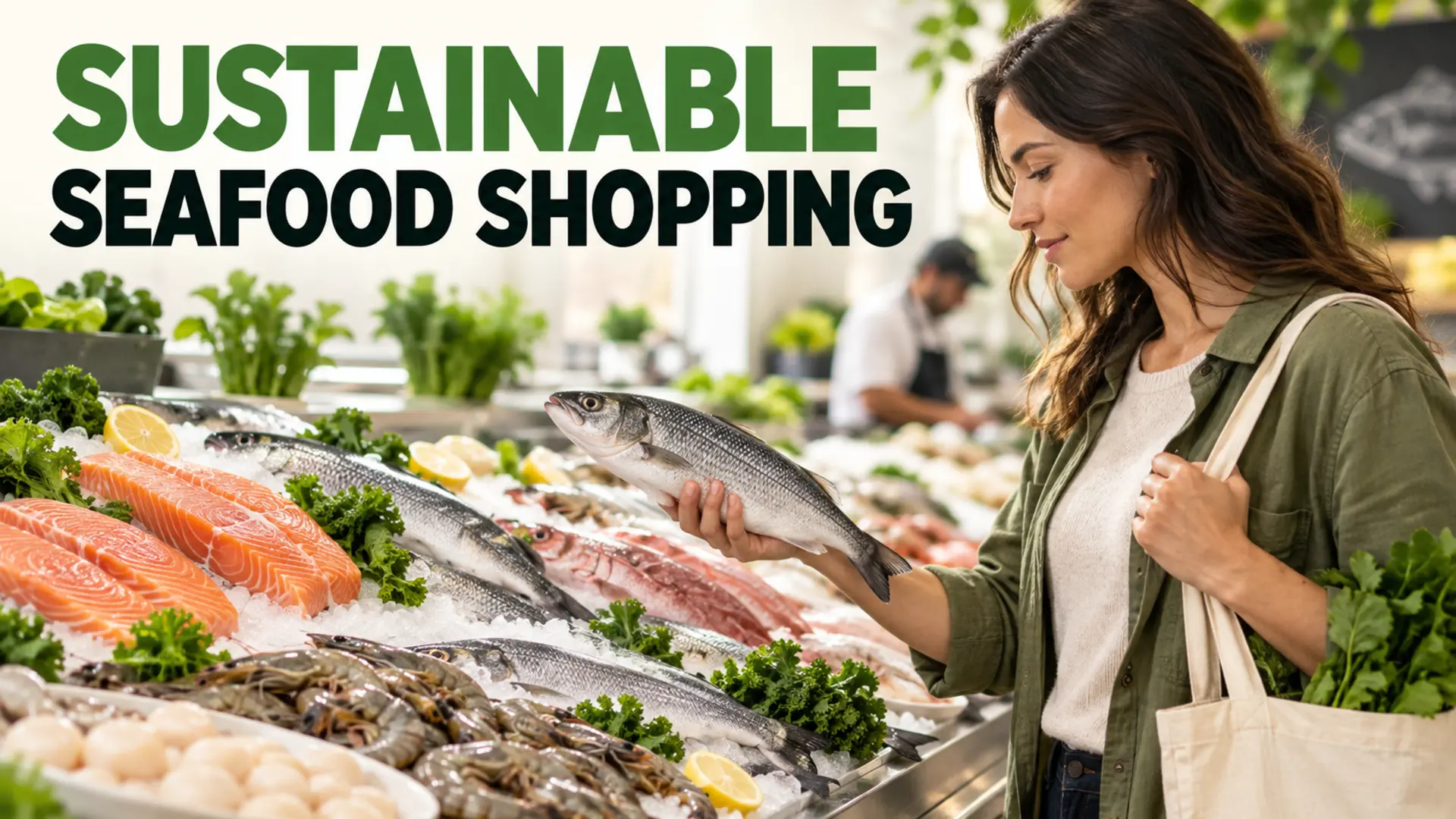
Sustainable seafood shopping is easier when you compare current, location-specific information instead of relying on one universal “best fish” list. Species, stock, fishing method, farm practices and region can all affect a choice.
Sustainable seafood shopping: what to check
- Species and origin: ask for the specific species and where it was caught or farmed.
- Harvest method: labels or counter staff may identify gear type or farming method.
- Credible certification: third-party labels can be useful signals, but standards differ and certification is not the only evidence of responsible production.
- Current local guidance: seafood assessments change as stocks and practices change, so consult a reputable regional guide when available.
- Food safety: keep seafood cold, prevent cross-contamination and follow package or local public-health advice for storage and cooking.
Fresh versus frozen
Frozen seafood can be a practical, lower-waste option, and “fresh” does not automatically mean more sustainable or recently caught. Compare origin, condition, package integrity, price per unit and how quickly you will use it. Avoid packages with signs of thawing, damage or excessive ice buildup.
Balance sustainability with personal needs
Budget, availability, cultural preferences, allergies and health guidance all matter. Mercury advice varies by species and by life stage, so pregnant people, young children and frequent seafood eaters should use current advice from their local health authority.
For meal-planning ideas, see our Mediterranean diet shopping list. When comparing canned or packaged fish, use our guide to reading nutrition labels.
A simple shopping checklist
- Decide how many meals you will realistically prepare.
- Compare two or three available species.
- Check origin, method, certification and current guidance.
- Choose an amount you can store and use safely.
- Keep a flexible backup such as canned or frozen seafood.
Conclusion
Sustainable seafood shopping is a comparison process, not a permanent ranking. Check the information available for the exact product, choose within your budget and needs, and revisit guidance as conditions change.