
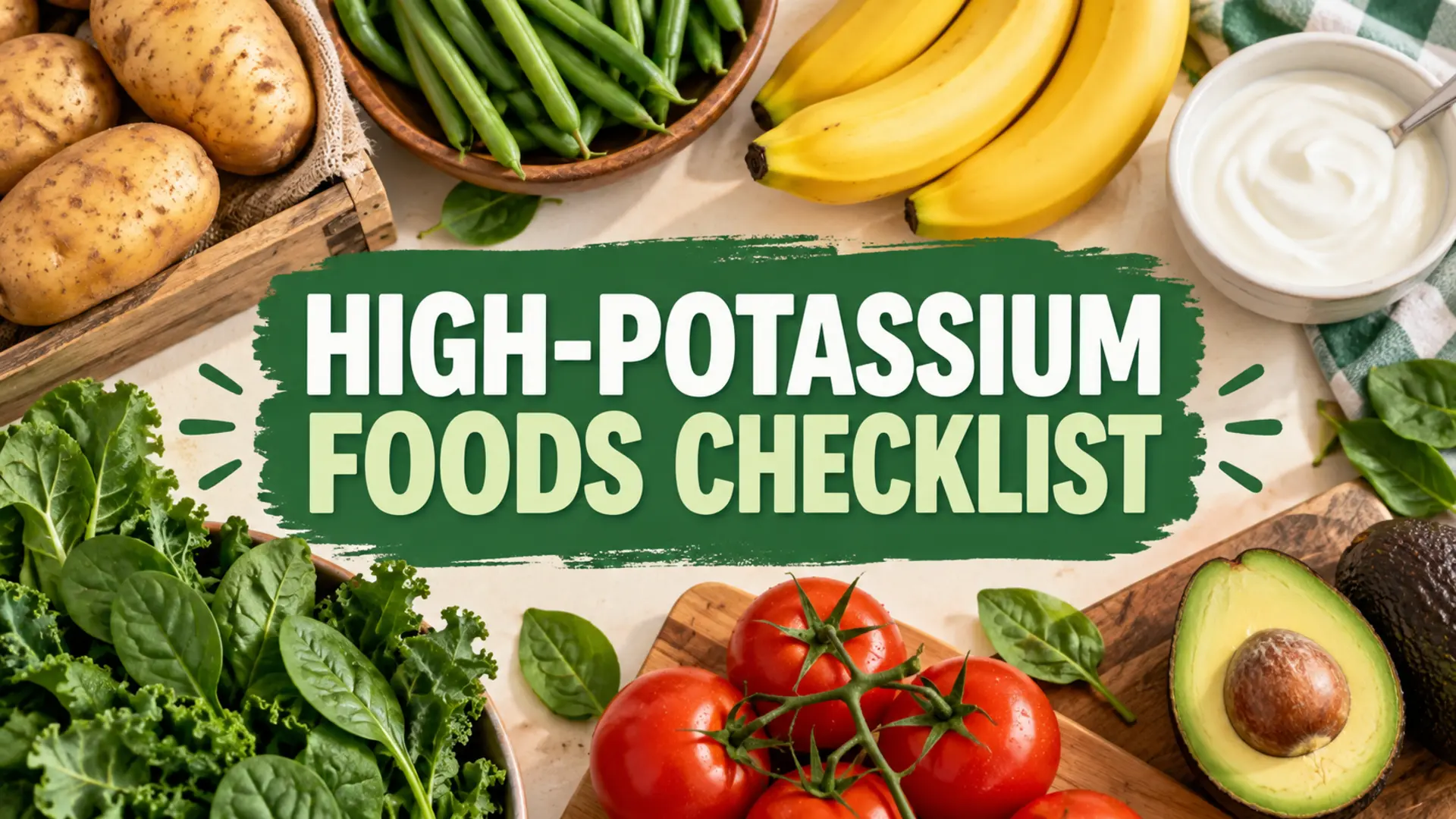
A high-potassium foods checklist can help organize varied meals, but more potassium is not appropriate for everyone. Kidney function, medicines and certain health conditions can change how the body handles potassium.
High-potassium foods checklist
- Potatoes and sweet potatoes
- Beans and lentils
- Bananas, oranges, melon and dried fruit
- Tomatoes, leafy greens and squash
- Avocado, yogurt and suitable fortified alternatives
- Fish and other varied protein foods
Potassium content varies by product, portion and preparation. Use labels where available, and avoid treating a short “top foods” list as a prescription.
Build practical meals
- Bean and vegetable soup with bread
- Yogurt or soy yogurt with fruit and oats
- Baked potato with greens and a suitable protein
- Rice bowl with lentils, tomato and vegetables
For broader blood-pressure-conscious shopping, see the DASH diet shopping guide. The nutrition-label guide can help compare sodium and potassium when both appear on the label.
Important medication and kidney cautions
Some kidney conditions and medicines can raise potassium to unsafe levels. Potassium supplements and potassium-based salt substitutes should not be added casually. Follow the plan provided by your clinician or renal dietitian.
Conclusion
Use this high-potassium foods checklist for meal-planning ideas, not as a treatment dose. Choose variety and confirm that increasing potassium fits your medical needs.