
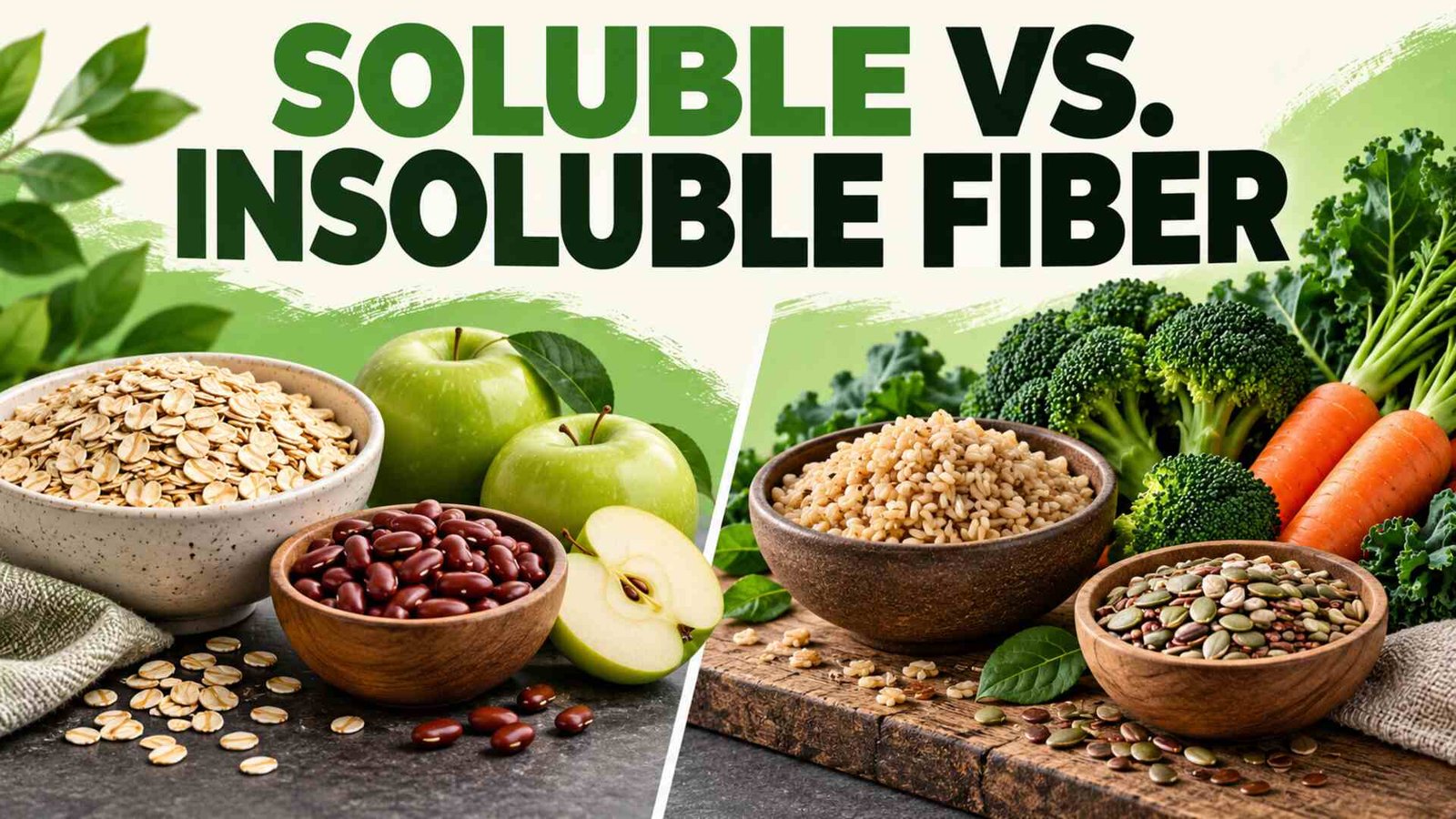
Understanding soluble vs insoluble fiber can help you build a more varied grocery list. Many plant foods contain both types, so you do not need to sort every ingredient into a perfect category.
Soluble vs insoluble fiber foods
- Foods known for soluble fiber: oats, barley, beans, lentils, apples and citrus.
- Foods known for insoluble fiber: wheat bran, many whole grains, vegetables, nuts and seeds.
- Foods containing a mixture: most beans, vegetables, fruit and whole grains.
Shop for variety
Choose a mix of legumes, grains, produce, nuts and seeds that fits your culture, budget and tolerance. Fresh, frozen and canned options can all contribute. Compare serving sizes and labels with our guide to reading nutrition labels.
Increase fiber gradually
A sudden large increase may cause discomfort. Add foods gradually and drink suitable fluids unless a clinician has advised restriction. Preparation methods and portions can affect individual tolerance.
For more ideas, use the high-fiber foods checklist.
When to seek advice
Persistent pain, bleeding, unexplained weight loss or major bowel changes should be assessed. People with strictures, recent gastrointestinal surgery or specific digestive conditions may need individualized fiber guidance.
Conclusion
The soluble vs insoluble fiber distinction is useful, but variety matters most for everyday shopping. Add a range of plant foods gradually and adjust to your body.