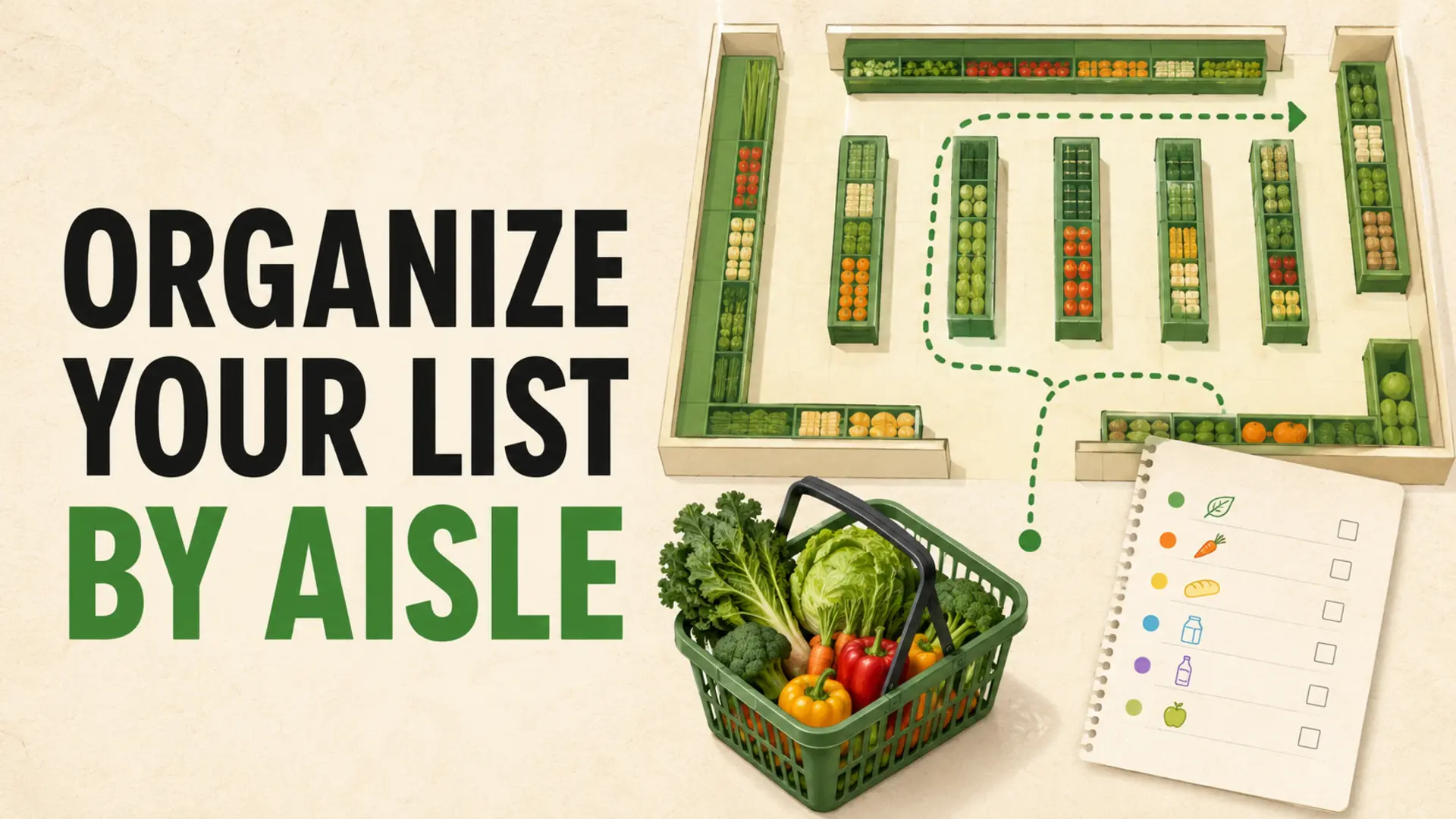
When you organize a shopping list by aisle, groceries appear in roughly the same order as your route through the store. Instead of switching between produce, pantry items and refrigerated foods on the page, you can focus on one section at a time.
The useful part is not memorizing a “universal” supermarket layout—there is no single layout that every store follows. The better method is to create a small set of categories, adapt their order to the shop you use most and update the order when the store changes.
Why organize a shopping list by aisle?
A category-based list can reduce unnecessary backtracking, make missed items easier to spot and help multiple shoppers understand the plan. It can also separate groceries from household supplies and keep temperature-sensitive items grouped for the end of the trip.
It does not need to match every numbered aisle. Broad departments are usually easier to maintain because products sometimes move and different branches arrange shelves differently.
1. Map the store you actually use
Think about your usual entrance, checkout area and main departments. On your next visit, notice the order in which you naturally encounter them. A quick note is enough; you do not need a detailed floor plan.
- Which department is closest to the entrance?
- Where are bread, deli foods and refrigerated products?
- Which pantry aisles do you visit regularly?
- Where are frozen foods and household supplies?
- Can you finish near the checkout without doubling back?
If you use two stores often, keep a separate category order for each. One list can contain the same groceries while presenting them in a different walking sequence.
2. Start with practical grocery categories
Most households can begin with six to ten broad groups. Rename or split them according to the store and the foods you buy. A useful starting structure is:
- Produce: fruit, vegetables and fresh herbs.
- Bakery: bread, wraps and baked goods.
- Meat, seafood or alternatives: fresh proteins and plant-based substitutes.
- Pantry: grains, pasta, canned food, oils, sauces, spices and baking supplies.
- Breakfast and beverages: cereals, oats, coffee, tea and drinks.
- Refrigerated: milk or alternatives, yoghurt, cheese, eggs and chilled items.
- Frozen: frozen produce, meals and other freezer products.
- Household and personal care: cleaning, paper and hygiene products.
Use categories that make sense at a glance. If “pantry” becomes too long, divide it into canned goods, grains and baking. If you rarely buy from a department, keep it combined with a nearby section.
3. Build the list from meals and inventory
Before sorting anything by aisle, decide what you actually need. Check your refrigerator, freezer and pantry, then add ingredients for the meals you expect to prepare. This 10-step grocery list method provides a practical starting point.
Add useful quantities such as “two courgettes” or “yoghurt for three breakfasts.” Specific amounts are easier to review than vague entries and can support the inventory-first approach in a zero-waste meal plan.
4. Sort items into departments
Once the list is complete, move each item under its store category. On paper, draw short section headings and leave room beneath each one. In a digital list, use categories or separate headings if your chosen tool provides them.
Keep the item name clear enough for another shopper. “Pasta sauce, 700 ml, no added chilli” is more useful than “sauce.” For shared household shopping, agree on common names so that one person does not list “garbanzo beans” while another searches for “chickpeas.”
5. Put categories in walking order
Arrange the category headings in the sequence you plan to visit them. Your route might start with household goods, continue through pantry aisles and produce, and finish with refrigerated and frozen sections. Another store may require a completely different order.
- Choose a sensible starting point near the entrance.
- Group nearby departments together.
- Move through centre aisles in one direction where practical.
- Leave chilled and frozen products toward the end.
- Finish near the checkout area.
A route is a guide, not a rule. If a busy aisle, closed counter or forgotten item changes the trip, adjust without turning the list into a source of stress.
6. Handle refrigerated, frozen and raw foods carefully
Select refrigerated and frozen items after shelf-stable groceries when the store layout allows it. Official USDA food-safety guidance recommends purchasing refrigerated or frozen products after nonperishables.
Keep raw meat, poultry and seafood separate from ready-to-eat foods in the cart and shopping bags. Travel directly home when possible, and use an insulated bag or cooler with a cold source when distance, traffic or warm weather could delay refrigeration.
7. Use recurring items without creating clutter
Save frequently purchased staples as a reusable checklist, but add them to the active list only after checking stock. A master list is helpful for remembering categories; it should not become permission to buy every staple on every trip.
Households using a shared list can assign consistent categories to recurring items. The broader principles in this guide to smart grocery management can help keep pantry checks, shopping and updates connected.
Example of an aisle-organized shopping list
Produce
- Apples — 6
- Spinach — 1 bag
- Carrots — 5
- Fresh coriander — 1 bunch
Pantry
- Brown rice — 1 package
- Chickpeas — 2 cans
- Tomato paste — 1 small can
Refrigerated
- Milk or preferred alternative — 1 carton
- Plain yoghurt — 1 tub
- Eggs — 1 carton
Frozen
- Frozen peas — 1 bag
- Frozen berries — 1 bag
Replace these headings and items with your own route. For meal-prep shopping, you can also review these meal plans with organized shopping lists to see how ingredients can be grouped around a weekly plan.
Common aisle-list mistakes
- Assuming every store is identical: use the layout of the branch you visit.
- Creating too many categories: broad groups are faster to scan and maintain.
- Sorting before checking inventory: organization cannot prevent duplicate purchases if the list itself is inaccurate.
- Using unclear item names: include size, quantity or preference when it matters.
- Placing cold foods too early: finish with refrigerated and frozen sections where practical.
- Ignoring route changes: update the order after a remodel or when switching stores.
Make your next list easier to follow
To organize a shopping list by aisle, begin with the store you know, choose a manageable set of departments and arrange those groups in walking order. Check food at home first, write useful quantities and keep cold items near the end of the route.
After one or two trips, revise the category order based on where you actually found things. A list that reflects your real store and household habits will remain more useful than a complicated template built around a layout you never visit.