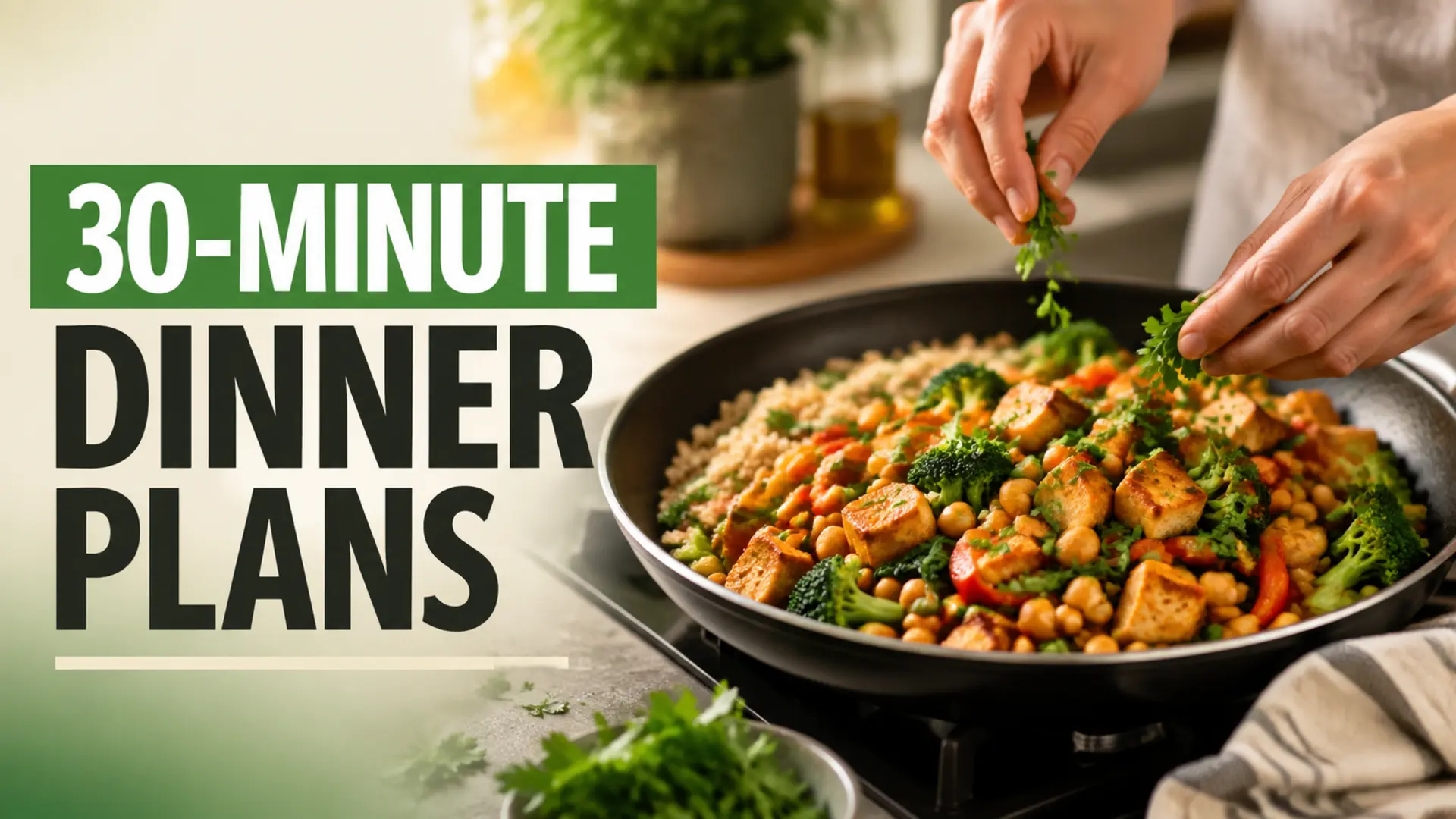
30-minute dinner plans work best when they use familiar ingredients, short preparation steps and cooking methods that happen at the same time. The goal is a realistic weeknight framework—not a promise that every kitchen, appliance or cook will finish at exactly the same minute.
Choose a quick base, a protein, vegetables and a flavour direction. Keep the ingredient list manageable, read the recipe before starting and use convenience ingredients when they genuinely help. Cooking time will vary with ingredient size, equipment and experience, so allow extra time when needed.
How to build reliable 30-minute dinner plans
A useful fast-dinner formula has four parts:
- Base: couscous, quick-cooking noodles, pasta, tortillas, bread or a ready-to-heat grain.
- Protein: canned beans or lentils, eggs, tofu, tempeh, seafood, ground meat or thinly cut poultry.
- Vegetables: tender fresh produce, frozen vegetables or pre-cut options you will actually use.
- Flavour: a familiar sauce, spice blend, herbs, citrus, cheese or suitable plant-based alternative.
Pick components with overlapping preparation. While water boils or a grain rests, prepare vegetables and sauce. When a protein needs your full attention, use a no-cook side rather than starting another pan.
1. Chickpea, tomato and spinach couscous
Shop for: couscous, canned chickpeas, tomatoes, baby spinach, lemon, herbs and feta or a preferred alternative.
Prepare the couscous according to its package directions. Warm drained chickpeas and tomatoes in a skillet, fold in spinach until wilted, then combine with the couscous. Finish with lemon and herbs. Adjust the seasoning to match the salt already present in canned foods and cheese.
2. Chicken and pepper wraps
Shop for: thin chicken strips, bell peppers, onion, tortillas, a mild spice blend, yoghurt or salsa and lettuce.
Cook the chicken and sliced vegetables in a wide pan, keeping raw poultry separate from ready-to-eat ingredients. Warm the tortillas while the filling cooks. Serve with lettuce and your chosen sauce. A plant-based strip or drained beans can replace the chicken when suitable.
3. Tofu and broccoli noodle bowls
Shop for: quick-cooking noodles, firm tofu, broccoli, carrots, spring onions and a sauce based on soy, ginger and lime.
Cook the noodles according to their label. Brown bite-sized tofu in a skillet, add small broccoli pieces and shredded carrot, then toss with the sauce and drained noodles. Check packaged sauces for allergens and sodium if either matters to your household.
4. Tomato, white bean and herb pasta
Shop for: pasta, canned white beans, crushed tomatoes, garlic, spinach or kale and fresh or dried herbs.
Boil the pasta while warming tomatoes, drained beans, garlic and herbs in a separate pan. Stir tender greens into the sauce, combine with the pasta and add a little pasta water if needed. This meal uses mostly pantry ingredients, making it useful when fresh-food supplies are low.
5. Fish or bean tacos with crunchy slaw
Shop for: fish fillets or canned black beans, tortillas, shredded cabbage, avocado, lime and a simple yoghurt or tahini sauce.
Cook seasoned fish pieces in a skillet or warm drained beans with spices. Toss cabbage with lime and a small amount of sauce, warm the tortillas and assemble. Cut fish into even portions so it cooks consistently, and confirm doneness before serving.
6. Egg fried rice with frozen vegetables
Shop for: cooked chilled rice or a ready-to-heat grain, eggs, frozen mixed vegetables, spring onions and soy sauce.
Cook the vegetables in a wide pan, add rice and stir until hot, then make space to scramble the eggs before combining everything. Use properly chilled rice and reheat it thoroughly. Tofu can replace the eggs if that better fits your needs.
7. Lentil coconut curry
Shop for: canned lentils, coconut milk, curry paste or spices, frozen peas, spinach and flatbread or a quick grain.
Simmer drained lentils with coconut milk and your chosen curry seasoning. Add peas and spinach near the end, then serve with bread or a quickly prepared grain. Curry pastes vary in heat, salt and allergens, so read the label and start with a modest amount.
Create one organized shopping list
Select two or three meals rather than buying for all seven at once. Check the refrigerator, freezer and pantry before adding anything. The process in this guide to making an accurate grocery list can help prevent duplicate purchases.
Produce
- Choose two or three quick-cooking vegetables.
- Add one leafy green that can work in more than one meal.
- Select herbs, citrus or spring onions for finishing.
Protein
- Buy only the proteins required for your selected dinners.
- Include a pantry option such as beans or lentils for a flexible backup.
Pantry and grains
- Choose one or two fast bases instead of several partly used packages.
- Check sauces, spices, oil and canned foods before shopping.
For a store-ready order, use this method to organize your shopping list by aisle.
Preparation shortcuts that stay practical
- Wash and cut vegetables when you have time, then refrigerate them appropriately.
- Use frozen vegetables when they reduce waste and preparation.
- Drain and rinse canned beans before the busy part of cooking begins.
- Mix a simple sauce while another component cooks.
- Choose pre-cut produce selectively when the convenience helps you use it.
- Freeze suitable extra portions before they are forgotten.
Avoid storing homemade garlic in oil at room temperature. If you prepare garlic in oil, follow current food-safety guidance for refrigeration or freezing; the USDA explains the botulism risk and safe storage limits.
Keep fast dinners food-safe
Speed should never replace safe handling. Wash hands and surfaces, keep raw animal products away from ready-to-eat foods and use a food thermometer rather than relying only on colour or time. The official FoodSafety.gov temperature chart lists safe minimum internal temperatures for meat, poultry, seafood, egg dishes and leftovers.
If a recipe is not finished within 30 minutes, continue cooking until it is safe and ready. Ingredient thickness, starting temperature, cookware and appliance performance all affect timing.
Make the plan easier next week
After dinner, note which shortcuts helped and which ingredients remained. Move successful meals into a repeatable rotation, and use suitable leftovers for lunch or another dinner. The flexible components in this batch cooking guide for beginners can support weeks when you want more preparation in advance.
Choose one dinner formula and begin
Good 30-minute dinner plans are simple enough to repeat and flexible enough to survive a changed schedule. Pick one base, one protein, vegetables and a familiar flavour, then organize only the groceries you need.
Start with two fast dinners this week. Review what worked, adjust quantities and build a small collection of dependable meals that fit your household, equipment and pace.