
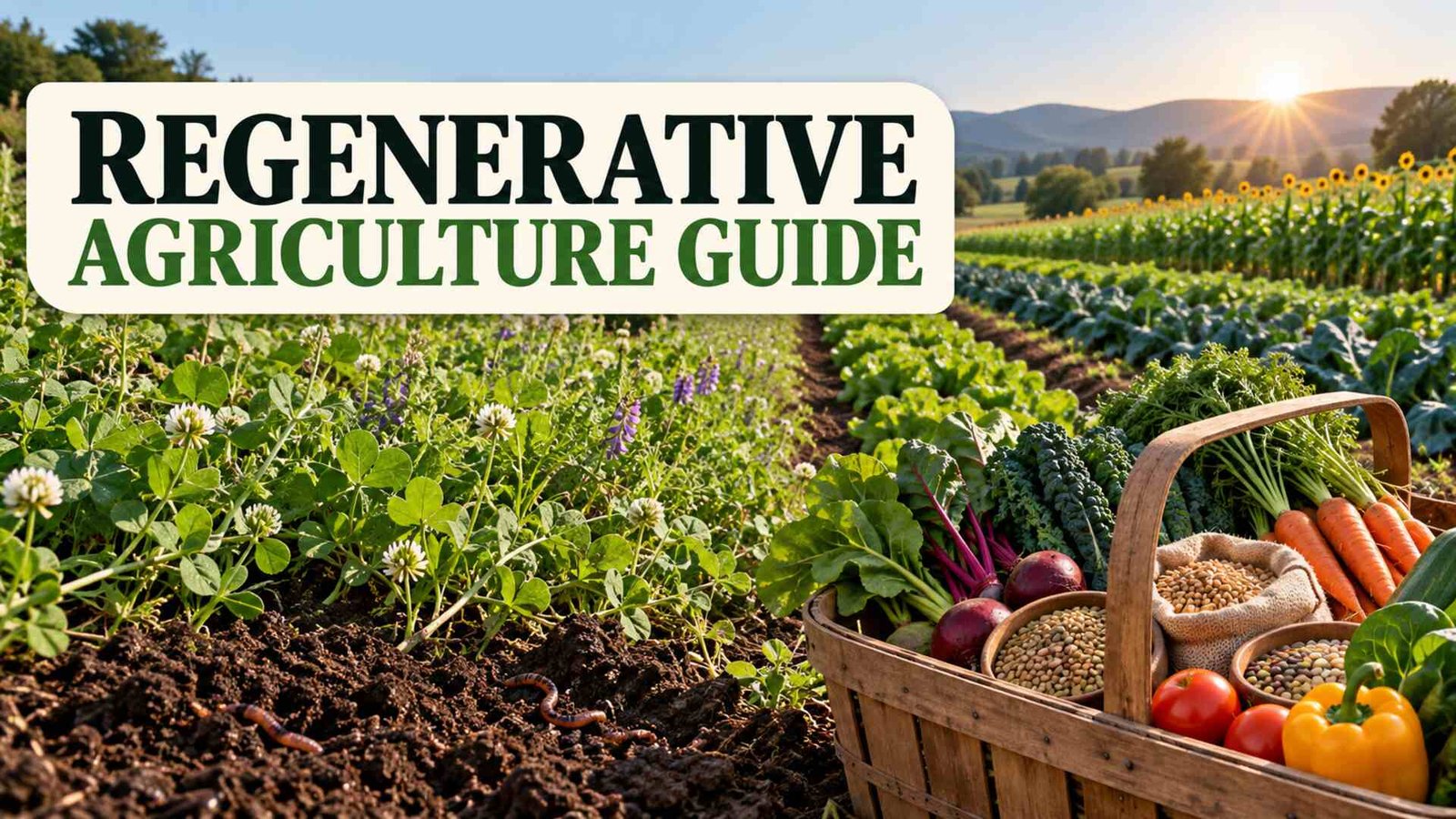
This regenerative agriculture guide helps grocery shoppers evaluate farming claims without assuming that one label guarantees a particular environmental outcome. Practices, definitions and verification systems vary across crops, farms and regions.
Regenerative agriculture guide: common practices
Producers may describe practices such as cover cropping, crop rotation, reduced soil disturbance, integrating livestock, maintaining living roots or supporting habitat. Their suitability and results depend on climate, soil, crop type and implementation.
Questions to ask when shopping
- Which specific practices does the producer use?
- Are claims independently verified, measured or clearly documented?
- Does a certification publish current standards and auditing procedures?
- Where and how was the food produced?
- Does the product fit your budget, preferences and likely use?
The climate-friendly grocery basket guide provides broader plant-forward and waste-reduction considerations. For sourcing questions, see the local and regional food guide.
Avoid simple rankings
A regenerative claim does not automatically establish lower emissions, better nutrition or superior labour conditions. Compare transparent evidence and recognize that conventional, organic and regenerative approaches can overlap.
Conclusion
Use this regenerative agriculture guide as a question framework. Prioritize credible detail, realistic quantities and food you will use rather than paying for vague environmental language.