
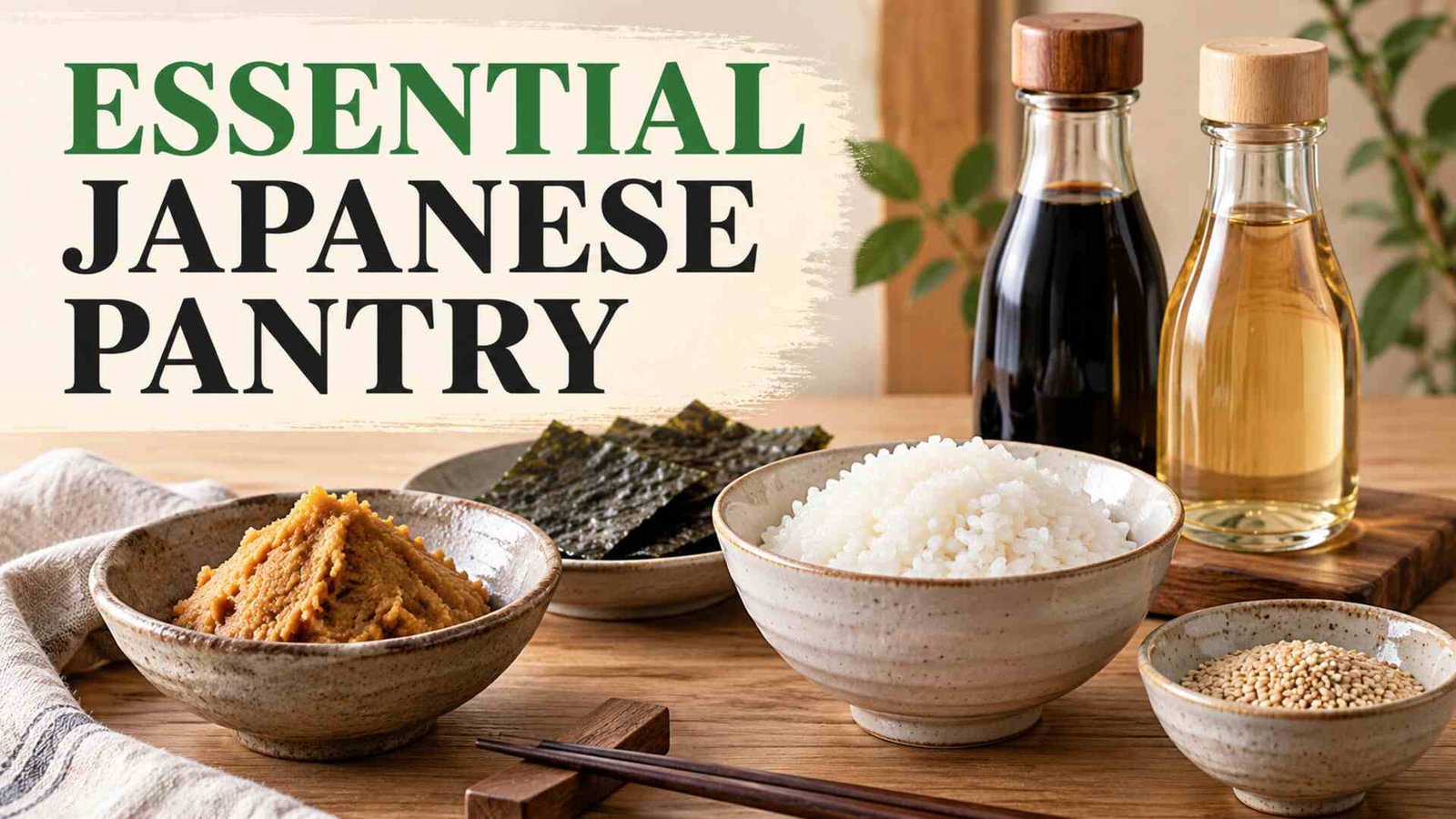
An essential Japanese pantry depends on household preferences, region and the meals you plan to cook. This practical list introduces versatile ingredients without suggesting that one pantry represents all Japanese cuisine.
Essential Japanese pantry starting points
- Short- or medium-grain rice for suitable dishes
- Soy sauce or tamari, with allergen labels checked
- Miso in a type suited to planned recipes
- Rice vinegar
- Mirin or a suitable cooking-seasoning alternative
- Dashi ingredients or another recipe-appropriate stock
- Nori, wakame or kombu where required
- Sesame seeds and sesame oil
- Noodles such as soba, udon or somen
Read labels and choose by recipe
Soy, wheat, fish and sesame are relevant allergens in many products. Ingredient lists and seasoning strength vary, so taste and adjust rather than treating products as identical substitutes. Alcohol-containing seasonings may not suit every household.
Organize dry goods with the FIFO pantry method and use the nutrition-label comparison guide when evaluating packaged foods.
Respect regional and household variation
Buy small amounts first, follow storage directions and learn techniques from cooks and sources connected to the relevant tradition.
Conclusion
The best essential Japanese pantry supports dishes you genuinely cook while preserving ingredient context and avoiding waste.