
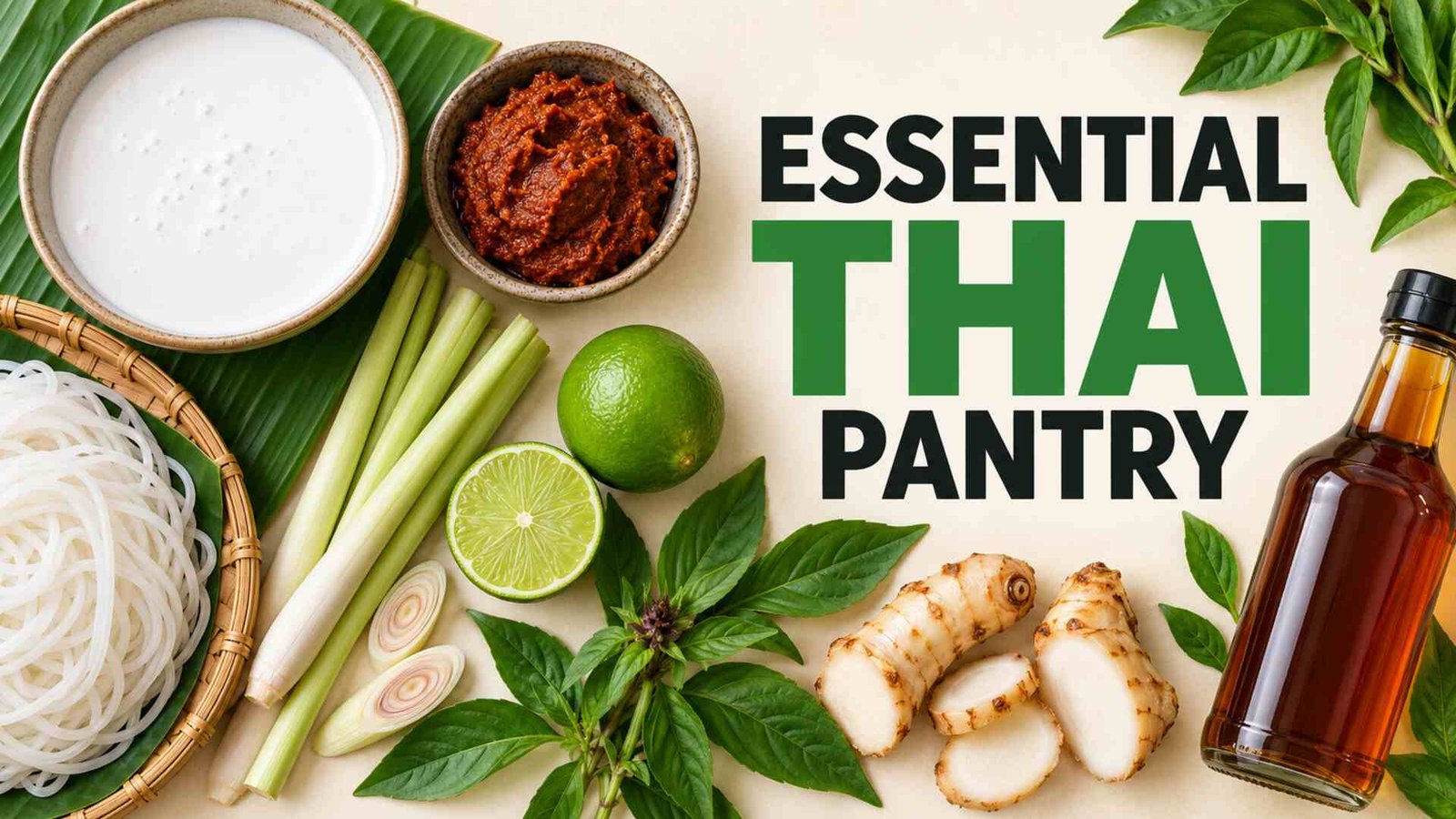
An essential Thai pantry should reflect the dishes you plan to cook, access to ingredients and personal dietary needs. Thai cooking varies by region and household, so treat this as a flexible starting point.
Essential Thai pantry starting points
- Jasmine or another recipe-appropriate rice
- Rice noodles in useful sizes
- Fish sauce or a suitable alternative
- Soy sauce and other recipe-specific seasonings
- Curry paste with ingredients and allergens checked
- Coconut milk
- Tamarind product suited to the recipe
- Fresh lime, lemongrass, galangal and chiles when available
- Thai basil, cilantro or other required herbs
Check packaged ingredients
Fish, shellfish, soy, wheat and peanuts may appear in sauces and curry pastes. Heat, saltiness and concentration vary by product, so follow the recipe and adjust carefully. Refrigerate opened products when directed.
Use the nutrition-label comparison guide for packaged foods and the seasonal produce calendar to adapt fresh ingredients locally.
Avoid unnecessary waste
Plan overlapping meals for fresh herbs and buy smaller packages until you know your preferred products. Freezing may suit some ingredients, but follow item-specific guidance.
Conclusion
A useful essential Thai pantry supports specific recipes while respecting regional context and allergen needs.