
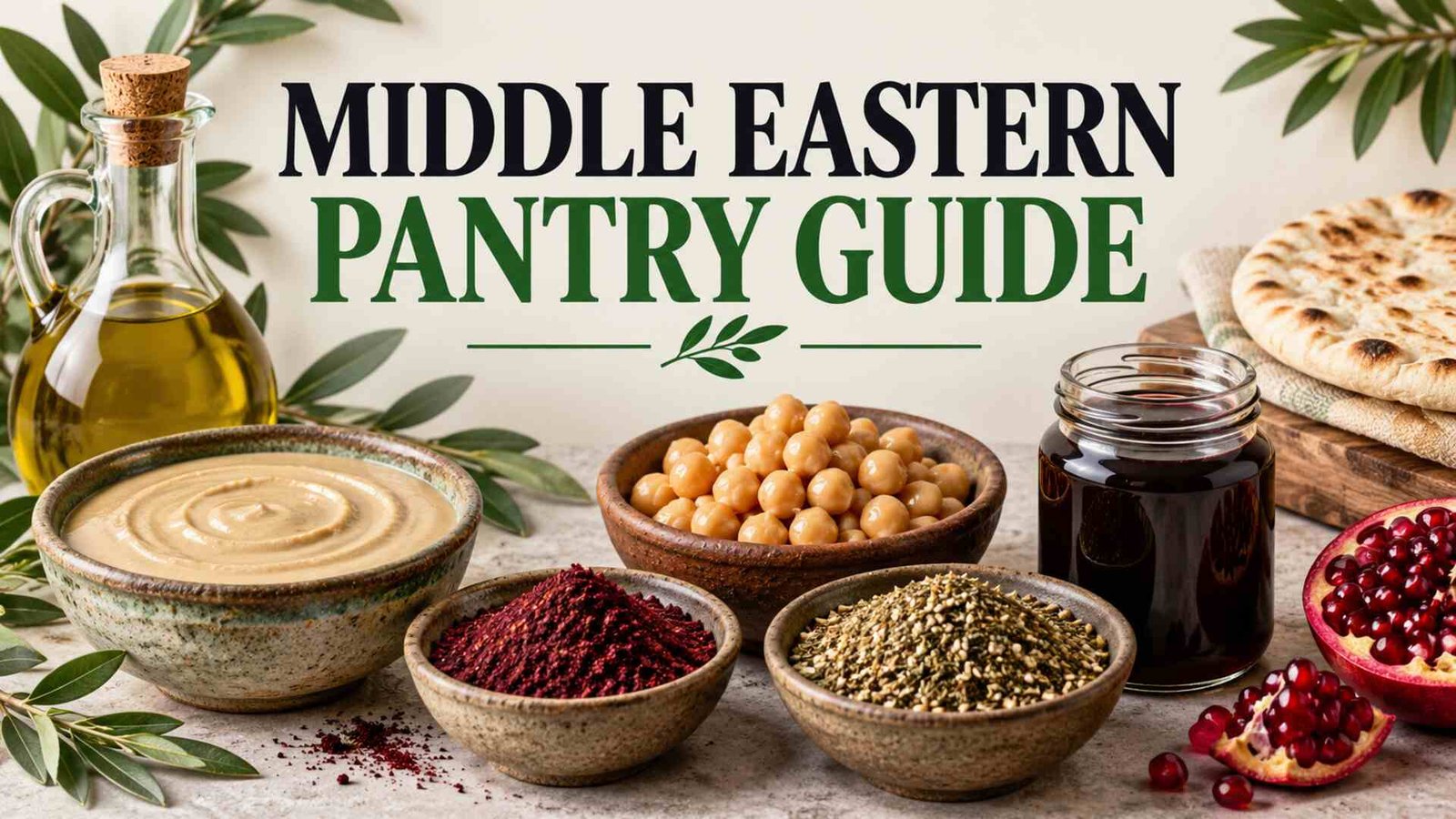
This Middle Eastern pantry guide offers flexible starting points for dishes from a large and diverse region. Ingredients and techniques vary across countries, communities and households, so shop for specific recipes instead of treating one list as universal.
Middle Eastern pantry guide: useful staples
- Tahini and sesame seeds
- Chickpeas, lentils and other pulses
- Rice, bulgur, freekeh or couscous as recipes require
- Olive oil and suitable cooking fats
- Sumac, za’atar and other recipe-specific spices
- Pomegranate molasses, dates or preserved lemon where appropriate
- Flatbreads, nuts and seasonal vegetables
Check labels and regional context
Sesame, wheat, nuts and dairy are common allergen considerations. Za’atar blends and pomegranate products vary, so compare ingredients, salt, sweetness and storage directions. Learn from sources connected to the particular food tradition.
Use the FIFO pantry method for grains and pulses, and the nutrition-label guide for packaged ingredients.
Conclusion
A useful Middle Eastern pantry guide supports meals you plan to cook while leaving room for regional and household variation.