
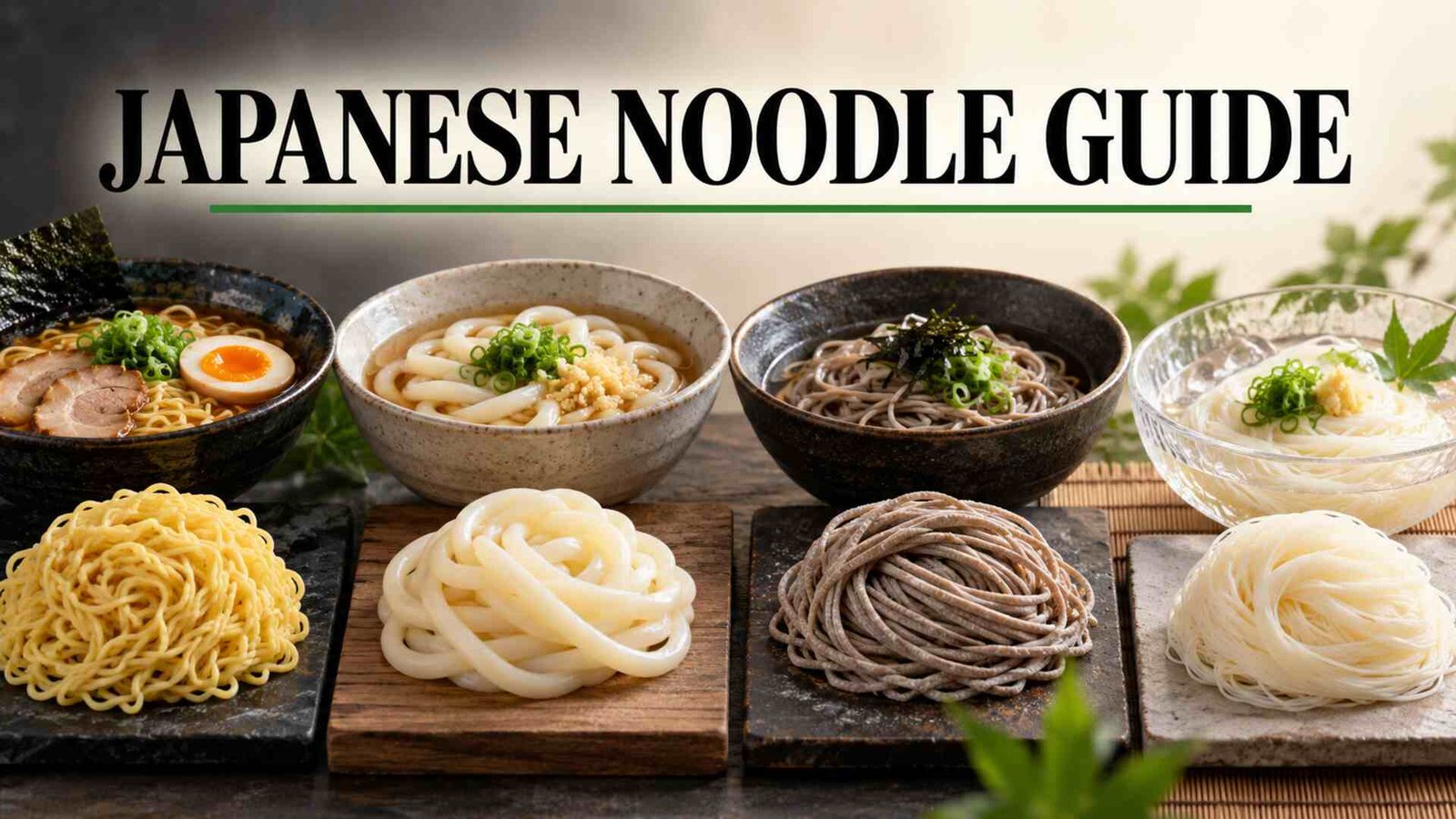
This Japanese noodle guide compares ramen, udon, soba and sōmen without treating every product as interchangeable. Ingredients, thickness and preparation vary by maker, region and whether the noodles are fresh, frozen or dried.
Japanese noodle guide to four common styles
- Ramen: wheat noodles often made with alkaline salts; styles range from thin and straight to thick and wavy.
- Udon: thick wheat noodles sold fresh, frozen or dried for soups, stir-fries and chilled dishes.
- Soba: noodles containing buckwheat, sometimes blended with wheat; check the ingredient list if gluten matters.
- Sōmen: fine wheat noodles commonly served chilled or in light broths, with brief cooking times.
Cook the product you bought
Follow package directions rather than relying on one universal boiling time. Use plenty of water when directed, stir gently, and taste near the suggested finish. Rinsing is common for chilled noodles and some hot preparations, but the correct method depends on the dish.
Read labels for wheat, buckwheat, egg and other allergens. Broths and dipping sauces may also contain soy, fish or shellfish. Store unopened and opened packages according to the manufacturer’s directions.
See our Japanese pantry guide for complementary staples and the Asian supermarket guide for practical shopping tips.
Choose noodles recipe by recipe
Start with the dish you want to make, then select the noodle type and format it calls for. Product-specific preparation produces better results than rigid rules about texture, origin or “correct” technique.