
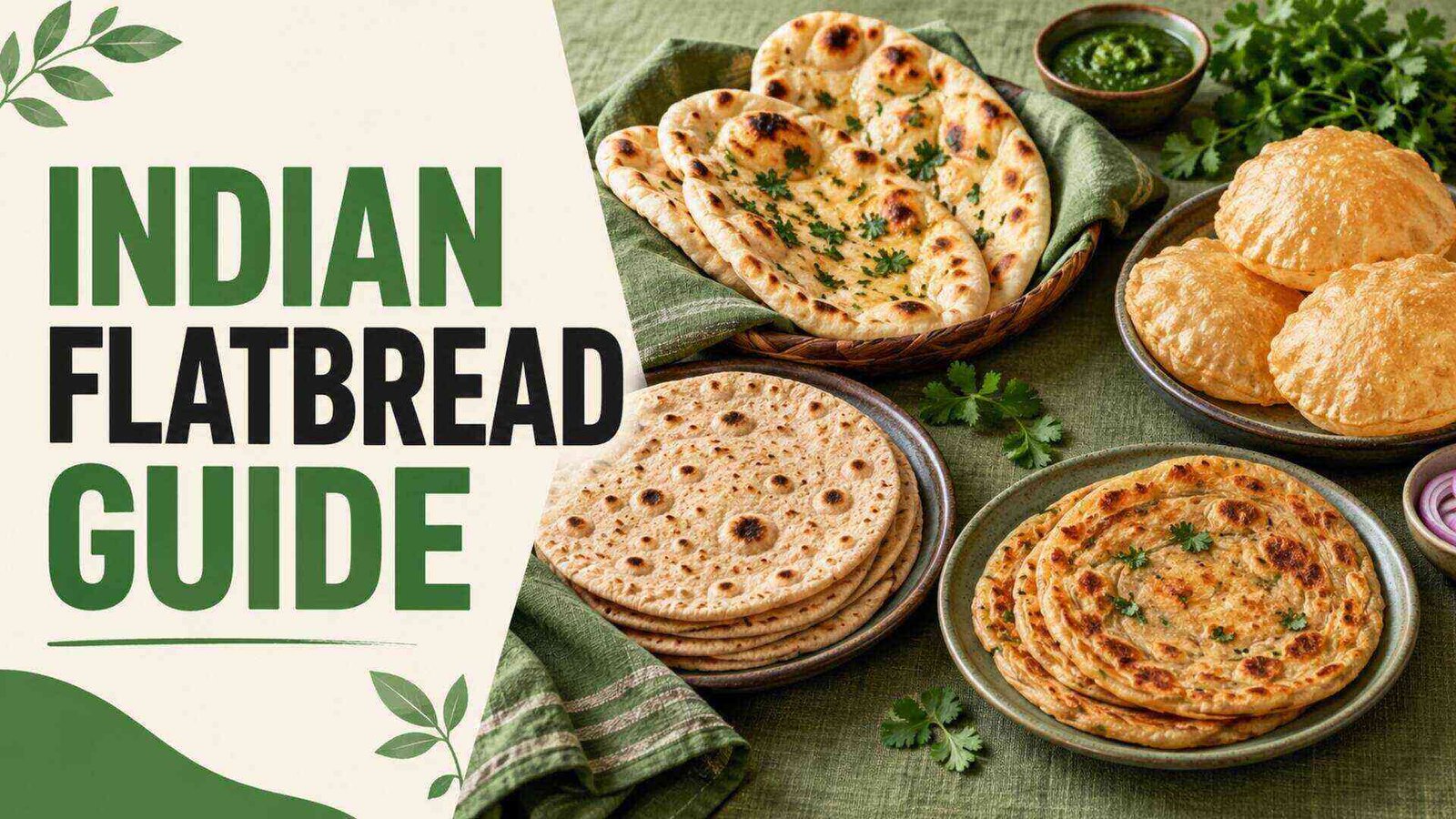
This Indian flatbread guide compares four familiar styles without treating India’s diverse bread traditions as one fixed formula. Roti, naan, paratha and puri differ in flour, shaping and cooking method, so begin with a trusted recipe for the bread you want to make.
Indian flatbread guide to four styles
- Roti or chapati: usually an unleavened wheat flatbread cooked on a hot griddle; flour and regional terminology vary.
- Naan: a leavened bread traditionally associated with high-heat oven cooking, although home recipes may use a skillet or domestic oven.
- Paratha: a broad family of layered or filled breads cooked with fat on a griddle.
- Puri: an unleavened bread that puffs during frying and requires careful hot-oil handling.
Choose flour and follow the recipe
Atta, all-purpose flour and other flours absorb water differently. Use the flour named in your recipe, add water gradually and follow recipe-specific resting, rolling and cooking directions. Results depend on the flour, equipment, heat and cook’s technique; exact puffing times are not universal.
Our Indian pantry guide covers complementary pulses, grains and spices. The South Asian grocery guide can help you compare flours and package sizes.
Cook flatbreads safely
Use suitable ventilation and long utensils around open flames, and follow appliance guidance. Keep hair, sleeves and flammable items away from burners. For puri, keep water away from hot oil, use a stable pot and never leave frying oil unattended.
Indian bread traditions vary by region, community and household. A recipe-led approach respects that range while helping you buy only the ingredients you will use.