
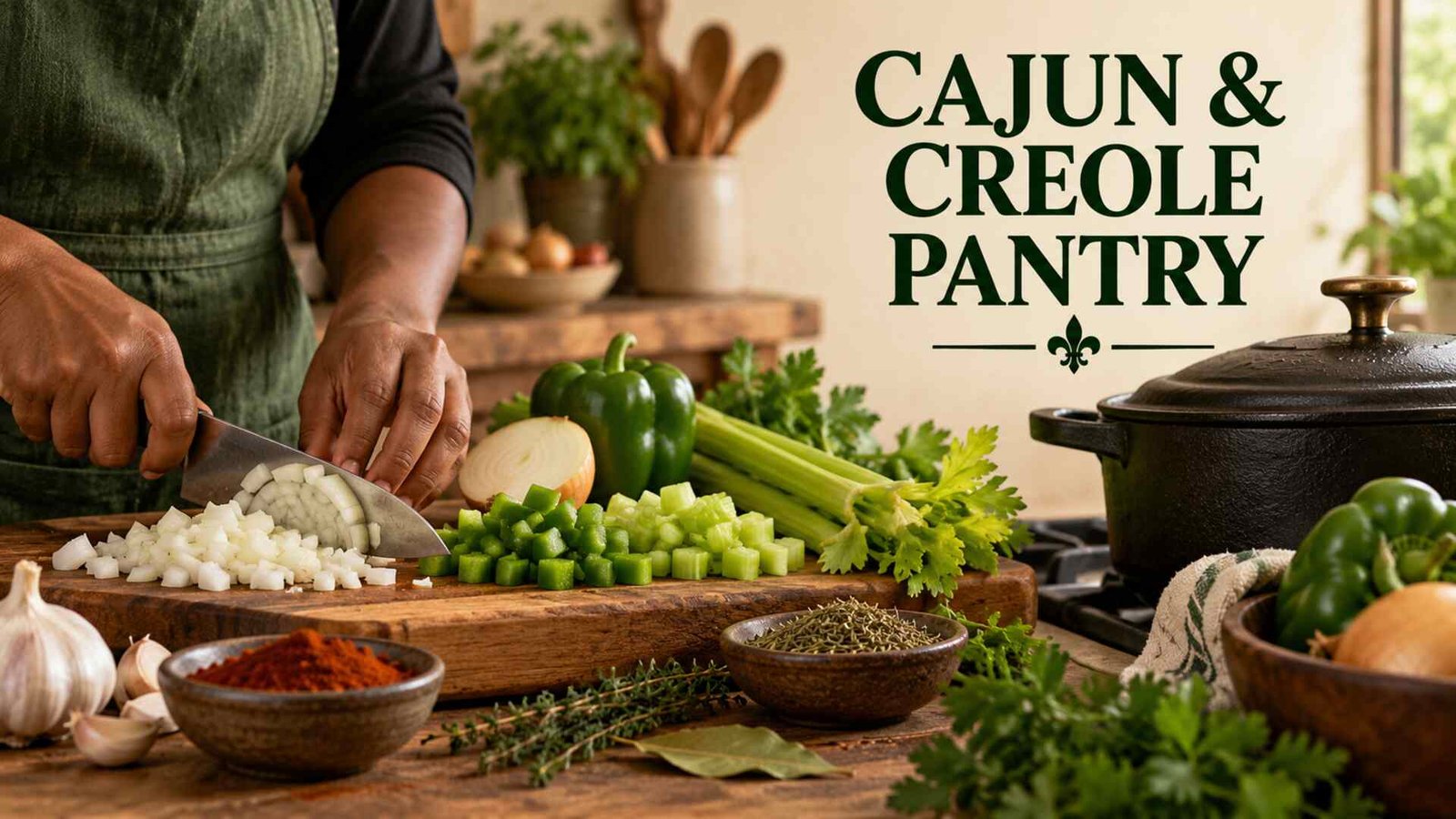
A Cajun and Creole pantry can support many Louisiana dishes, but the two traditions are distinct and neither follows one fixed formula. Start with a named recipe and buy the vegetables, seasonings and proteins that preparation requires.
Cajun and Creole pantry foundations
- Onion, bell pepper and celery: a familiar aromatic combination whose proportions vary by cook and dish.
- Filé powder: ground sassafras leaves associated with Choctaw food knowledge and used in some gumbo traditions; follow the recipe for timing.
- Andouille and other smoked meats: styles vary, so compare ingredients, smoke level, allergens and refrigeration directions.
- Flour and cooking fat: used for roux in many dishes, with colour and method determined by the recipe.
- Rice, beans, herbs and spices: flexible staples selected for particular dishes.
Make and handle roux safely
Roux becomes extremely hot and can cause serious burns. Use a stable heavy pan, a heat-safe utensil and steady attention. Avoid universal microwave or oven shortcuts unless they come from a tested recipe for your equipment. If the roux burns, discard it safely after cooling.
Our global condiment bar guide offers storage and allergen reminders. The FIFO pantry method helps rotate flour, rice and seasonings.
Keep the traditions specific
Louisiana foodways reflect Indigenous, African, Acadian, Creole, Caribbean, European and other influences. Avoid calling every dish interchangeable or claiming one product guarantees authenticity.
Choose recipes from knowledgeable Louisiana cooks, check shellfish, wheat, celery, mustard and other allergens, and keep meat and seafood refrigerated. A recipe-led pantry is more useful than a rigid list.