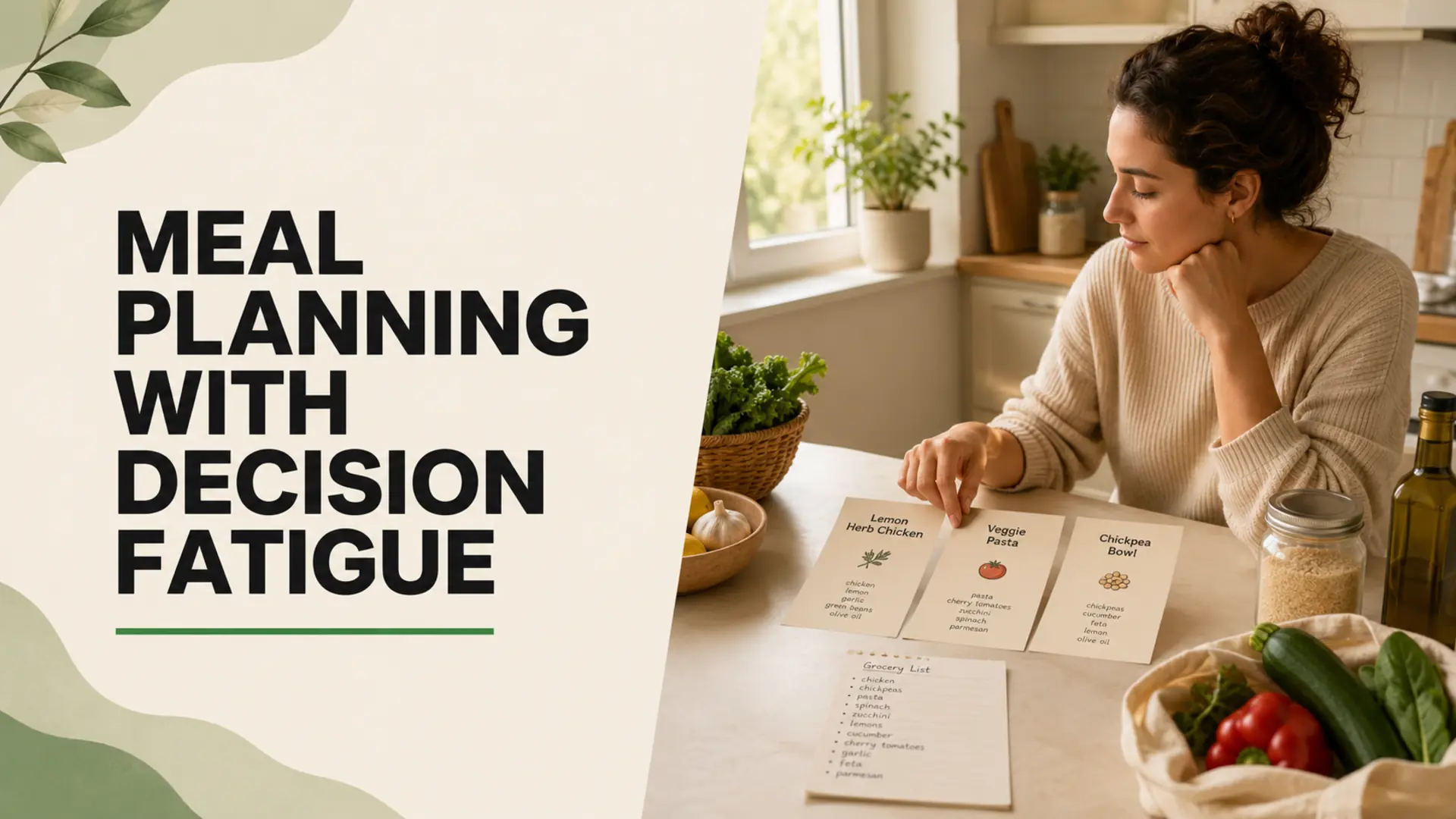
Meal planning with decision fatigue becomes easier when you reduce the number of choices, keep the plan flexible and prepare a few dependable fallback meals. You do not need identical breakfasts, a permanent seven-night schedule or a list of “approved” dinners. A small, familiar framework can guide the week without turning food into another demanding project.
Why Meal Planning With Decision Fatigue Feels Hard
Meal planning involves several connected choices: what to cook, who will eat, what is already available, how much time the meal requires and which ingredients to buy. When energy or attention is limited, even ordinary options can feel like too much.
The practical response is to narrow the decision at each stage. Instead of searching hundreds of recipes, choose from a short personal list. Instead of planning every meal in detail, decide only the dinners that require preparation and keep several flexible options available.
Start With the Week, Not the Recipes
- Look at the calendar for work, school, appointments and meals away from home.
- Mark the nights that need a very easy dinner.
- Count how many meals genuinely need planning.
- Choose one night for leftovers or a flexible pantry meal.
- Plan more involved cooking only where the schedule supports it.
This prevents a seven-dinner plan from becoming an obligation during a week that may need only four cooked meals.
Create a Small Meal Roster
Write down meals that are familiar, practical and accepted by the household. Begin with five to ten options, but treat that range as a starting point rather than a strict limit. Include different levels of effort.
- Very easy: sandwiches, snack plates, eggs, canned soup with sides or a freezer meal.
- Moderate: pasta, grain bowls, tacos, stir-fries or sheet-pan meals.
- Longer cooking: soups, curries, casseroles or batch-cooked dishes.
Save new recipes for weeks when experimentation feels manageable. Your everyday roster should prioritize reliability, ingredient availability and the equipment you actually use.
Use Theme Nights as Prompts, Not Rules
A theme narrows the field without prescribing one exact dish. Keep only the themes that feel useful, and change them as routines or seasons shift.
- Bowl night: grain or greens, protein, vegetables and sauce.
- Wrap night: tacos, burritos, flatbreads or lettuce wraps.
- One-pot night: soup, stew, curry or skillet pasta.
- Tray night: a flexible sheet-pan combination.
- Use-it-up night: safely stored leftovers and ingredients that need attention.
For a complete low-dish framework, use the one-pot meal-planning guide. When cooking feels unrealistic, the no-cook meal plan offers adaptable options that work beyond summer too.
Choose With a Three-Question Filter
When selecting a meal, ask only three questions:
- Do I already have an ingredient that should be used soon?
- How much energy and time is realistic that day?
- Which meal from my roster fits both answers?
If two meals fit, choose the one with fewer missing ingredients. This provides a tie-breaker without reopening a long recipe search.
Plan Flexible Components Instead of Exact Meals
Some people find component planning easier than assigning a recipe to every night. Choose a cooked grain, one or two proteins, washed vegetables and a sauce. Those components can become bowls, wraps, salads or a quick skillet meal.
This method also allows household members to assemble different combinations from the same ingredients. It can reduce conflict over one fixed dinner while keeping the grocery list focused.
Build Three Fallback Meals
A fallback meal is an option made from ingredients you usually keep available. It should be simple enough for a difficult evening and flexible enough to handle substitutions.
- Pasta with jarred sauce, frozen vegetables and beans or another protein
- Eggs or tofu with toast and fruit
- Canned soup upgraded with frozen vegetables and bread
- Bean-and-cheese quesadillas or wraps with salsa
- Frozen grains with vegetables and a ready-to-use sauce
Choose three that suit your dietary needs and replace them when the ingredients are used. Fallback meals are part of the plan, not evidence that the plan failed.
Turn the Plan Into a Short Grocery List
- List ingredients for the selected dinners.
- Add breakfast, lunch and household essentials that are actually low.
- Check the refrigerator, freezer and pantry.
- Remove duplicates and choose acceptable substitutions.
- Group the final items by store section.
The reusable weekly shopping template can hold recurring checks, while this guide to planning meals from your fridge helps prioritize ingredients already at home.
Reduce Choices at the Grocery Store
- Write a specific item and quantity when it matters.
- Record one acceptable substitute in advance.
- Avoid browsing every variation when any suitable option will work.
- Use store order so the trip follows a predictable path.
- Skip nonessential decisions and revisit them another week.
What to Do When the Plan Still Feels Too Much
Reduce the scope. Plan two dinners rather than seven, repeat a familiar breakfast if you enjoy it, use convenience ingredients where they help, or ask another household member to choose from two options. If difficulties with decisions, eating or daily functioning are persistent or distressing, consider speaking with an appropriate healthcare professional; meal-planning strategies are not a substitute for individualized care.
Keep the System Kind and Adaptable
Meal planning with decision fatigue should remove pressure, not create a new standard to meet. Use a short meal roster, flexible themes, three fallback meals and a focused grocery list. When the week changes, revise the plan without guilt. A useful system supports the energy you have rather than demanding more of it.