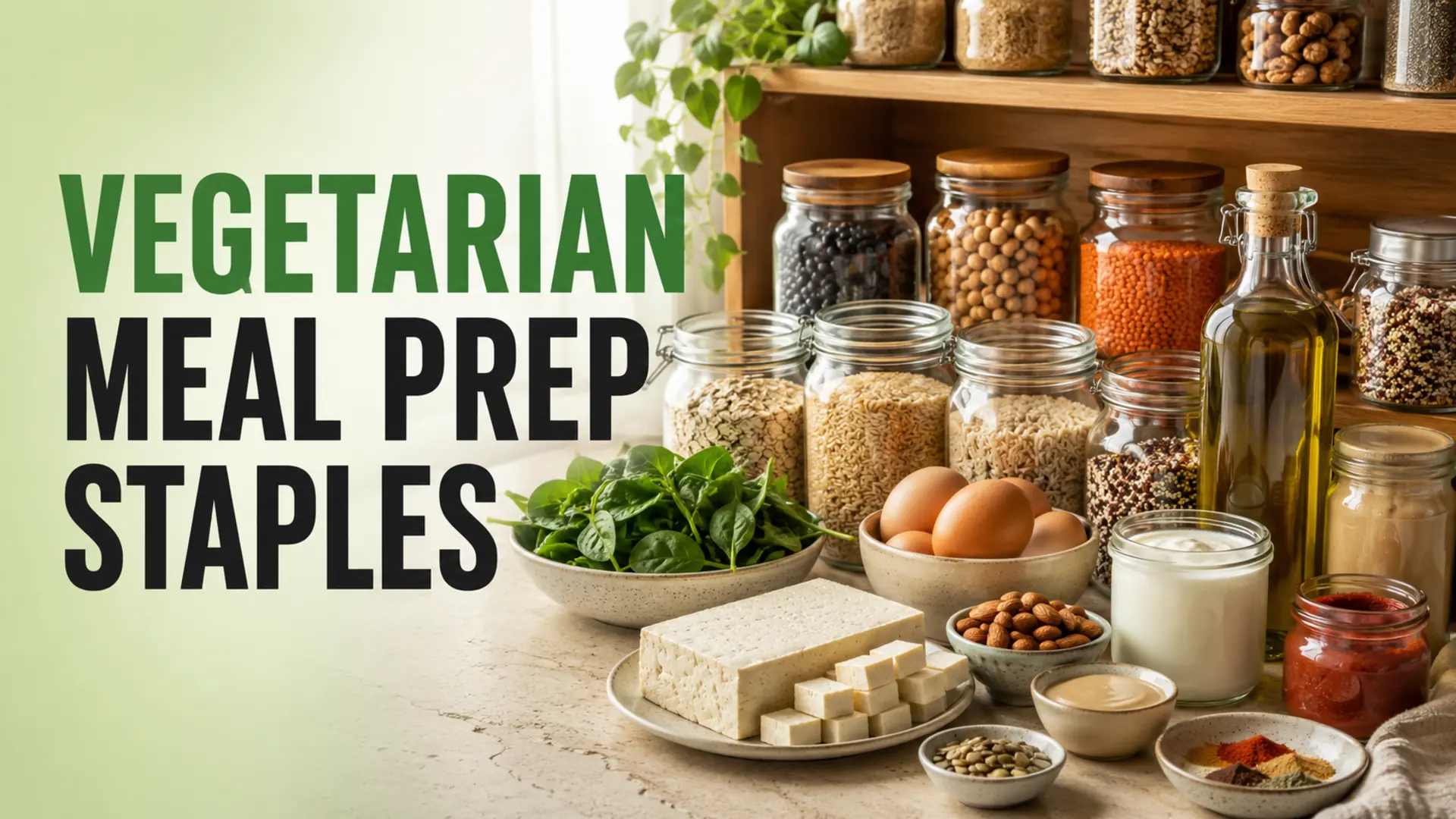
Vegetarian meal prep staples should make everyday meals flexible, satisfying and easy to assemble. A useful pantry does not require every fashionable grain, powder or speciality condiment. It needs a small selection of foods your household enjoys and can combine with fresh or frozen produce.
Vegetarian eating patterns vary. Some include eggs and dairy, while vegan patterns exclude all animal-derived foods. Choose staples that fit your preferences, allergies, culture, budget and nutrition needs.
Build vegetarian meal prep staples in practical groups
Instead of shopping from one rigid “must-have” list, select a few ingredients from each group:
- Legumes: lentils, chickpeas, kidney beans, black beans, split peas or other local pulses.
- Grains and starches: oats, rice, barley, quinoa, couscous, pasta, potatoes or bread.
- Protein-rich refrigerated foods: tofu, tempeh, eggs, plain yogurt, cottage cheese or another suitable alternative.
- Vegetables and fruit: a mix of fresh, frozen, canned and dried options.
- Fats and texture: olive or other cooking oil, nuts, seeds, tahini or nut butter.
- Flavour builders: tomato paste, miso, soy sauce or tamari, vinegar, spices, dried mushrooms and herbs.
You do not need every item. One or two dependable choices in each useful category can support many meals.
Start with legumes that match your schedule
Dried beans are economical when you have time and equipment to soak or cook them. Canned beans cost more per unit in some places but require little preparation. Lentils and split peas often cook faster than larger dried beans.
Compare the real value for your household: purchase price, cooking energy, storage space and the amount likely to be used. Rinse canned legumes when appropriate and compare sodium if it matters to your diet.
The budget-friendly plant-based shopping guide offers more comparisons between dried, canned, fresh and frozen staples.
Choose grains and starches for different meal formats
Keep at least one quick option and one batch-cooking option. Couscous, oats or pasta can cover busy days; rice, barley or quinoa can be cooked in a larger batch when time allows. Potatoes and bread provide additional flexibility.
Whole grains can add fibre and texture, but the best staple is one you will prepare and eat. Introduce higher-fibre foods gradually if your usual diet is lower in fibre, and drink enough fluid according to your needs. For ingredient ideas, see the high-fibre meal prep guide.
Add tofu, tempeh, eggs or dairy when they fit
Tofu and tempeh can be refrigerated anchors for stir-fries, bowls, curries and sandwiches. Check package storage instructions and use-by dates. Different tofu textures suit different preparations: silken tofu blends into sauces, while firm varieties hold their shape better in a pan.
Vegetarians who eat eggs or dairy may use eggs, plain yogurt, cottage cheese and cheese in suitable amounts. Those foods are optional rather than requirements. Vegan shoppers can choose fortified plant alternatives where available, checking the label for protein, calcium, vitamin D and vitamin B12.
Keep vegetables available in more than one form
Fresh produce is useful for salads and quick sides, but frozen and canned vegetables can reduce preparation and provide a backup when fresh food runs out. Choose forms that suit the meal:
- Frozen spinach or peas for curries, pasta and rice dishes
- Canned tomatoes for soups, stews and sauces
- Fresh cabbage, carrots and peppers for longer refrigerator life
- Seasonal fruit for breakfasts and snacks
- Frozen berries for oats, yogurt or smoothies
Plan fresh produce around realistic use. The fridge-first meal-planning method can help prioritize ingredients before they decline in quality.
Create a small flavour kit
Vegetarian meals do not require expensive speciality products to taste good. Begin with salt, pepper, one cooking oil, an acid such as vinegar or lemon, and two or three spices you use regularly.
Then add one concentrated savoury ingredient: tomato paste, miso, soy sauce, dried mushrooms, olives or nutritional yeast. Read labels for allergens, sodium and storage directions. Nutritional yeast is not automatically a source of vitamin B12; only fortified products provide it, so check the label.
Consider nutrients without making universal claims
A varied vegetarian diet can provide protein through legumes, soy foods, eggs, dairy, grains, nuts and seeds. Individual requirements differ, and a single ingredient does not need to supply every amino acid at every meal.
Iron sources include pulses, fortified cereals, whole grains, nuts, seeds and green vegetables. Plant iron is absorbed differently from iron in meat; including a vitamin C-rich food such as peppers, citrus, tomatoes or broccoli with a meal may help.
Vitamin B12 deserves specific attention. The NIH Office of Dietary Supplements explains that plant foods do not naturally contain vitamin B12 unless fortified. Eggs and dairy can provide B12 for some vegetarians, while people eating little or no animal food need a reliable source from fortified foods or supplements. Discuss supplements with an appropriate health professional, especially during pregnancy, breastfeeding or when managing a medical condition.
The current NHS vegetarian-diet guide also covers protein variety, iron, B12 and omega-3 sources.
Use four repeatable vegetarian meal formulas
Grain bowl
Combine a grain, beans or tofu, two vegetables and a sauce. Change the cuisine with herbs, spices and toppings rather than buying entirely new ingredients.
Soup or stew
Cook lentils or beans with onions, vegetables, tomatoes or broth. Add grains, pasta or potatoes according to the recipe. Cool and store leftovers safely.
Stir-fry or skillet
Cook tofu, tempeh or eggs with quick vegetables and a suitable sauce. Serve with rice or noodles. Keep raw egg separate from ready-to-eat foods and cook it thoroughly.
Tray bake
Roast vegetables with chickpeas, tofu or another suitable protein. Add a grain, flatbread or sauce when serving. Match ingredient size so the components finish at roughly the same time.
Prepare components instead of identical meals
A flexible session might include one cooked grain, one pot of lentils, washed vegetables, one sauce and a tray of roasted vegetables. These components can become bowls, wraps, soups or salads across several days.
Label containers, refrigerate perishable food promptly and follow local storage guidance. Freeze portions you will not use soon, where the recipe and ingredient are suitable for freezing.
Use a realistic vegetarian pantry checklist
- Two legumes, canned or dried
- Two grains or starches, including one quick option
- One refrigerated protein such as tofu, eggs or yogurt
- Two frozen or canned vegetables
- Fresh vegetables and fruit in usable quantities
- One nut, seed or spread
- One cooking oil and one acidic ingredient
- Three familiar herbs or spices
- One versatile flavour builder
- A verified B12 source if your eating pattern requires it
Review this checklist against what you already own. The goal is a working pantry, not a collection of duplicates. The spice, oil and condiment organization guide can help keep flavour staples visible and usable.
Make vegetarian meal prep sustainable for your routine
The best vegetarian meal prep staples are affordable, familiar and versatile. Start with a few legumes, grains, vegetables and flavour builders, then add refrigerated foods and fortified products that fit your eating pattern.
Test combinations before buying in bulk, rotate older food forward and adjust the list as your schedule changes. Variety and consistency matter more than a supposedly perfect pantry.