Shopping for 15-minute one-pan dinners starts with ingredients that cook at roughly the same pace. The goal is not to promise that every meal will be ready in exactly 15 minutes. It is to reduce chopping, avoid unnecessary pans and keep a few flexible combinations available for busy evenings.
Actual cooking time depends on your equipment, ingredient size, starting temperature and recipe. Use package directions and safe internal temperatures rather than the clock alone.
Plan 15-minute one-pan dinners as components
Build each dinner from four parts: a quick-cooking protein, fast vegetables, an optional ready-to-use starch and a simple flavour base. Choose components that can share one skillet without one burning before another is cooked.
- Protein: eggs, tofu, canned beans, canned fish, thin fish fillets, small pieces of poultry, ground meat or clearly labelled fully cooked sausage.
- Vegetables: spinach, shredded cabbage, mushrooms, courgette or zucchini, peppers, peas, broccoli slaw, tomatoes or frozen mixed vegetables.
- Starch: precooked rice, couscous, quick-cooking noodles, tortillas, gnocchi or leftover cooked grains.
- Flavour: garlic, ginger, herbs, lemon, salsa, pesto, curry paste or a favourite lower-effort sauce.
Not every meal needs every component. Beans, lentils and some dairy foods can contribute more than one role.
Choose ingredients by preparation time
A fast ingredient is only useful when it needs little work at home. Compare the full preparation process, not just the advertised cooking time.
- Pre-washed greens and shredded vegetables reduce cutting.
- Frozen vegetables are already prepared and can be portioned directly from the bag.
- Canned beans and fish can be drained and added near the end.
- Thin, evenly sized pieces cook more predictably than thick, irregular pieces.
- Precooked grains and clearly labelled ready-to-eat proteins can shorten the cooking stage.
Convenience ingredients may cost more per unit, so balance their price against the amount you will actually use. A reusable weekly shopping template can separate dependable staples from optional shortcuts.
Read labels before adding “precooked” foods
Do not assume a smoked, cured or browned product is ready to eat. Sausages and similar foods may be sold raw, partially cooked or fully cooked. Read the package for storage and cooking instructions.
For microwave rice, refrigerated pasta, sauces and frozen vegetables, check the serving size, preparation method, allergens and sodium when relevant to your needs. Choose products that fit the meals you intend to make rather than relying on front-of-package claims.
Use a one-pan cooking order
- Prepare first. Wash produce, open packages, measure sauces and cut ingredients before heating the pan.
- Cook raw protein safely. Brown or cook it according to the recipe and its required internal temperature. Transfer it to a clean plate temporarily if vegetables need separate space.
- Add firm vegetables. Mushrooms, peppers and broccoli generally need more time than spinach or shredded greens.
- Add quick vegetables and precooked starches. Stir them in once the firmer ingredients are nearly ready.
- Return cooked components and finish the sauce. Heat everything through without overcooking delicate vegetables.
A one-pan dinner can still require a bowl or clean plate during preparation. The purpose is manageable cleanup, not a literal guarantee of one utensil.
Six adaptable one-pan dinner ideas
Chickpea, couscous and vegetable skillet
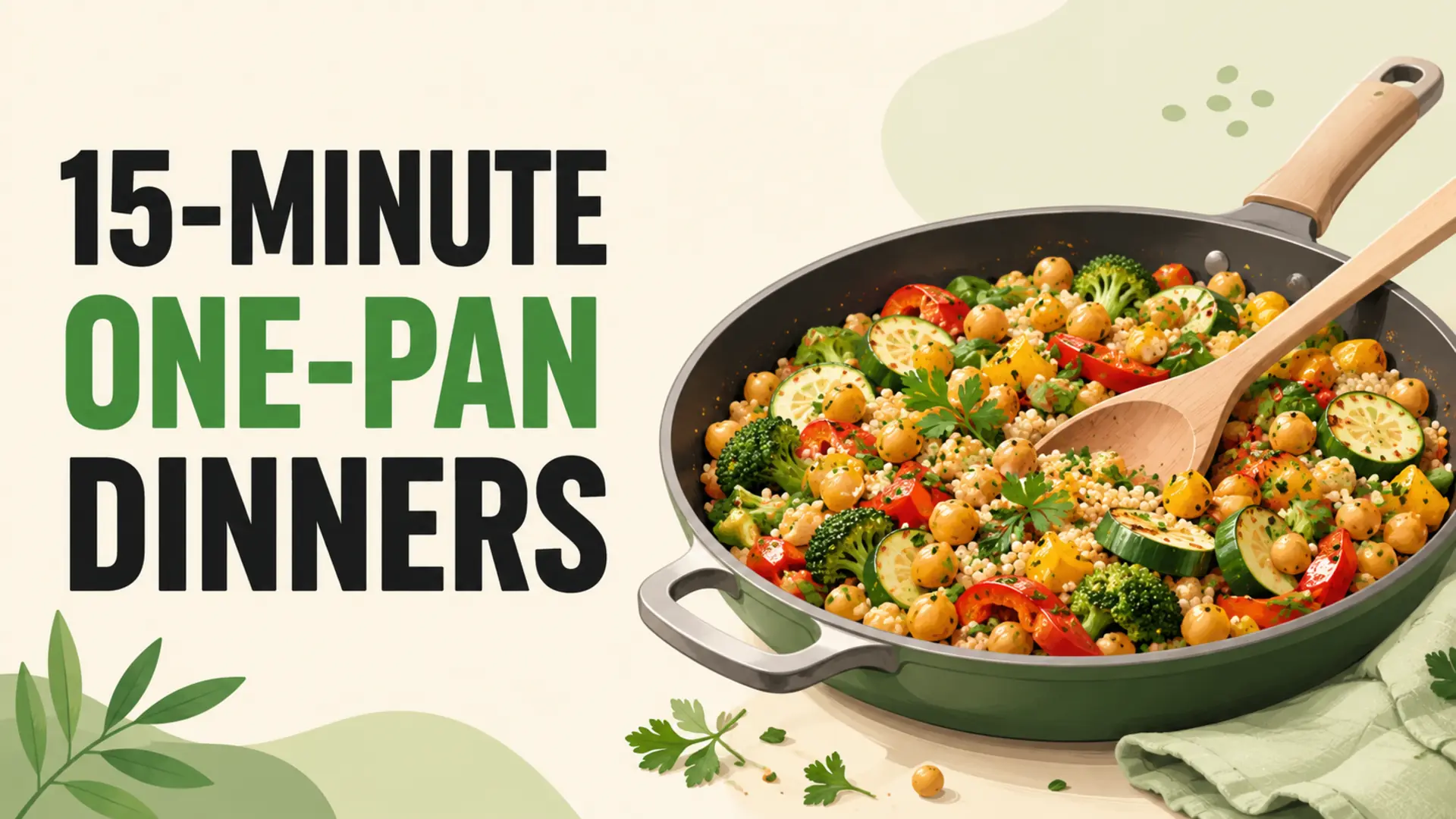
Sauté peppers and courgette, add drained chickpeas, then stir in quick-cooking couscous with the amount of hot liquid specified on its package. Finish with lemon and herbs.
Egg and vegetable rice skillet
Cook mushrooms and peas, move them to one side, then scramble eggs in the clear space. Add precooked rice and season to taste. Cook eggs fully and heat the rice throughout.
Tofu and frozen-vegetable stir-fry
Brown small tofu cubes, add frozen stir-fry vegetables and finish with ginger, garlic and a suitable sauce. Serve as is or add precooked noodles.
Shrimp, tomato and greens pan
Cook shrimp until the flesh is pearly or white and opaque, then add tomatoes and spinach briefly. Lemon, garlic and herbs provide a simple finish.
Bean, tomato and gnocchi skillet
Follow the gnocchi package directions, then combine it with beans, tomatoes and spinach. Add water or sauce gradually so the pan does not become heavy or sticky.
Ground poultry and cabbage skillet
Cook ground poultry thoroughly, drain excess fat if needed, then add shredded cabbage and carrots. Season with ginger, garlic and a sauce that suits your household.
Keep cooking time claims realistic
Meals built from prepared ingredients may be quick, but “15 minutes” should be treated as a planning target. A cold pan, crowded skillet, blunt knife or thick piece of food can extend the process.
To make evenings smoother:
- Choose one familiar recipe before adding new combinations.
- Defrost ingredients safely in advance when required.
- Keep frequently used seasonings together.
- Use a skillet large enough to avoid steaming everything in a crowded pile.
- Check the recipe and package directions before starting.
Cook proteins to safe temperatures
Colour and elapsed time do not reliably show whether meat or poultry is safe. Use a food thermometer and follow the current FoodSafety.gov minimum-temperature chart. It specifies, among other guidance, 165°F (74°C) for poultry, including ground poultry, and 160°F (71°C) for ground beef, pork, veal and lamb. Shrimp should be cooked until pearly or white and opaque.
Keep raw meat, poultry, seafood and eggs separate from ready-to-eat foods. Wash hands, boards and utensils appropriately, and refrigerate perishable food promptly. FoodSafety.gov summarizes this as clean, separate, cook and chill.
Shop once and create several combinations
Select ingredients that cross over between meals. Spinach might finish a gnocchi skillet, fold into eggs and accompany a bean dish. Peppers can work with tofu, shrimp or ground meat. A jar of pesto or salsa can flavour more than one dinner without requiring a new sauce for each recipe.
The one-pot meals grocery plan offers a broader weekly framework, while the five-ingredient sheet-pan guide is useful when oven cooking fits your schedule better.
A focused one-pan dinner shopping list
- Two quick-cooking proteins or plant-based equivalents
- Three or four fast vegetables, fresh or frozen
- One or two precooked or quick-cooking starches
- One versatile sauce or paste
- Fresh lemon, lime or herbs for finishing
- One pantry backup such as canned beans and tomatoes
Check the refrigerator and pantry first. Buy quantities that match your household rather than copying a universal list.
Make fast dinners repeatable
Reliable 15-minute one-pan dinners come from compatible ingredients, a clear cooking order and realistic expectations. Start with one tested skillet meal, note which shortcuts were genuinely helpful and use those lessons to shape the next grocery list.
Fast cooking should never replace safe cooking. Let internal temperature, package instructions and the condition of the food determine when dinner is ready.