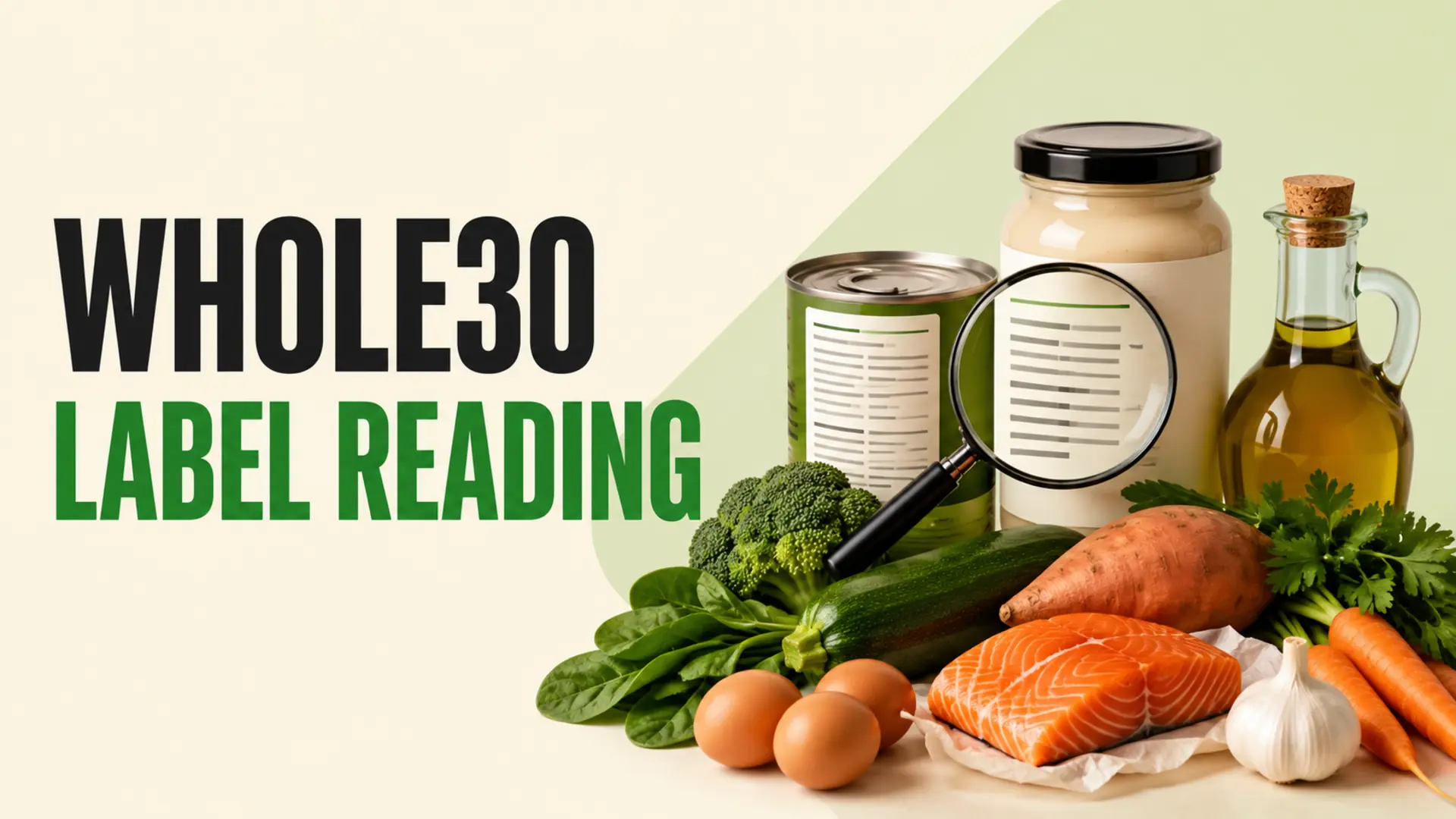
A practical Whole30 shopping list starts with ordinary foods you can identify easily, then uses careful label reading for packaged products. The program’s rules have changed over time, so check the current official rules before shopping rather than relying on an old printable list or social-media graphic.
This guide explains how to organize your trip, compare ingredient lists, and avoid unnecessary specialty products. Whole30 is a branded elimination program, not a medical diagnosis or a substitute for individualized nutrition advice.
What belongs on a Whole30 shopping list?
The Original Whole30 elimination phase centres meals on vegetables, fruit, eggs, meat, seafood, and compatible fats while temporarily excluding several food groups and ingredients. The organization also offers a separate Plant-Based Whole30 with different rules, so decide which program you are following before building your list.
According to the current official Original Whole30 program rules, the elimination phase excludes added sugar, alcohol, grains, most legumes, and dairy, with specific exceptions and clarifications. Because rules can be revised, use the official source as the final reference.
Build meals before choosing products
Planning complete meals prevents a cart full of individual “compatible” foods that do not work together. Choose a protein, two or more vegetables, a cooking fat, and an optional fruit or sauce for each main meal. Repeat ingredients across meals to keep the list manageable.
- Breakfast: eggs with potatoes, peppers, and spinach.
- Lunch: chicken salad with greens, cucumber, fruit, and a compatible dressing.
- Dinner: salmon, roasted vegetables, and mashed sweet potato.
- Backup meal: canned fish, avocado, raw vegetables, and fruit.
If you are also cooking for people who are not following the program, plan shared bases and serve excluded foods separately. Our guide to making a grocery list can help combine recipes, quantities, and pantry checks.
Start with minimally packaged foods
Fresh produce, plain meat, seafood, and eggs usually require less label analysis than sauces, deli products, seasoned proteins, or ready-made meals. That does not mean they must be organic, grass-fed, wild-caught, or premium-priced. Those preferences may matter to an individual shopper, but they are not a reason to make the list unnecessarily expensive.
Produce
Choose vegetables and fruit that match the meals you planned. Potatoes are allowed under the current Original Whole30 rules, although commercially prepared fries and chips are treated separately by the program. Frozen vegetables and fruit can be useful when their ingredient lists contain only the food itself.
Protein
Plain eggs, poultry, meat, and seafood simplify shopping. Seasoned, cured, smoked, canned, or marinated options need a closer label check because their recipes can include added sugar, grains, dairy, soy-derived ingredients, or alcohol.
Fats and flavour
Choose cooking fats permitted by the current program rules and ingredients you will actually use. Herbs, spices, citrus, garlic, vinegar, mustard, and tomato products can add variety, but packaged versions still need to be checked individually.
How to read labels for Whole30
For compatibility with a food-elimination program, the ingredient list is usually more useful than marketing phrases on the front of the package. “Natural,” “no added preservatives,” or “healthy” does not tell you whether every ingredient fits Whole30 rules.
- Read the complete ingredient list, not only the Nutrition Facts panel.
- Compare each ingredient with the current official program rules.
- Check compound ingredients inside parentheses, such as the ingredients in broth or seasoning blends.
- Review allergen statements when allergies or intolerances are relevant, but do not treat them as a complete Whole30 check.
- Recheck labels when buying a familiar product because formulations can change.
The US Food and Drug Administration explains that most prepared foods require nutrition labelling and provides broader food-labelling guidance. Other countries use different formats and terminology, so follow the rules where the product is sold.
Ingredients that deserve a closer look
Added sweeteners may appear under many names, and a product can contain them even when it does not taste sweet. Sauces, broths, cured meats, dressings, and tomato products are common places to look carefully. Grain, dairy, and legume derivatives may also appear in seasoning mixtures and processed foods.
Do not assume every additive is excluded. Whole30’s current guidance identifies specific incompatible additives while allowing many others, and its published rules have changed. Use the official rules-versus-recommendations guidance instead of a generic “chemical-sounding ingredients” test.
Practical Whole30 grocery categories
Vegetables and fruit
- Leafy greens, broccoli, cauliflower, cabbage, and green beans
- Carrots, peppers, onions, mushrooms, and zucchini
- White potatoes, sweet potatoes, squash, and beets
- Apples, berries, citrus, bananas, and other preferred fruit
- Avocado, fresh herbs, garlic, and lemons or limes
Protein and meal bases
- Eggs and plain poultry
- Unseasoned meat or seafood
- Canned tuna, salmon, or chicken with compatible ingredients
- Frozen plain fish or meat without breading or sauce
Pantry and refrigerated items
- Compatible oils or cooking fats
- Plain nuts and seeds permitted by the chosen program
- Unsweetened tomato products
- Broth or stock with a compatible ingredient list
- Mustard, vinegar, herbs, and spices checked against current rules
For more label-focused planning, see our guides to gluten-free meal prep and cross-contact and dairy-free meal-prep shopping. Whole30 is not equivalent to either diet, but the label-reading methods overlap.
Shop in a store-specific order
Arrange the list around the store you use: produce, meat and seafood, pantry, refrigerated foods, and frozen items. Pick up chilled products toward the end when practical and keep raw animal products separate from ready-to-eat foods. A familiar route reduces backtracking without forcing a supposedly universal supermarket layout.
Our aisle-by-aisle shopping-list guide provides a flexible template you can adapt to different stores.
Avoid common shopping mistakes
- Using an outdated rules graphic: verify current rules on the official Whole30 site.
- Buying only branded specialty foods: ordinary compatible ingredients can form complete meals.
- Confusing “Whole30 Approved” with every compatible option: an official mark can simplify checking, but unlabelled products may also fit after review.
- Ignoring quantities: plan realistic amounts to reduce unused food.
- Treating the program as a medical test: discuss restrictive diets or symptoms with a qualified clinician or registered dietitian.
Conclusion
A useful Whole30 shopping list is meal-based, label-aware, and grounded in the current program rules. Begin with simple foods, read every packaged-product ingredient list, avoid unnecessary premium requirements, and organize the trip around your actual store. If you have a medical condition, a history of disordered eating, allergies, pregnancy-related needs, or concerns about nutritional adequacy, seek individualized professional guidance before starting a restrictive elimination program.