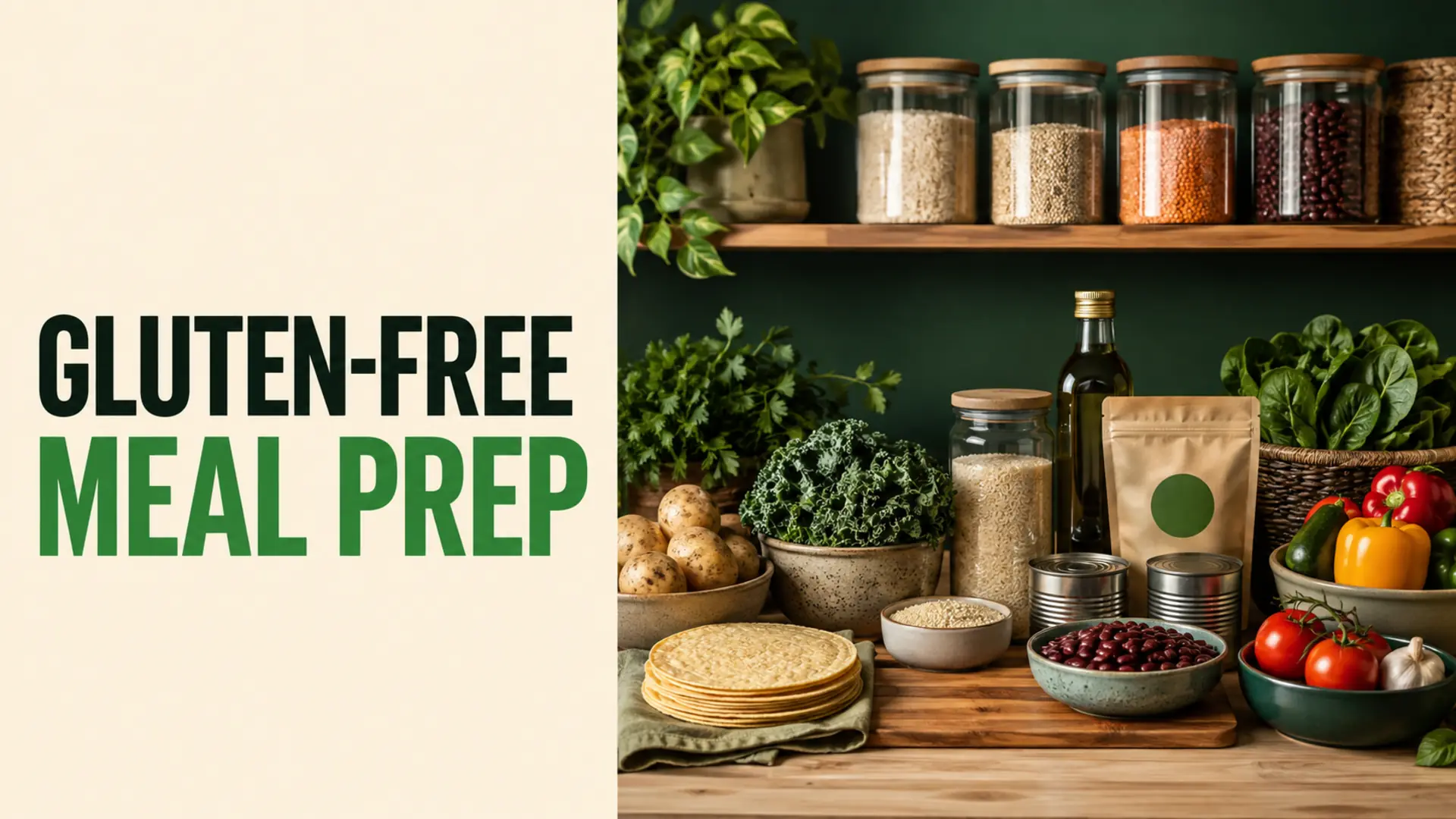
Gluten-free meal prep can be built around simple ingredients such as rice, potatoes, quinoa, beans, lentils, eggs, plain proteins, vegetables and fruit. The important step is not assuming that every version of a naturally gluten-free food is safe. Flavourings, sauces, processing and cross-contact can change whether a product is appropriate.
People follow gluten-free diets for different reasons, including celiac disease, medically diagnosed sensitivities and personal dietary choices. The level of precaution needed can differ. Anyone with celiac disease, a wheat allergy or another medical concern should follow advice from an appropriately qualified healthcare professional and the labelling rules where they live.
Essential staples for gluten-free meal prep
Use this list as a starting point, then check every packaged product. “Naturally gluten-free” describes the basic ingredient, not every processed, seasoned or restaurant version.
Grains and starchy foods
- Rice and wild rice
- Quinoa
- Potatoes and sweet potatoes
- Corn and products labelled gluten-free when required
- Buckwheat, despite its name
- Millet, sorghum and amaranth
- Oats specifically labelled gluten-free and suitable for the individual
Protein-rich staples
- Beans, chickpeas and lentils
- Eggs
- Plain tofu or tempeh after checking the label
- Plain meat, poultry, fish or seafood
- Yogurt, cheese or alternatives after checking ingredients
- Nuts, seeds and nut or seed butters with suitable labels
Produce and flavour builders
- Fresh or plain frozen vegetables
- Fresh or plain frozen fruit
- Herbs, spices and citrus
- Olive oil and suitable vinegars
- Gluten-free-labelled sauces, stocks and condiments when needed
Read labels every time
Recipes and product formulations can change, and products with similar names may be manufactured differently. Read the full label each time you buy a packaged food. Check the ingredient list, allergen information, gluten-free claim and any cross-contact statements that matter to your needs.
Gluten-free labelling rules vary by country. In the United States, the FDA’s gluten and food-labelling guidance explains the federal definition for foods carrying a gluten-free claim. Use the official authority for the country where the product is sold.
| Product type | What to verify |
|---|---|
| Stocks and soups | Thickeners, flavourings and the gluten-free claim |
| Sauces and marinades | Wheat, barley or other gluten sources and cross-contact information |
| Seasoning blends | All ingredients rather than assuming plain spices |
| Processed meats | Seasonings, binders, coatings and preparation information |
| Frozen vegetables | Whether sauces or seasonings have been added |
| Plant-based proteins | Grains, sauces and shared-equipment statements |
Understand the special case of oats
Regular oats can be exposed to wheat, rye or barley during growing, transport or processing. Requirements and terminology differ across regions. Health Canada permits gluten-free claims for specially produced oats under defined conditions, while the FDA requires oats carrying a gluten-free claim to meet the US gluten-free definition.
People with celiac disease should use oats only when they are suitable under local guidance and their healthcare plan. Health Canada’s gluten-free oats guidance explains the Canadian requirements.
Prevent gluten cross-contact during meal prep
Cross-contact happens when gluten is transferred to food intended to be gluten-free. The required setup depends on the household and the person’s medical needs. In a shared kitchen, pay attention to surfaces, appliances, utensils and foods that collect crumbs.
- Wash hands and clean preparation surfaces before starting.
- Use clean utensils, boards, pans and storage containers.
- Keep gluten-free ingredients away from flour dust and crumbs.
- Consider a separate toaster or toaster bags when required.
- Use a clean colander for gluten-free pasta.
- Avoid dipping a crumb-covered knife into shared butter, jam or spreads.
- Store clearly identified gluten-free foods in a protected area.
- Prepare gluten-free food first when that reduces the chance of transfer.
If the kitchen serves someone with celiac disease or a serious allergy, follow their clinical guidance rather than relying only on general household tips.
Build a flexible gluten-free meal-prep formula
Choose one item from each group and verify that every packaged component is suitable:
- Base: rice, quinoa, potatoes or another suitable grain or starch
- Protein-rich component: beans, lentils, eggs, tofu or plain animal protein
- Vegetables: fresh, frozen, roasted, steamed or raw
- Flavour: herbs, citrus and a checked sauce or dressing
- Optional topping: nuts, seeds, cheese or avocado
This structure can create grain bowls, salads, soups, tray meals and simple plated dinners without depending on specialty snack products. The adaptable choices in these high-protein meal prep plans can provide additional ideas, but every ingredient must still be reviewed for gluten suitability.
Create a gluten-free shopping list
Write specific product requirements where substitutions could cause a problem. “Soy sauce” may be too vague; “gluten-free-labelled tamari, verify label” gives the shopper a useful instruction. Do not assume tamari is always gluten-free, because formulations and manufacturing conditions vary.
- Choose the planned meals and number of portions.
- List naturally gluten-free ingredients.
- Mark packaged foods that require a gluten-free label or closer review.
- Add preferred brands only when they have been verified and remain suitable.
- Check pantry stock and read existing labels again.
- Note safe alternatives instead of accepting any substitution.
If the recipe yield needs adjusting, follow the method in How to Scale Meal Prep Recipes for 1, 2, or 4 People before combining the quantities.
Organize a shared pantry safely
Keep verified gluten-free ingredients clearly identified. Store open packages in clean sealed containers and retain the original label or essential product information. Do not combine new food with an older batch unless both products have been verified and the container is clean.
A regular pantry audit can remove unidentifiable packages and reveal ingredients that need rechecking. If other household members shop, agree that uncertain substitutions should be skipped or confirmed rather than guessed.
Prepare and store meals for the week
Use a prep sequence that protects the gluten-free food, then follow suitable food-safety guidance for cooking, cooling, refrigeration and freezing. Label containers clearly. The flexible workflow in the Sunday grocery prep guide can help organize the session, with cross-contact precautions added for the household’s needs.
Common gluten-free meal-prep mistakes
- Assuming “naturally gluten-free” means every product version is safe: check processing and labels.
- Using regular oats without verification: follow appropriate local and clinical guidance.
- Trusting a familiar product forever: formulations can change.
- Using shared crumb-covered appliances or condiments: assess cross-contact risks.
- Accepting unverified substitutions: give shoppers clear alternatives.
- Confusing celiac disease with a food allergy: both require care, but they are not the same condition.
- Depending only on specialty products: suitable whole-food staples can create flexible meals.
Keep the plan practical and medically appropriate
Gluten-free meal prep is easiest to manage when the household uses verified staples, reads labels consistently and controls cross-contact according to the person’s needs. Start with a few dependable meals and keep notes about suitable products, but recheck packaging when buying them again.
The existing Health Canada food-allergy guidance remains useful for diagnosed food allergies. Celiac disease is an autoimmune condition rather than a wheat allergy, so use celiac-specific medical and labelling guidance when that is the reason for avoiding gluten.