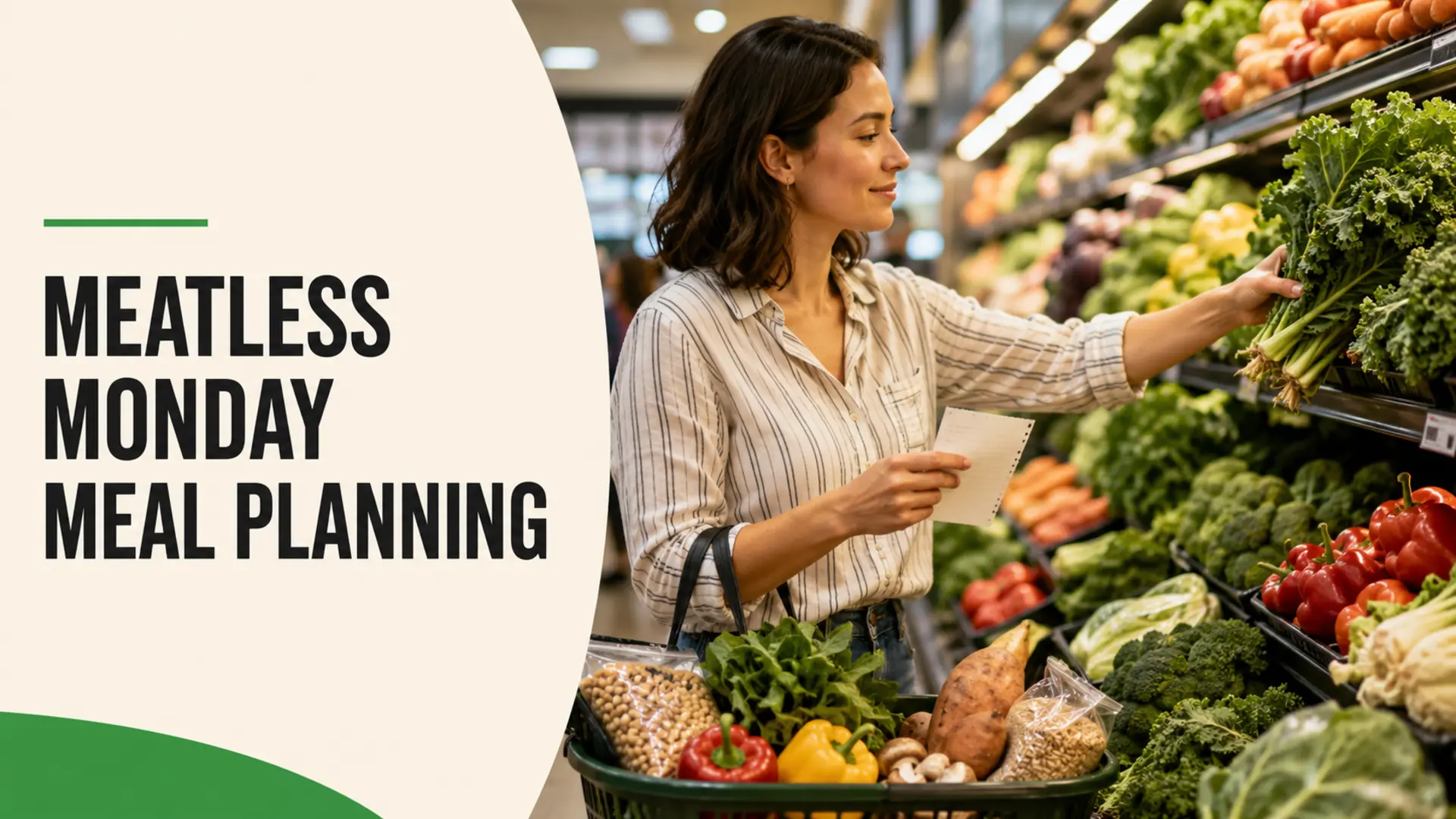
Meatless Monday meal planning works best when one satisfying dinner fits naturally into the rest of the week. Start with a familiar meal format, choose a practical protein source, and buy ingredients that can appear in lunches or other dinners. This keeps the weekly shop focused without treating Monday as a separate menu.
You do not need specialty products or an entirely new pantry. Beans, lentils, chickpeas, tofu, eggs, dairy or fortified alternatives can all play a role, depending on your preferences and dietary needs. The goal is a varied, enjoyable meal your household will want to repeat.
Why Meatless Monday Meal Planning Starts With the Week
Look at the full week before choosing Monday’s dinner. An ingredient is easier to justify when it has more than one destination. Spinach bought for a chickpea curry might go into an omelette or pasta later. Lentils can become both a sauce and a lunch bowl. This overlap reduces half-used packages and makes substitutions easier.
- Check the refrigerator, freezer and pantry before writing the list.
- Note any vegetables, cooked grains or sauces that should be used first.
- Choose Monday’s meal to use at least one existing ingredient.
- Plan one later meal that uses the remaining fresh items.
If inventory checks are new to you, use this simple pre-shopping pantry audit before making the weekly list.
Build a Satisfying Meatless Dinner
A useful dinner formula is: protein source + vegetables + carbohydrate + flavour builder. The amounts depend on appetite, household size and what else is served. Think in flexible components instead of searching for a perfect meat substitute.
Choose a protein source
Options include beans, lentils, chickpeas, tofu, tempeh, eggs, yogurt, cheese, nuts and seeds. Mix and match according to allergies, dietary pattern and availability. People following a fully vegan pattern may also need to pay attention to fortified foods and nutrients such as vitamin B12; the NHS vegetarian-diet guide offers a practical overview of variety and food groups.
Add vegetables and a carbohydrate
Fresh, frozen and canned vegetables are all useful. Pair them with rice, pasta, bread, tortillas, potatoes or another grain that suits the dish. A familiar base can make a new filling or sauce feel approachable.
Finish with flavour and texture
Tomato paste, mushrooms, herbs, spices, citrus, vinegar, miso or soy sauce can add depth. Toasted seeds, chopped nuts, crisp vegetables or breadcrumbs can provide contrast. Check labels when allergies, gluten or sodium are concerns.
Five Adaptable Meatless Monday Ideas
Lentil tomato pasta
Cook onions, carrots and mushrooms, then stir in cooked or canned lentils and tomato sauce. Serve with pasta and greens. Use leftover sauce in a baked potato or grain bowl.
Black bean taco bowls
Combine seasoned beans with rice, cabbage, tomato, corn and a yogurt- or avocado-based topping. The same ingredients can fill tacos or wraps later in the week.
Chickpea vegetable curry
Simmer chickpeas with vegetables, curry spices or paste, and tomatoes or coconut milk. Serve with rice. Confirm that prepared sauces suit the household’s dietary needs.
Tofu sheet-pan dinner
Roast pressed tofu with broccoli, peppers and sweet potato, using a dressing or spice blend you already enjoy. For more component ideas, see this sheet-pan dinner grocery guide.
Vegetable frittata or chickpea-flour bake
Use cooked vegetables, herbs and cheese in an egg frittata, or choose a suitable egg-free chickpea-flour bake. Serve with potatoes, toast or salad. Cook egg dishes safely and check doneness with current FoodSafety.gov temperature guidance.
Make a Focused Grocery List
Write the list around the selected meal and the ingredients already at home. A compact list might include one main protein source, two or three vegetables, one carbohydrate and a few flavour builders. Add only the optional toppings your household is likely to use.
- Protein: beans, lentils, chickpeas, tofu, tempeh, eggs or dairy
- Vegetables: one sturdy option, one quick-cooking option and any use-first produce
- Carbohydrate: rice, pasta, tortillas, bread, potatoes or grains
- Flavour: herbs, spices, aromatics, sauce ingredients and an acidic finish
- Texture: nuts, seeds, crisp vegetables or breadcrumbs, if useful
For more pantry choices that work across several meals, review these vegetarian meal prep staples.
Plan Quantities Without Guesswork
Start with the number of people eating and whether anyone wants leftovers. Check package sizes and recipes, but adjust for appetite and side dishes. If a can, bunch or package will not be fully used, name its second use before buying it. Freeze suitable extras promptly or choose a smaller package when that makes more sense.
When a recipe serves more or fewer people than you need, this guide to scaling recipes and grocery lists can help you revise quantities deliberately.
Prepare a Few Components Ahead
A small amount of preparation can make Monday easier: cook a grain, rinse canned beans, chop sturdy vegetables or mix a sauce. Keep perishable foods refrigerated, use clean utensils and store prepared components in covered containers. Follow product directions and local food-safety guidance rather than relying on a universal storage timeline.
Handle Different Preferences
Use a build-your-own format when tastes differ. Taco bowls, grain bowls, baked potatoes and noodle dishes allow people to choose toppings while sharing the same base. Introduce one unfamiliar ingredient at a time, and keep a familiar sauce, side or texture in the meal. Meatless Monday can be vegetarian, vegan or simply plant-forward according to household needs.
Review and Improve Next Week
After dinner, note what was popular, what remained and what should change. Save successful combinations as reusable list templates. If an ingredient repeatedly goes unused, replace it with something more versatile rather than buying it from habit.
A Practical Meatless Monday Routine
- Check the food already at home.
- Choose one familiar meal format.
- Add a suitable protein source, vegetables and a carbohydrate.
- Plan a second use for vulnerable ingredients.
- Shop with a focused list.
- Prepare only the components that will genuinely help.
- Record what worked for the next week.
Good Meatless Monday meal planning is less about rigid rules and more about designing one appealing dinner that supports the whole week. Start with ingredients your household likes, build in overlap, and let successful meals become part of your regular rotation.