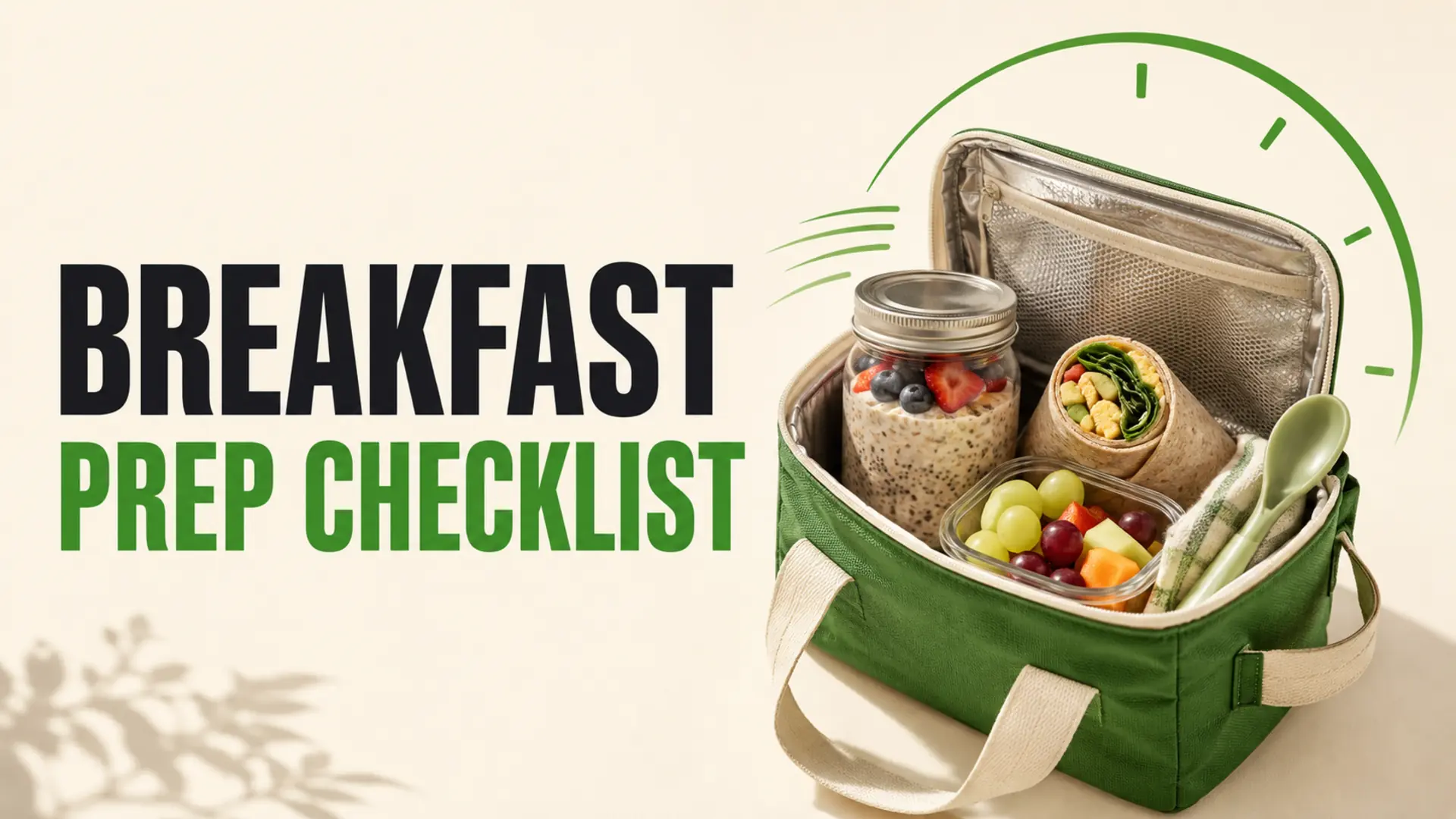
A practical breakfast prep checklist helps you choose a few portable breakfasts, buy realistic quantities, prepare components safely, and avoid deciding what to eat during a busy morning. It does not require a fixed Sunday routine, protein powder, specialty ingredients, or the same meal every day.
Start with the mornings that genuinely need advance preparation. Then choose two or three breakfast formats that match your appetite, equipment, commute, dietary needs, and access to refrigeration.
Breakfast prep checklist: plan before shopping
- Count how many breakfasts need to be prepared.
- Check the refrigerator, freezer, and pantry.
- Choose two main breakfast formats and one backup option.
- Confirm access to a refrigerator, microwave, toaster, or cutlery.
- Note allergies, dietary requirements, and foods that do not travel well.
- Decide which items will be refrigerated and which will be frozen.
- Add only the missing ingredients to the grocery list.
This quick audit prevents buying five jars of overnight oats when only two mornings require a packed breakfast.
Choose portable breakfast formats
Use flexible formats rather than rigid recipes. Each one can be adjusted with different grains, fruit, vegetables, proteins, and flavours.
Overnight oats or breakfast jars
Combine rolled oats with milk or a suitable alternative, then add fruit, seeds, yogurt, nut butter, or spices according to preference. Keep crunchy toppings separate until serving. A leak-resistant container is more important than a particular jar size.
Egg muffins or mini frittatas
Cook eggs thoroughly with vegetables, cheese, beans, or cooked meat. Portion the mixture in a muffin pan or small baking dish. Baking time varies with the recipe, pan, oven, and ingredient temperature, so use visual doneness and an appropriate food thermometer rather than a universal timer.
Breakfast wraps
Fill tortillas or flatbreads with combinations such as eggs and vegetables, beans and salsa, tofu scramble, or cheese and spinach. Cool cooked fillings before wrapping and freezing. Avoid overfilling, which makes wraps difficult to seal and reheat evenly.
Baked oats, muffins, or breakfast bars
Oats, fruit, eggs or egg alternatives, milk, seeds, and nuts can form sliceable breakfasts. Follow a tested recipe when ingredient ratios affect structure or food safety, especially when working with raw eggs or flour.
No-cook backup breakfasts
Keep one low-effort option for disrupted weeks: whole fruit with yogurt, whole-grain toast with nut or seed butter, a simple cereal, or a pre-portioned trail mix paired with another suitable food. See our guide to no-cook meal-prep shopping for more ideas.
Build a flexible breakfast grocery list
Choose from each category rather than buying every item.
- Grains and bases: oats, whole-grain bread, tortillas, cereal, cooked grains, or potatoes
- Protein choices: eggs, plain yogurt, cottage cheese, milk, fortified soy alternatives, tofu, beans, nuts, or seeds
- Fruit: bananas, apples, citrus, berries, grapes, stone fruit, frozen fruit, or seasonal local options
- Vegetables: spinach, peppers, tomatoes, mushrooms, onions, broccoli, or leftover cooked vegetables
- Flavour and texture: cinnamon, vanilla, herbs, salsa, nut or seed butter, seeds, or unsweetened coconut
- Storage supplies: leak-resistant containers, freezer-safe wraps, labels, and an insulated bag if needed
Fresh, frozen, canned, and dried foods can all be useful. “Organic,” “wild,” “pasture-raised,” or a particular branded variety is optional, not a requirement for successful breakfast preparation.
Match quantities to your week
The original draft prescribed large batches, but a standard yield will not fit every household. Start with the number of breakfasts you need, then account for variety and changing plans.
For example, a five-day workweek might include two oat jars, two wraps, and one flexible breakfast at home. If several people are eating, confirm their preferences before multiplying the recipe. Our guide to scaling meal-prep recipes explains how to adjust quantities without automatically doubling every ingredient.
Use a short preparation sequence
- Clear work surfaces and wash hands, utensils, and produce as appropriate.
- Cook components that need the longest cooling time first.
- Prepare fruit, vegetables, dry toppings, and no-cook items.
- Cool cooked foods promptly in shallow containers.
- Portion only the servings you expect to use.
- Label containers with the item and preparation or freezing date.
- Place near-term breakfasts in the refrigerator and longer-term portions in the freezer.
A sequence keeps the kitchen manageable and reduces cross-contamination. For a broader weekly workflow, use this flexible grocery-prep routine; preparation can happen on any day that suits your schedule.
Store prepared breakfasts safely
Food type, ingredients, refrigerator temperature, and handling all affect storage time. Do not give every breakfast the same shelf life. Use the current FoodSafety.gov cold-storage chart and the product or tested recipe guidance for the specific food.
FoodSafety.gov advises refrigerating leftovers promptly in shallow containers. Keep raw eggs and raw meat away from ready-to-eat fruit and cooked foods. If transporting a perishable breakfast, use an insulated bag with adequate cold packs and refrigerate it when possible.
If a food looks or smells unusual, or you are uncertain about how long it has been outside safe temperature control, discard it. Smell alone cannot establish that food is safe.
Reheat without relying on a fixed microwave time
Microwave wattage, serving size, starting temperature, shape, and filling all affect reheating. A universal instruction such as “30 seconds” or “90 seconds” can leave cold spots.
Remove foil and use a microwave-safe container. Cover, rotate or stir where practical, allow standing time, and check several areas. FoodSafety.gov lists 165°F (74°C) for reheated leftovers and 160°F (71°C) for egg dishes. Follow the guidance relevant to the prepared item.
Make breakfast prep work without nutrition promises
Breakfast needs vary. Not every serving must provide a fixed 25–35 grams of protein, and no batch-cooked meal can guarantee “clean energy,” prevent a slump, or suit every health goal. Build meals around your needs and seek individualized advice from a qualified professional when appropriate.
You can add protein or fibre using foods you already enjoy, but avoid assuming supplements are necessary. If smoothies are part of the rotation, this smoothie-prep list and freezing guide provides adaptable combinations.
Review the checklist after one week
Notice which breakfasts were eaten, which became repetitive, what leaked or reheated poorly, and what was left over. Reduce the next batch, change the container, or replace an unpopular format. The most effective breakfast prep checklist is the one that matches your real mornings rather than an idealized routine.
Plan a small rotation, shop from what you already have, prepare with safe storage in mind, and keep one easy backup available. That creates a useful morning system without exaggerated promises or unnecessary food waste.