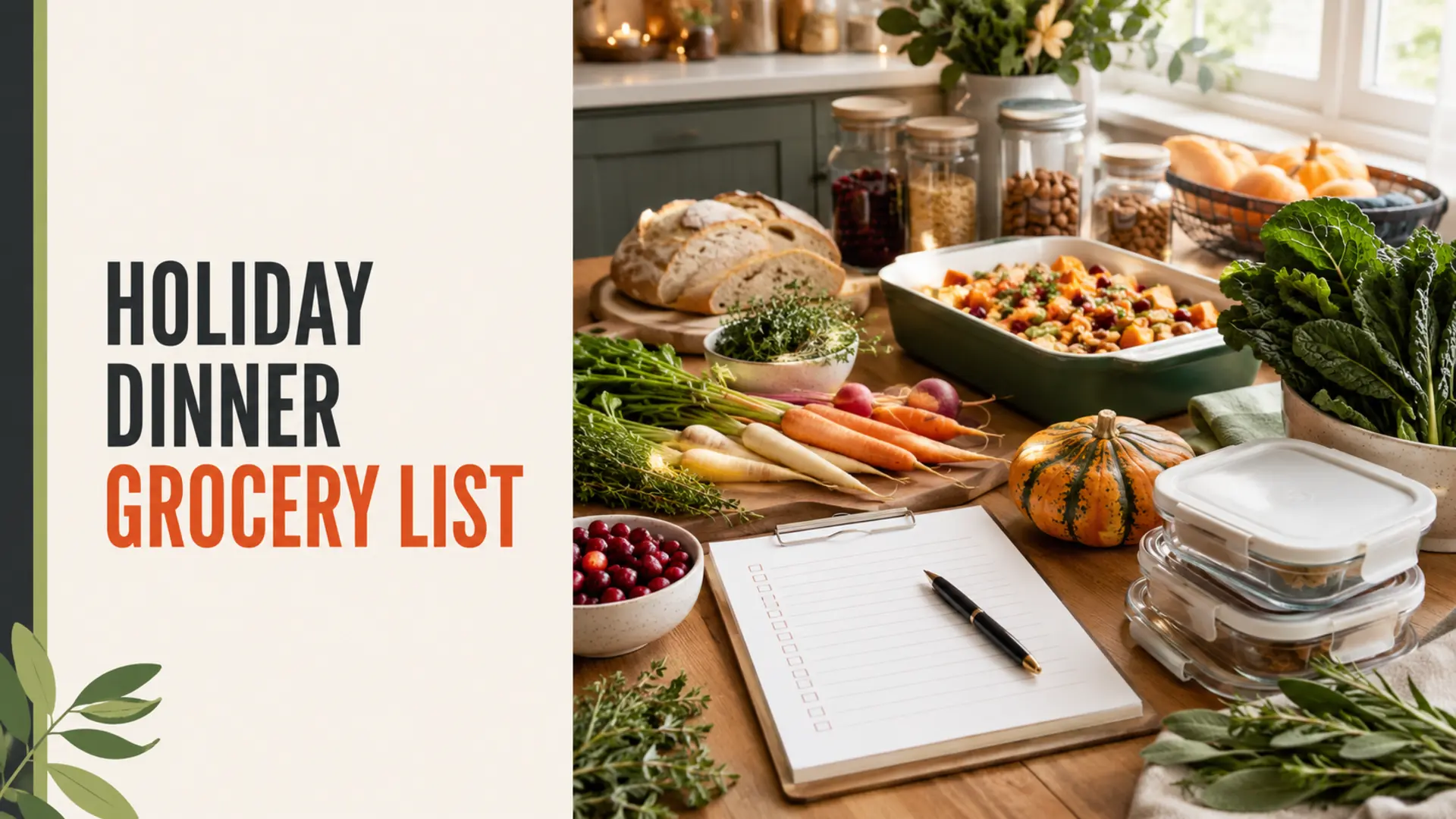
A well-organized holiday dinner grocery list turns a complex gathering into a manageable series of decisions. Instead of relying on universal portion formulas or one rushed shopping trip, plan around your guest count, menu, dietary needs, storage space and local availability. This flexible template works for many celebrations and food traditions.
Build your holiday dinner grocery list from the menu
Start by writing the dishes you intend to serve, including drinks, condiments and any food guests are bringing. Separate confirmed dishes from optional extras so the list does not grow without limits. If recipes serve different numbers, use a consistent guest count and scale each recipe carefully before combining ingredients.
Then check your pantry, refrigerator and freezer. A quick pantry audit can prevent duplicate purchases of flour, spices, oils, canned goods and baking supplies. Confirm that opened ingredients are still suitable and that you have enough usable quantity.
Confirm guests and dietary needs
Ask guests about allergies, medically necessary restrictions, religious or cultural requirements and strong preferences before finalizing the menu. Do not assume that removing one visible ingredient makes a dish safe for someone with an allergy; packaged-food labels, shared utensils and preparation surfaces also matter.
Mark each dish as suitable, adaptable or unsuitable for each relevant guest. When cross-contact is a concern, discuss the plan directly with the person affected and keep ingredient labels available. If the kitchen cannot safely meet a requirement, consider a clearly sealed alternative from a trusted source rather than promising a risk-free homemade dish.
Use flexible quantities instead of universal formulas
Serving needs vary with the menu, guest ages, appetite, event length, number of courses and whether leftovers are desired. Recipe yields and package guidance are better starting points than a fixed amount per person.
- Main dishes: use the recipe yield, then adjust for bone-in portions, multiple mains and dietary alternatives.
- Side dishes: plan smaller portions when several sides are offered and larger ones when the menu is simple.
- Bread and starters: consider how long guests will wait before the main meal and how filling the first courses are.
- Desserts: smaller pieces may work when several desserts are available.
- Drinks: offer water and non-alcoholic choices, then tailor other beverages to the event and guests.
Build in a modest buffer where it is useful, but avoid multiplying every recipe “just in case.” Intentional leftovers need refrigerator or freezer space and a plan for safe storage.
Complete holiday dinner grocery list template
Main dishes and alternatives
- Chosen meat, poultry, seafood or plant-based centrepiece
- Ingredients for marinades, sauces, gravy or accompaniments
- A clearly planned alternative for guests who need one
- Cooking oil, stock or other recipe liquids
Vegetables and side dishes
- Potatoes, grains, pasta or another starch
- Two or more vegetables suited to the menu
- Salad ingredients and dressing components
- Herbs, aromatics, citrus and garnishes
Baking and desserts
- Flour, sugar, leaveners and spices required by the recipes
- Butter or suitable alternative, eggs and dairy or substitutes
- Fruit, chocolate, nuts or other fillings and toppings
- Ready-made dessert if baking capacity is limited
Drinks and serving essentials
- Water, tea, coffee and non-alcoholic beverages
- Ice and drink garnishes where appropriate
- Foil, parchment, storage containers and food labels
- Napkins or other genuinely needed serving supplies
Divide shopping into practical stages
The right shopping timeline depends on the food, storage instructions and your schedule. Use three adaptable stages rather than fixed holiday dates.
Early shop: shelf-stable and frozen items
Buy pantry ingredients, frozen foods, beverages and non-food essentials once the menu is confirmed. This is also the time to order specialty products or a centrepiece that may have limited availability. Check freezer space before purchasing a large frozen item.
Middle shop: sturdy perishables
Buy foods that store well under their labelled conditions, such as root vegetables, some dairy products and sturdy produce. Follow package dates and food-specific storage guidance rather than assuming all items keep for the same period.
Final shop: delicate and highly perishable foods
Purchase delicate greens, fresh herbs, bakery items and other short-lived ingredients close enough to the event to protect quality. Fresh meat, poultry and seafood require prompt refrigeration and should be bought according to safe storage time, not merely convenience.
Plan thawing and cooking safely
If the menu includes frozen meat or poultry, calculate thawing time from its weight and the approved method. Never thaw food on the counter. FoodSafety.gov recommends refrigerator thawing as the safest approach and provides specific guidance for preparing holiday turkey safely. Cold-water or microwave thawing requires immediate cooking.
Use a food thermometer and follow the safe internal temperature for the specific food. Keep raw foods separate from ready-to-eat ingredients, wash hands and utensils appropriately, and refrigerate perishables promptly.
Map preparation to equipment and refrigerator space
Write the cooking temperature, estimated oven time and serving vessel beside each dish. Identify conflicts before the event: several dishes may require the same oven, burner, mixer or refrigerator shelf. Choose some room-temperature, stovetop or make-ahead dishes if equipment is limited.
Clear space safely rather than leaving perishable food unrefrigerated. Label prepared components, group ingredients by recipe and keep raw proteins contained on a low refrigerator shelf to reduce leakage risk.
Plan useful leftovers, not accidental excess
Decide which dishes you would genuinely eat again and prepare storage containers before serving. Divide leftovers into shallow containers and refrigerate promptly. Consult the official cold-food storage chart for food-specific guidance.
Turn compatible leftovers into planned meals, freeze suitable portions or send food home only when it can be transported safely. For broader planning ideas, the zero-waste meal plan explains how to assign ingredients before buying more.
Final holiday shopping check
- Confirm the guest count and dietary information.
- Finalize the menu and note guest contributions.
- Scale recipes and combine duplicate ingredients.
- Check pantry stock, storage space and equipment.
- Group the list into early, middle and final shops.
- Schedule safe thawing and preparation tasks.
- Prepare containers and a plan for leftovers.
Use the template as a flexible guide
A holiday dinner grocery list should support the celebration, not create another rigid standard to meet. Match the plan to your guests, recipes, kitchen and traditions. Thoughtful quantities, staged shopping and safe storage can make the meal easier to manage while limiting forgotten ingredients and unnecessary excess.