Food waste hurts your household budget because every forgotten leftover, spoiled vegetable and duplicate purchase represents money already spent. The good news is that you do not need a perfect zero-waste kitchen. A short inventory check, a flexible meal plan and a clear “eat first” routine can help you buy with more purpose and use more of what you bring home.
How food waste affects your household budget
The cost of wasted food varies by household, location, diet and grocery prices, so universal savings figures can be misleading. The simplest way to understand your own cost is to track what you discard for two weeks. Note the item, approximate amount and why it was not used. Common causes include buying without checking the kitchen, choosing packages that are too large, changing meal plans and storing food where it is easy to overlook.
This small audit turns an abstract problem into a practical shopping decision. If salad greens repeatedly spoil, you might buy a smaller quantity, choose a sturdier vegetable or plan the most perishable meal earlier in the week.
Start with a five-minute kitchen inventory
Before making your grocery list, check the refrigerator, freezer and pantry. Look for open packages, produce that should be used soon and ingredients already available for planned meals. A repeatable pantry audit checklist can help you maintain a more accurate inventory between larger clean-outs.
- Move older items to the front so they stay visible.
- Add only genuinely missing ingredients to your list.
- Mark foods that should shape the next few meals.
- Check storage space before buying bulky or frozen items.
Build meals around food you already have
Inventory-first meal planning is one of the most useful ways to reduce food waste and protect a household budget. Choose two or three ingredients that need attention, then match them with flexible meal formats such as soups, grain bowls, pasta, omelettes or tray bakes. The goal is not to force unrelated leftovers together; it is to give usable food a clear role before buying more.
If a recipe makes more than your household needs, use a reliable method to scale meal-prep recipes. Smaller batches can be more economical when leftovers are unlikely to be eaten or frozen safely.
Create an “eat first” area
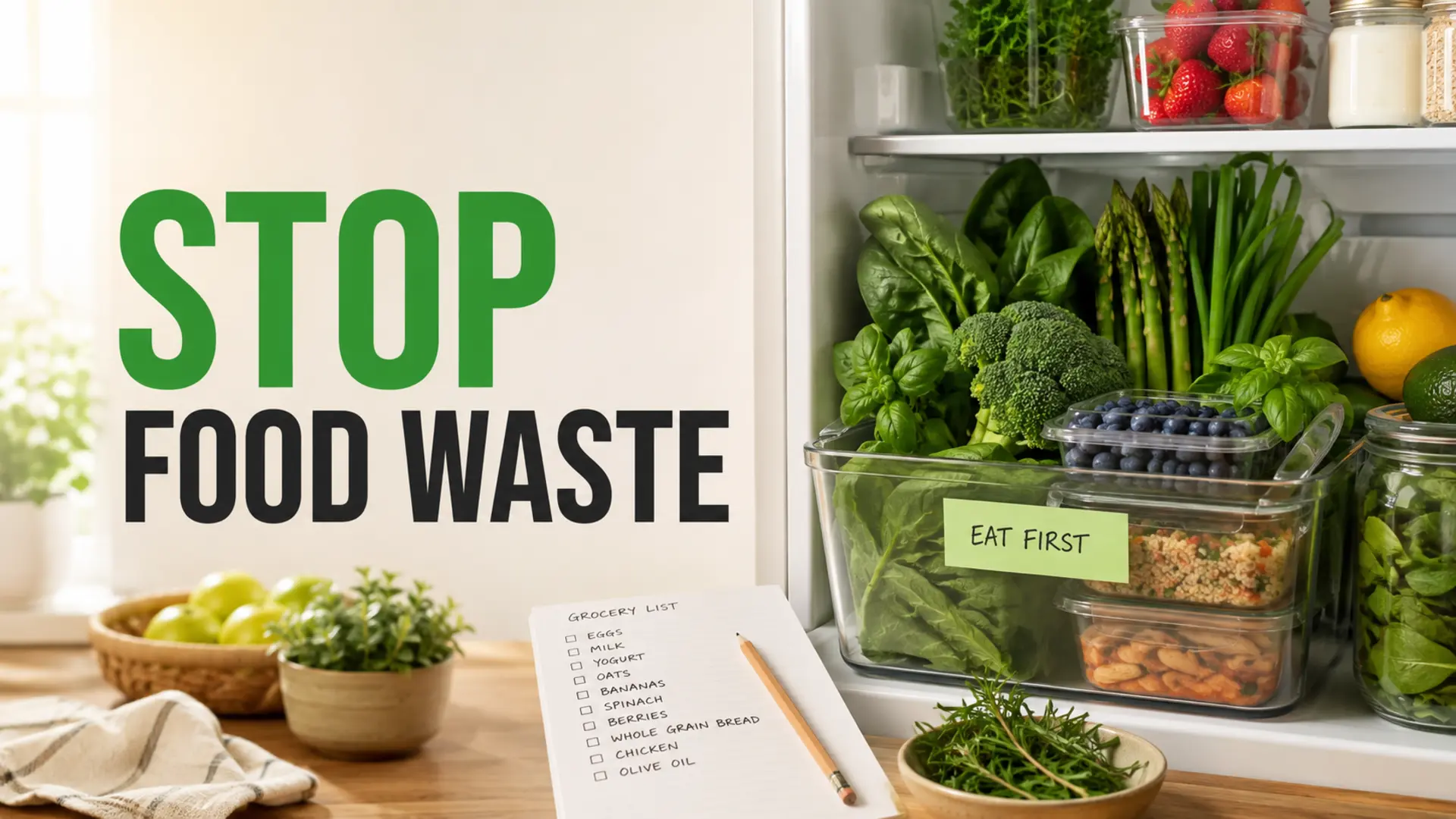
Dedicate one visible refrigerator shelf or clear container to ingredients and cooked foods that should be used next. Keep the label simple and review it when planning breakfast, lunch or dinner. Do not rely on a fixed number of days for every food: storage time depends on the item, preparation method, temperature and packaging. When safety is uncertain, consult a reputable food-storage resource rather than tasting food to test it.
The U.S. Environmental Protection Agency also recommends planning, shopping thoughtfully and storing food properly in its guide to preventing wasted food at home.
Shop in quantities your household can finish
A larger package is not automatically better value. Compare the unit price, but also consider how much your household will realistically use. Loose produce, smaller packages or frozen alternatives may cost more per unit yet waste less overall. For unfamiliar products, start small before committing to a bulk purchase.
Organize the final list in the order you shop. This supermarket aisle list method makes it easier to review categories, spot duplicate items and keep chilled purchases together near the end of the trip.
Use a weekly leftover reset
Choose a regular time to review leftovers and soon-to-expire ingredients. Turn suitable items into a planned lunch, a mixed meal or clearly labelled freezer portions. Freeze only foods that handle freezing well, cool cooked food promptly and label packages with the contents and date. A weekly reset works best before the next shopping trip, while there is still time to adjust the list.
Measure progress without chasing perfection
After each shopping cycle, ask what was discarded and why. Then make one small adjustment: buy less of one ingredient, move a food to a more visible location or change the order of planned meals. A waste-aware meal plan can help turn those observations into a practical routine.
Reducing food waste is not about using every scrap at any cost. It is about aligning purchases with your actual schedule, appetite and storage capacity. With a short inventory, a focused grocery list and a consistent review habit, you can make your household budget work harder while keeping meals flexible and realistic.