
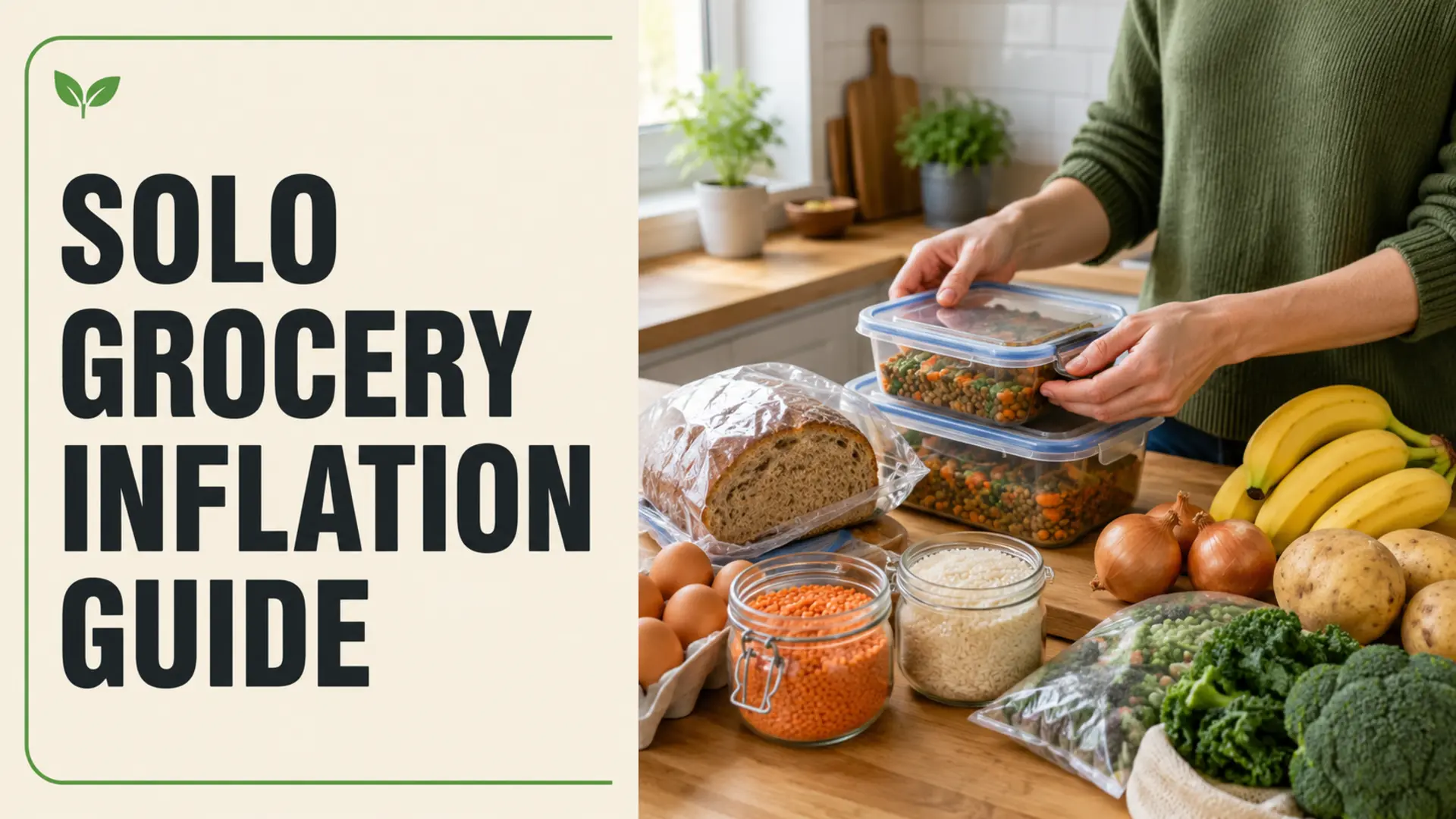
Managing grocery inflation for one person is less about predicting prices and more about responding to what your own receipts show. Solo shoppers cannot always use large packages efficiently, but they can compare unit prices, buy flexible quantities, portion suitable foods and reduce waste. The goal is a repeatable system that fits local prices, available storage and the way you actually eat.
Track Grocery Inflation for One Person With Receipts
Save several weeks of receipts and identify the foods you buy repeatedly. Record the package size and regular price rather than relying only on promotional prices. A simple grocery price book helps you notice when a staple changes price, shrinks in size or becomes less competitive than an alternative.
- Choose 10 to 20 frequently purchased staples.
- Record the store, date, package size and unit price.
- Note whether the price required a loyalty account or multi-buy.
- Review monthly instead of checking every product every week.
Calculate a Real Solo Grocery Baseline
Separate food from cleaning products, toiletries, delivery fees and restaurant meals. Average several normal weeks so one stock-up trip does not distort the result. The guide to calculating real grocery cost per person provides a consistent method for comparing periods.
When spending rises, look at both prices and behaviour. A higher total may reflect a price increase, more meals at home, a larger package bought for future weeks or food waste. The cause determines the useful response.
Buy the Quantity You Can Actually Use
Loose produce, smaller packages and service-counter quantities can reduce waste, but they are not universal rules. Compare the unit price with the amount you expect to eat. A bag of onions may still be better value when onions appear in several planned meals; two loose onions may be better when your schedule is uncertain.
Usable value = purchase price ÷ amount likely to be eaten. This is often more helpful for a solo household than package price alone.
Build Meals Around Flexible Components
Choose ingredients that can move between several meal formats. Rice, pasta, potatoes, bread or another local staple can provide a base. Eggs, beans, lentils, tofu, fish, poultry or other suitable foods can provide protein. Fresh, frozen and canned produce can be mixed according to price, texture and storage needs.
- Grain bowl: base, protein, vegetables and sauce
- Soup or stew: vegetables, protein and broth
- Pasta: sauce, vegetables and optional protein
- Egg meal: vegetables, toast or potatoes
- Tray meal: a few ingredients cooked together
Repeating components is not the same as eating an identical meal all week. Change the final format, seasoning or vegetable while using the same core ingredients.
Scale Recipes for One or Two Portions
Reduce recipes carefully and note which ingredients do not divide neatly. Some dishes are worth cooking in a larger batch because they store well; others are better prepared as one or two servings. Use this guide to scale meal-prep recipes while accounting for cookware, cooking time and package sizes.
Freeze Strategically, Not Automatically
Freezing can make larger purchases practical when the food freezes well, the freezer has space and portions will be used. Divide suitable meat, bread, cooked grains, soups or prepared meals into labelled portions. Follow product and food-safety guidance for cooling, storage and reheating.
Not every cheese, vegetable, sauce or cooked dish keeps the same texture after freezing. Test a small portion before preparing a large batch, and never freeze food merely to avoid making a decision about it.
Mix Fresh, Frozen and Shelf-Stable Food
Fresh produce can offer flavour and texture; frozen produce allows flexible portions; canned produce and legumes can provide convenient backup. Compare the complete edible quantity, ingredient list and intended recipe. The frozen versus fresh produce guide explains how to compare unit price, yield, texture and storage fairly.
Use a Two-Level Solo Shopping List
Put meal-critical items in an essentials section. Put flexible additions in an optional section. Add quantities and substitutes beside each item so you can respond to a high price without rebuilding the entire plan in the aisle.
- Essential: completes a planned meal
- Substitute: an acceptable lower-cost alternative
- Optional: purchased only if useful and within the limit
- Restock later: not needed during this trip
Evaluate Promotions for a Household of One
Multi-buy offers, family packs and loyalty rewards are useful only when the final unit price is competitive and the quantity can be stored and consumed. Check whether the promotion requires buying several units. A single regularly priced item may cost less overall and preserve cash for other needs.
Keep Convenient Backup Meals
A solo budget can be disrupted by one exhausting evening. Keep one or two practical backup meals that are faster than ordering food: soup with toast, eggs and frozen vegetables, pasta and beans, a frozen homemade portion or another familiar option. Convenience foods can be useful when they prevent a more expensive unplanned purchase.
Review Waste Before Cutting Variety
For one week, record what was discarded and why. The issue may be package size, an unrealistic recipe, poor visibility in the refrigerator or a schedule change. Adjust quantities and storage before eliminating foods you enjoy. Reducing avoidable waste is different from imposing an unnecessarily restrictive menu.
Adapt the Plan as Prices Change
Review the price book, grocery baseline and unused food once a month. Replace one expensive staple at a time, test the alternative and keep it only if it works. Changing several foods at once makes it difficult to see which adjustment helped.
Make Solo Shopping Work for Real Life
A practical response to grocery inflation for one person combines price tracking, usable quantities, flexible meals and safe storage. Compare local unit prices, portion only foods that keep well, mix fresh and shelf-stable options, and preserve a little convenience. A resilient solo plan is one you can repeat without excessive waste or an unrealistic amount of cooking.
Frequently Asked Questions
Why can groceries cost more per person for a single household?
One-person households may face package sizes designed for families, fewer bulk efficiencies, and more waste risk. They also have full responsibility for delivery fees and travel. Careful portioning, flexible recipes, and buying the usable quantity matter more than automatically choosing the lowest unit price.
How much should one person spend on groceries?
There is no universal amount. Location, dietary needs, income, eating-out habits, cooking facilities, and local prices all matter. Track several normal weeks and build a personal baseline. Compare primarily with your own history rather than an online average.
Is bulk buying worthwhile for one person?
Only for foods used regularly that store well and offer a genuine lower unit price. Cash flow and storage still matter. Split suitable purchases with another household when safe and practical, or choose the smaller package if it prevents waste.
How can one person use fresh produce before it spoils?
Buy smaller quantities, choose a mix of long- and short-lived produce, schedule delicate items early, and freeze suitable portions before quality declines. Use flexible dishes that accept several vegetables. Pre-cut or frozen options may be economical when they improve actual use.
What are good meal-planning strategies for one person?
Plan two or three meal components rather than seven separate recipes. Cook a base, protein, and vegetables, then change sauces or formats. Freeze some portions immediately and leave room for schedule changes so leftovers do not become an obligation.
How should a solo shopper compare unit prices?
Use unit price to understand value, then consider the total package cost and likelihood of finishing it. A family pack can be cheaper per kilogram but more expensive per eaten serving if part is discarded. Usable cost is the better decision metric.
Can frozen foods help a one-person grocery budget?
Yes. Plain frozen vegetables, fruit, proteins, bread, and prepared components can allow small portions and longer storage. Check ingredients, package directions, and freezer capacity. Label opened packages so the convenience does not turn into forgotten waste.
How can a single person handle food-price inflation?
Track a short list of frequently purchased items, substitute within meal functions, compare fresh, frozen, canned, and dried forms, and keep a backup meal. Adjust the budget when necessary rather than reducing adequate food to defend an outdated target.
Are meal kits good value for one person?
They may reduce planning and specialty-ingredient waste, but many plans provide two or more servings and include fees. Compare the complete cost with groceries, takeout, and freezer-friendly cooking. Confirm that the extra portion will actually be eaten.
How can I avoid cooking fatigue when living alone?
Keep easy meals available, alternate cooking with planned leftovers, use convenient components that genuinely help, and freeze portions before repetition becomes tiring. An efficient plan should reduce work, not require daily scratch cooking to meet the budget.