A grocery price book is a simple record of what you normally pay for frequently purchased foods and household essentials. By tracking package size, unit price, store and date, you can recognize whether an advertised promotion is genuinely better than the prices you usually see.
You do not need to track every supermarket item or predict a fixed sales cycle. Start with the products your household buys often, collect a few observations and let your own shopping history become the benchmark.
What to Record in a Grocery Price Book
- Item: the product category, such as rolled oats or canned beans.
- Brand or variety: only when it affects quality or suitability.
- Package size: weight, volume or count.
- Unit price: cost per 100 grams, ounce, litre or item.
- Store: the retailer or location where you found it.
- Date: useful when prices change over time.
- Conditions: loyalty requirement, multi-buy quantity or other restriction.
Unit price is more useful than package price when sizes differ. If you need help standardizing comparisons, follow our guide on how to use unit pricing.
How to Build a Grocery Price Book
1. Choose 10 to 20 Regular Purchases
Begin with staples that appear repeatedly on your list. Pantry foods, cleaning supplies, dairy alternatives or other routine purchases provide more useful data than occasional speciality items. A quick monthly pantry audit can help identify what you actually use.
2. Select a Format You Will Maintain
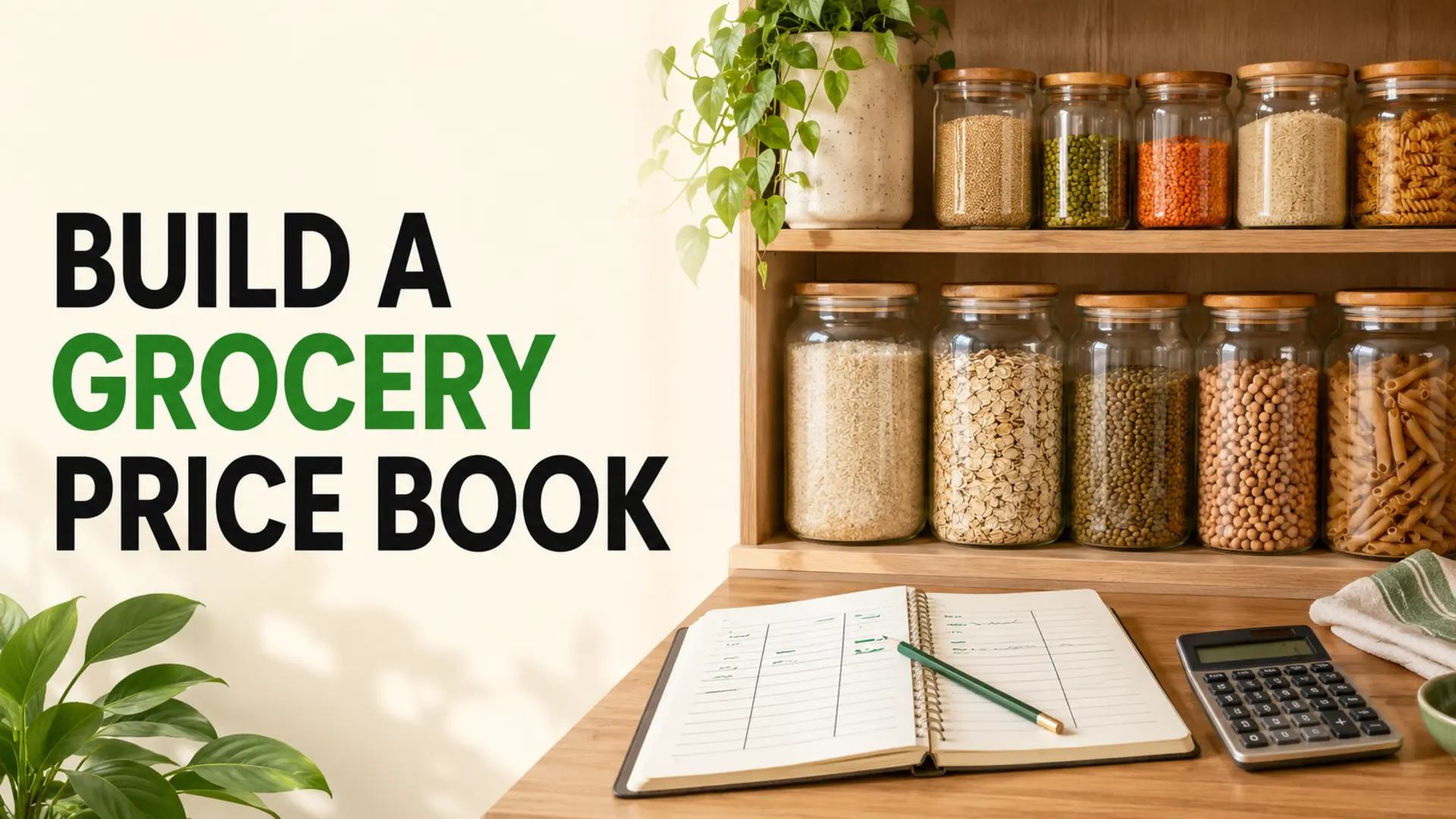
A paper notebook, spreadsheet or basic notes document can all work. Use whichever option is easy to update while shopping or reviewing a receipt. Avoid building a complicated system that takes more effort than the decisions it supports.
3. Record Comparable Prices
Enter the package price and size, then calculate or copy the unit price. Compare similar products using the same measurement. Note meaningful differences such as concentration, ingredients or dietary requirements instead of treating every item as interchangeable.
4. Update It Gradually
You do not need several months of data before the book becomes useful. Add an entry when you buy an item, see a promotion or review a receipt. Over time, repeated observations will show the price range you encounter most often.
A Simple Grocery Price Book Template
| Item | Package size | Price | Unit price | Store | Date | Notes |
|---|---|---|---|---|---|---|
| Rolled oats | Your package size | Observed price | Price per standard unit | Store name | Purchase date | Regular or promotional |
| Canned beans | Your package size | Observed price | Price per standard unit | Store name | Purchase date | Multi-buy conditions |
Use your own local prices rather than copying someone else’s targets. Prices, package sizes, currencies, taxes and product availability differ between regions and can change over time.
How to Spot a Genuine Supermarket Sale
- Compare the promotional unit price with your recorded usual range.
- Check whether the discount requires a loyalty account or minimum quantity.
- Confirm that a different package size is not creating a misleading comparison.
- Consider whether you will use the product before quality declines.
- Compare suitable alternatives, including store brands where appropriate.
A bright sale label is an invitation to investigate, not proof of value. Combine your price history with meal planning around supermarket sales flyers so discounted ingredients support meals you already intend to prepare.
Decide Whether to Stock Up
A strong unit price does not automatically justify a large purchase. Check available cash, storage space, household consumption and food-safety requirements. Buy a quantity that fits your normal use rather than relying on universal stock-up rules.
For perishables, decide how the item will be cooked, refrigerated or frozen before adding extra packages. For shelf-stable goods, check dates and rotate older stock forward. This keeps a promotion from becoming waste.
Common Price Book Mistakes
- Recording only the checkout price and omitting package size.
- Comparing unlike products without noting quality differences.
- Setting a permanent target price and never updating it.
- Buying more than the household can use because the unit price is low.
- Tracking too many products and abandoning the system.
Turn Price History Into Better Grocery Decisions
Review your grocery price book before building a shopping list, especially for flexible staples. It can help you decide what to buy now, what to substitute and what can wait. Pair it with our practical guide to reducing your monthly grocery bill for a broader budgeting routine.
Start Small and Keep It Current
A useful grocery price book does not need perfect data. Track a short list of regular purchases, compare consistent units and update entries as you shop. Your own recent history will give you a more reliable reference than a generic list of supposed bargain prices.