
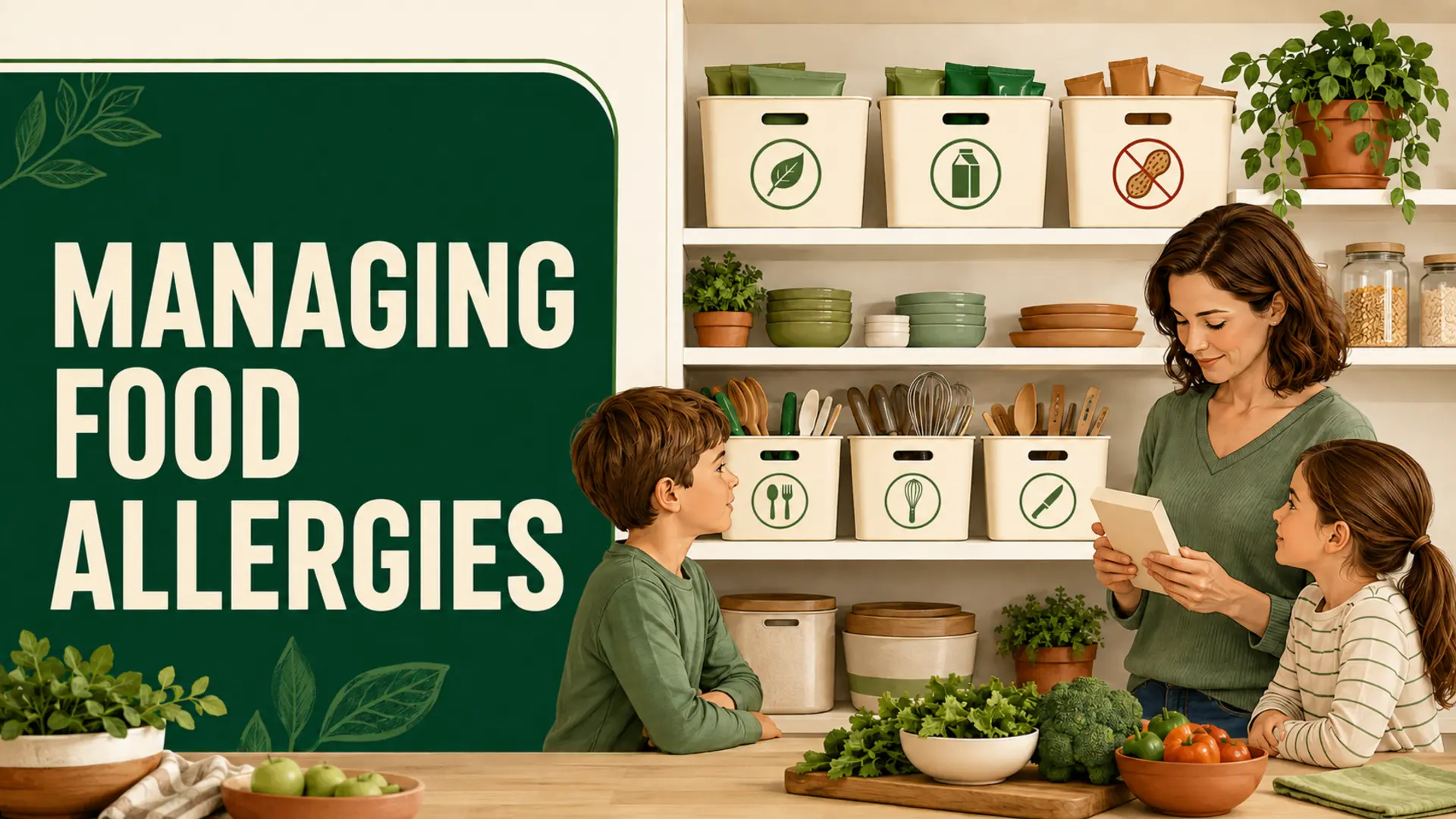
Managing food allergies at home in a family with several children requires a written plan, careful label reading, practical cross-contact controls, and an emergency response everyone can follow. The safest setup depends on the diagnosed allergens, the children’s ages, medical advice, and how food is stored and prepared in your household. A universal allergen-free menu may help some families, but it is not the only workable approach.
Start with each child’s medical allergy plan
Food allergy is different from food intolerance, preference, or another dietary restriction. Work with a qualified healthcare professional or allergist to confirm diagnoses, identify foods to avoid, and create an individualized emergency plan. Do not remove broad groups of foods from a child’s diet without appropriate medical or nutrition guidance.
Keep the plan current and make sure caregivers understand it. The CDC recommends having a plan that covers both prevention and the response to a food-allergy emergency, including anaphylaxis. Store prescribed emergency medication as directed, check expiration dates, and ensure responsible adults know where it is and how to use it.
Create one household allergy reference
Write a concise reference showing each child’s allergens, approved alternatives, foods that require extra checking, and emergency contacts. Keep it available to parents, older siblings, babysitters, and anyone who shops or cooks. Use plain language and update it whenever medical guidance or product choices change.
A shared grocery list for household planning can include allergy-specific notes such as “check every label” or “no substitution without approval.” Do not rely on package colour, familiar branding, or a product that was safe on a previous purchase.
Read food labels every time you shop
Ingredients and manufacturing details can change. Read the full label on each package and follow the labelling rules and medical advice relevant to your country. When information is unclear, contact the manufacturer or choose another product rather than guessing.
- Match the package to the correct product and flavour.
- Review the complete ingredient list and allergen statement.
- Check warnings about shared equipment or facilities according to the family’s medical guidance.
- Do not replace an approved item with a similar-looking product automatically.
- Recheck bulk foods and bakery items, where ingredient and cross-contact details may be limited.
Organize storage to reduce mistakes
Separate clearly approved foods from products containing a household allergen. Sealed, labelled bins can make the distinction easier to see, but colour coding alone is not enough because visitors, young children, or people with colour-vision differences may misinterpret it. Pair colours with clear words or symbols.
Store allergen-containing foods in closed containers below—not above—open or allergy-safe foods to reduce the risk of spills. If young children might access them, use secured storage appropriate to the household. The kid-friendly pantry organization guide provides additional ideas for separating safe self-serve foods from restricted items.
Prevent cross-contact during preparation
Cross-contact occurs when an allergen is unintentionally transferred to another food, surface, or utensil. A dedicated cooking area or separate equipment may be appropriate for some households, but the exact controls should reflect the allergy plan and professional advice.
- Wash hands with soap and water before preparing allergy-safe food.
- Clean preparation surfaces and use clean utensils, cutting boards, pans, and serving tools.
- Prepare allergy-safe food first when that fits the household plan.
- Keep serving spoons with their assigned dishes.
- Avoid sharing cups, utensils, plates, or partially eaten food.
- Label leftovers clearly before refrigerating or freezing them.
A colour-coded cutting board can be a useful reminder, but colour does not make equipment safe on its own. Cleaning, separation, and consistent handling practices matter more than a particular colour or dishwasher setting.
Plan shared meals without rigid rules
Some families choose meals that everyone can safely eat. Others keep one or more allergen-containing foods for siblings and use defined storage, preparation, and serving controls. Discuss the safest workable approach with the child’s healthcare team, especially when a previous reaction was severe.
When building lunch or snack lists, start with reliably approved products and suitable whole foods. The nut-free school lunchbox checklist offers a useful planning structure, but school rules do not replace an individual allergy plan.
Teach siblings age-appropriate safety habits
Explain that food rules protect a family member and are not a punishment. Younger children can learn not to share food; older children can practise checking with an adult before offering a snack. Avoid assigning one child responsibility for another child’s medical safety.
- Wash hands after eating an allergen-containing food.
- Eat only in agreed areas of the home.
- Never tease, pressure, or test someone about an allergy.
- Tell an adult immediately if a sibling reports symptoms.
- Follow the emergency plan rather than improvising.
Prepare for an allergic emergency
Keep the clinician-provided emergency plan accessible and follow it immediately if symptoms occur. For suspected anaphylaxis, use prescribed epinephrine as directed and contact local emergency services. Do not delay treatment while searching online, waiting for symptoms to worsen, or substituting an antihistamine for epinephrine when the plan calls for it.
Managing food allergies at home becomes more reliable when the family uses the same core system: accurate medical plans, repeated label checks, clearly separated storage, careful food preparation, age-appropriate education, and a rehearsed emergency response. Review the system regularly as children grow and household routines change.
Authoritative resources: Review the CDC’s food-allergy planning guidance and Health Canada’s food-allergy information. Local labelling and emergency guidance may differ by country.
Frequently Asked Questions
How can a family manage different food allergies under one roof?
Keep a written plan for each child, including allergens, symptoms, prescribed treatment, and emergency contacts. Build shared meals from foods everyone can eat when practical, but use clearly separated alternatives when needed. Review the system with the child’s clinician rather than relying on a generic online plan.
Do food labels need to be checked every time I buy a familiar product?
Yes. Ingredients, manufacturing, package size, and precautionary statements can change. Read the full label every time and make sure it names the correct product variant. Health Canada advises people with food allergies to avoid the allergen and check labels.
What is cross-contact in food allergy management?
Cross-contact occurs when an allergen is unintentionally transferred to otherwise safe food through hands, utensils, cutting boards, fryers, counters, crumbs, or shared containers. A tiny amount may be enough to trigger a reaction, so simply removing a visible ingredient is not a safe correction.
How should allergy-safe food be stored in a family kitchen?
Use clearly labeled, closed containers and place safe foods where spills or crumbs from allergen-containing items cannot fall onto them. Separate spreads and frequently shared tools when cross-contact is possible. Adult oversight remains essential even if color coding helps children recognize zones.
Can washing remove food allergens from hands and surfaces?
Thorough washing with soap and water helps remove food residue from hands, and appropriate cleaning removes residue from surfaces and utensils. Hand sanitizer alone is not a substitute for washing away food proteins. Follow the family’s clinical plan and product instructions for cleaning.
Should siblings eat allergen-containing foods at home?
That decision depends on reaction severity, ages, space, and the family’s medical plan. Some households exclude an allergen; others control where and when it is eaten. The system must be realistic, consistently supervised, and approved with the allergic child’s healthcare professional.
What should be included in a food-allergy emergency plan?
The plan should name allergens, typical symptoms, when and how to give prescribed epinephrine, when to call emergency services, emergency contacts, and any observation instructions from the clinician. Keep medication accessible, in date, and with the child according to local school or childcare rules.
Is epinephrine the first-line treatment for anaphylaxis?
Yes. For a suspected severe allergic reaction, use prescribed epinephrine promptly according to the individual emergency plan and call emergency services. Antihistamines do not replace epinephrine for anaphylaxis. Caregivers should receive hands-on training from a qualified health professional.
How can parents teach siblings about food allergies without creating fear?
Use simple, factual rules: do not share food, ask an adult before offering anything, wash hands, and get help immediately if symptoms appear. Explain that the allergic child is not at fault. Give older siblings more detail while keeping adults responsible for prevention and treatment.
How should families handle restaurants, school, and playdates?
Communicate allergens and the emergency plan in advance, ask about ingredients and cross-contact, provide safe food when uncertainty remains, and ensure trained adults can access prescribed medication. The CDC offers school food-allergy planning guidance for families and staff.