
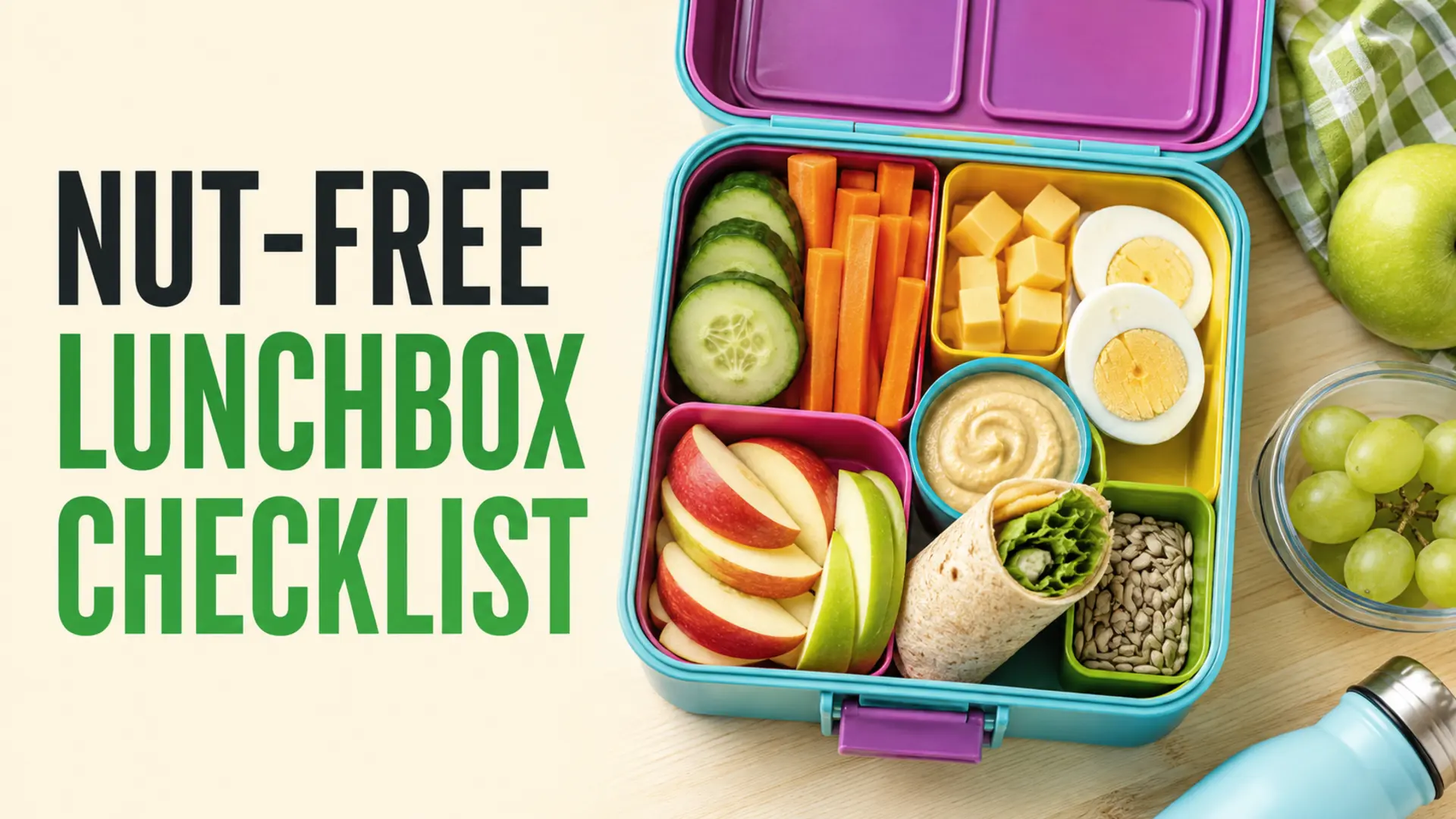
A nut-free lunchbox checklist works best when it starts with your school’s written policy, then combines familiar foods, clear label checks, and a repeatable packing routine. “Nut-free” rules vary by school and classroom, so confirm what must be avoided before you shop. This guide helps you plan options without promising that any food is safe for every child or setting.
Check the school policy before building your list
Ask whether the school restricts peanuts, tree nuts, products made in a facility that handles nuts, or additional allergens such as sesame. Follow the school’s instructions over a general online list. If your child has a diagnosed allergy, coordinate with the school and healthcare team about the child’s written allergy and emergency plan. Food Allergy Canada’s school resources can help families prepare questions for educators.
Nut-free lunchbox checklist: foods to consider
Choose foods your child already eats and that fit the school’s rules. Use the categories below as a shopping framework, not a guarantee that every product is suitable.
- Produce: apples, pears, berries, grapes, cucumber, carrots, snap peas, or other fruits and vegetables your child will actually eat.
- Protein foods: cheese, yogurt, hard-boiled egg, beans, hummus, or leftover chicken. Include only items permitted by the school and your child’s needs.
- Grains: whole-grain bread, wraps, pita, crackers, pasta salad, or rice.
- Spreads and dips: hummus or a seed-based spread may be an option only when the school allows it and the label confirms it fits the policy.
- Extras: water, a small treat, and a napkin or reusable utensil when needed.
Read the ingredient list and allergen statement on every packaged item. Formulas and facility statements can change, so do not rely only on what you bought last term. Keep original packaging or a photo of the label when the school asks families to document ingredients.
Build five lunches from a short shopping list
Start with two or three dependable mains, then rotate produce and sides. For example, one week might include a hummus wrap, a cheese-and-cracker box, an egg with pita, a bean salad, and a chicken or vegetable pasta salad. The goal is variety your child accepts, not a different recipe every morning.
- Choose five main items that fit the school policy.
- Add one or two fruits and vegetables for each lunch.
- Add a drink and a simple side where useful.
- Total the quantities for the week so you do not buy duplicates.
- Keep two backup combinations for busy mornings.
Make preparation easier without overpacking
Wash and cut only what you can store well, and portion dry items into reusable containers. Keep a short “running low” section on your grocery list so staples are added when noticed rather than remembered at the last minute. A pantry-audit routine can help you check lunch supplies before the next shop.
Invite your child to choose between two approved options. Their input can reduce untouched food while keeping the final decision within the family’s allergy and school requirements. For more morning ideas, see the breakfast preparation checklist.
Pack perishable foods safely
Use an insulated lunch bag for perishable food and follow current food-safety guidance for keeping it cold. The USDA lunch-bag guidance recommends using cold sources with perishable foods. Pack the lunch soon before leaving, refrigerate it when the school provides a refrigerator, and follow the school’s handling instructions.
Keep the checklist useful all year
At the end of each week, note what was eaten, returned, or difficult to pack. Replace unpopular choices, adjust quantities, and recheck labels when you buy a new product. A reliable nut-free lunchbox checklist should make shopping and preparation clearer while leaving room for your child’s preferences and the school’s latest policy.
For a more consistent routine, move from separate notes to a shared list with the paper-to-digital grocery list guide.
Frequently Asked Questions
What does “nut-free lunch” mean at school?
It usually means following the school’s policy about peanuts, tree nuts, products with precautionary labels, and food sharing. Requirements differ, so obtain the current written policy rather than guessing.
Are peanut-free and nut-free the same thing?
No. Peanuts are legumes, while tree nuts include foods such as almonds, cashews, and walnuts. A policy may address one or both, and individual students may have additional allergies.
What foods can go on a nut-free lunchbox checklist?
Options may include sandwiches with approved fillings, yogurt or alternatives, cheese, eggs if allowed, beans, fruit, vegetables, crackers, leftovers, and seed spreads when the school permits them.
Are seed butters always allowed in nut-free schools?
No. Some schools allow approved seed spreads, while others restrict look-alike products or additional allergens. Check the policy and product label before packing them.
How often should I read packaged-food labels?
Read the full label every time because ingredients and manufacturing statements can change. Food Allergy Canada provides guidance on reading food labels.
What does “may contain nuts” mean for a school lunch?
It is a precautionary allergen statement about possible cross-contact. Follow the school and affected student’s allergy plan; do not assume a small risk is acceptable because nuts are not ingredients.
How can I prevent cross-contact while packing lunch?
Wash hands and surfaces, use clean utensils and containers, keep allergen-containing foods away from the preparation area, and do not share food. Follow the school’s specific procedures.
How do I keep a lunchbox cold until lunchtime?
Use an insulated lunch bag with sufficient frozen cold sources, start with chilled food, and keep the bag away from heat. Discard perishable food that was not held safely.
How can I make five nut-free lunches without buying too much?
Choose two main formats, two fruits, two vegetables, and a few policy-approved snacks that overlap. Rotate combinations and use dinner leftovers only when they can be chilled and packed safely.
What should a child know about food allergies at school?
Teach age-appropriate rules: eat only approved food, do not trade, wash hands as directed, recognize symptoms they are able to identify, and tell an adult immediately if a reaction may be occurring.