
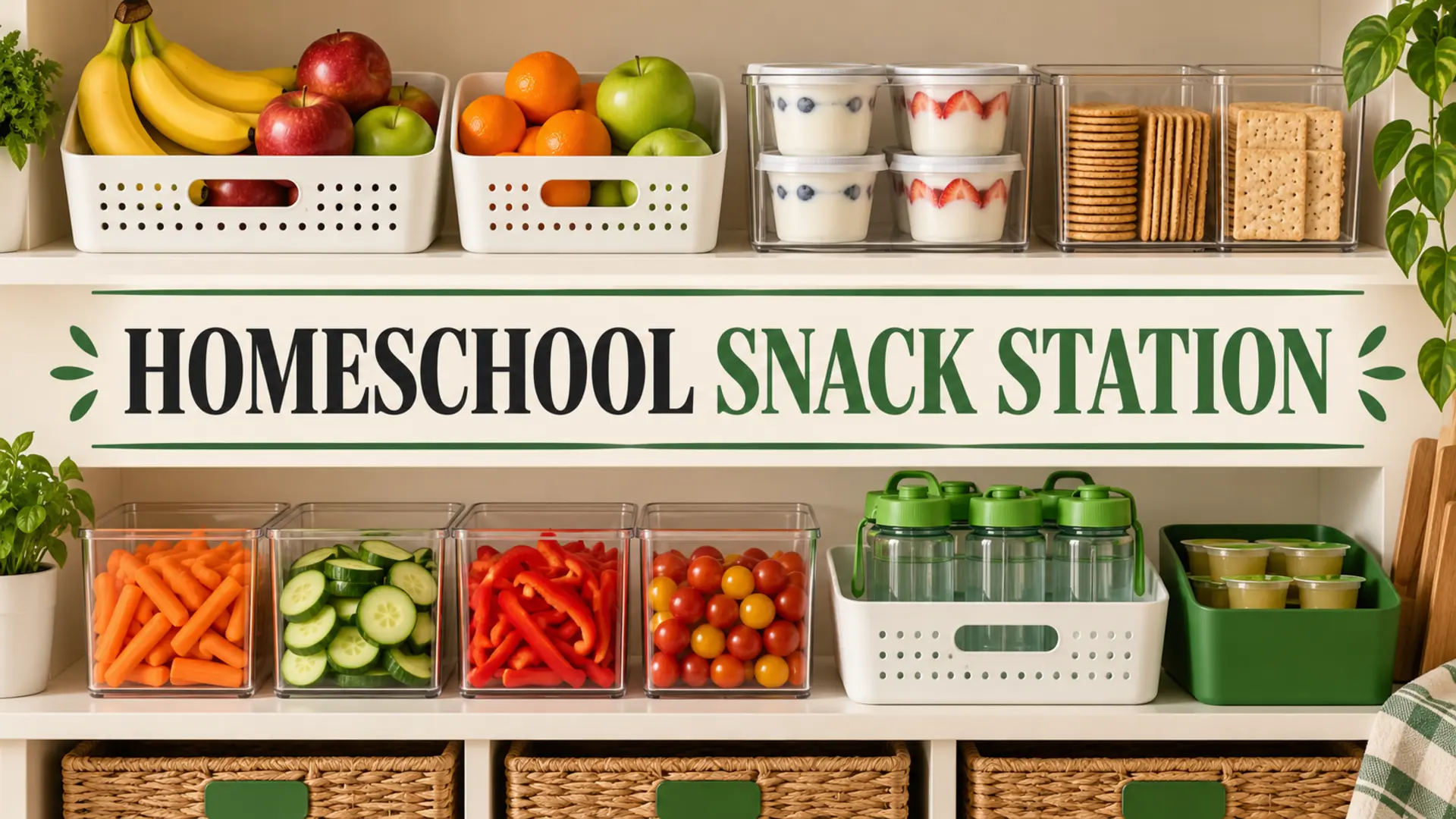
A homeschool snack station can make food choices easier during learning hours, but it should reflect children’s ages, allergies, appetite, and supervision needs. Use accessible foods only when children can manage them safely.
Homeschool snack station setup
Create one shelf-stable area and one refrigerated area if appropriate. Keep perishable foods cold, store choking hazards and allergens securely, and avoid placing glass containers where young children can reach them.
Choose flexible snack options
- Whole or prepared fruit suited to the child’s age
- Vegetables with hummus or another suitable dip
- Pasteurized yogurt or cheese
- Whole-grain crackers or toast
- Cooked eggs, beans, or other familiar protein foods
- Water in an age-appropriate cup or bottle
For more shopping ideas, adapt this family snack checklist.
Account for choking and allergies
Whole nuts, popcorn, whole grapes, hard raw vegetables, and other foods may be unsafe for younger children. Modify foods according to current age-specific guidance. Read allergen labels every time and prevent cross-contact when preparing or storing snacks.
Use routines without rigid food rules
Decide when children may choose a snack and whether they should ask first. Avoid claims that one protein-and-produce formula will stabilize blood sugar or guarantee attention. Appetite and learning needs vary.
Make the station easy to maintain
Use washable bins, rotate older food forward, check dates, and restock from a short list. The guidance on kid-friendly pantry organization can help define safe-access zones.
Review what works
Notice which foods are eaten, wasted, or difficult to manage, then adjust quantities. A good homeschool snack station supports the household routine without promising better focus or uninterrupted lessons.
Frequently Asked Questions
What is a homeschool snack station?
It is a designated pantry and/or refrigerator area with approved snack choices, serving tools, and clear rules. The station reduces repeated decisions, but it does not need to provide unlimited access. Setup should reflect children’s ages, allergies, eating skills, and lesson schedule.
What foods work well in a homeschool snack station?
Combine shelf-stable and refrigerated choices: fruit, vegetables, yogurt, cheese, hummus, whole-grain crackers, cereal, boiled eggs, or appropriate nuts and seeds where safe. Select foods the household actually eats and use age-appropriate textures rather than chasing a perfect “healthy snack” list.
How many snack choices should be available?
Start with two or three choices in each area, not a pantry full of options. Limited variety makes restocking and decisions easier and reduces waste. Rotate one item weekly based on what children ate, ignored, or struggled to serve safely.
How can I set snack times without rigid food rules?
Use predictable snack windows around lessons and meals while allowing flexibility for hunger, activity, and medical needs. Explain when children may serve themselves and when they should ask. Avoid using food as a reward for finishing schoolwork or punishment for behaviour.
How do I make the station safe for younger children?
Keep only approved, age-appropriate foods within reach, portion bulk items, use unbreakable containers, and supervise eating. Lock away choking hazards, medicines, cleaners, sharp tools, and foods requiring adult preparation. Children should sit upright rather than eating while moving around.
What choking hazards should be excluded from a young child’s snack station?
Whole nuts, popcorn, hard candy, gum, whole grapes, chunks of meat or cheese, hard raw vegetables, and thick spoonfuls of nut butter can be risky. Food shape and texture should follow the CDC’s choking-prevention guidance.
How should allergy-safe snacks be organized?
Keep them in clearly labeled closed containers, separate from allergen-containing crumbs or spills, and retain original packaging for label checks. Colour coding can help recognition but is not a complete safety system. Adults remain responsible for preventing cross-contact and following emergency plans.
How do I stop children eating ingredients reserved for meals?
Separate “snack anytime,” “ask first,” and “meal ingredient” zones using words and pictures. Explain the reason and provide enough approved options. If a planned ingredient is repeatedly attractive, portion some for snacks or move it out of the self-serve area.
How often should a homeschool snack station be restocked?
Check it on one scheduled day and do a short midweek review of perishables. Rotate older food forward, check package damage and dates, and refill based on actual use. Overfilling hides food and makes it harder to notice waste or safety problems.
Can a snack station improve concentration during homeschool?
Regular access to food and water can support the household routine, but no station guarantees focus or learning performance. Sleep, lesson design, movement, health, environment, and individual needs also matter. Treat the station as practical organization, not a medical or educational intervention.