
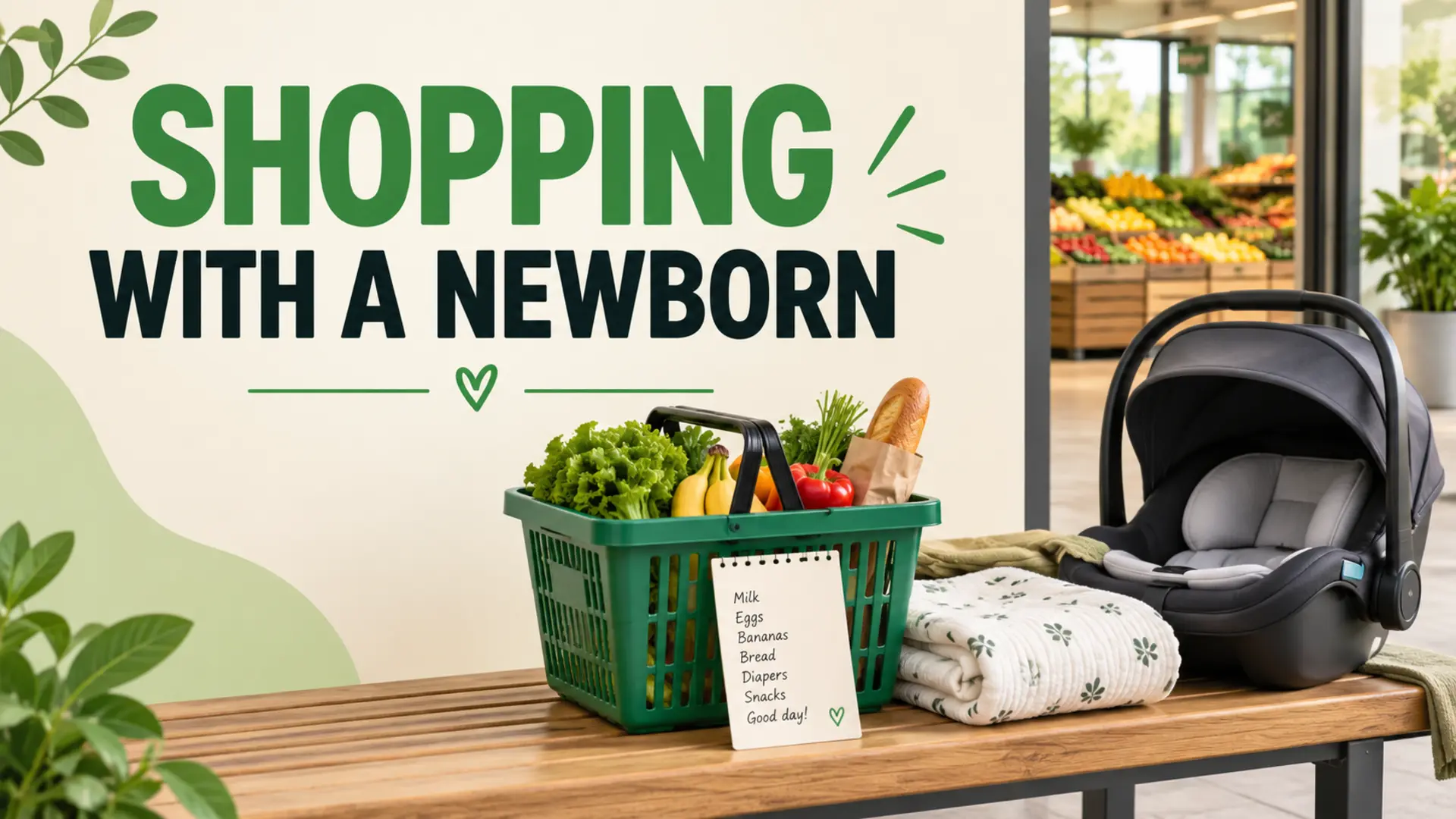
Grocery shopping with a newborn can feel unpredictable. A short list, flexible timing, safe infant transport, and help from another adult can make the errand more manageable without assuming a baby will sleep or feed on schedule.
Grocery shopping with a newborn: choose the easiest method
Consider whether in-store shopping, pickup, delivery, or asking a trusted person is most practical. Fees and availability vary, so choose according to recovery, weather, transportation, budget, and household support.
Make a short priority list
Separate essentials from items that can wait. Group groceries by aisle and allow substitutions. A postpartum freezer plan can reduce urgent trips.
Use infant equipment as directed
Do not balance an infant car seat on top of a shopping cart. Follow the car-seat, stroller, carrier, and cart manufacturers’ instructions. Babywearing is not right for every caregiver or infant; confirm safe positioning and seek professional guidance when needed.
Plan around needs, not guarantees
Feeding and changing before leaving may be convenient, but it does not guarantee sleep or a calm trip. Bring feeding supplies, diapers, wipes, spare clothing, and any other essentials appropriate for the outing.
Keep the trip flexible
There is no universal 20-minute limit or predictable newborn hunger cycle. Leave if the caregiver or baby needs a break, and postpone nonessential items without treating the trip as a failure.
Ask for household support
Another adult can shop, accompany the caregiver, unload bags, or put cold food away. This guide to coordinating grocery trips with a caregiver provides a clear handoff process.
Finish with safe food storage
Store refrigerated and frozen foods promptly, wash hands before handling the baby or food, and keep raw products separate from ready-to-eat items.
Successful grocery shopping with a newborn is simply the method that safely meets the household’s needs that day.
Frequently Asked Questions
What is the easiest way to grocery shop with a newborn?
Use whichever safe method fits that day: delivery, pickup, one adult shopping alone, or a short in-store trip. Make a priority list and postpone optional browsing. Recovery, feeding, sleep, weather, transport, and the baby’s health all matter more than following one ideal routine.
When can I take a newborn to the grocery store?
There is no universal date. Consider the baby’s health, prematurity, local infection levels, weather, crowding, and advice from the baby’s healthcare professional. Keep early trips short, avoid close contact with sick people, and do not let strangers touch the baby.
Is grocery pickup useful after having a baby?
Yes. Pickup can reduce time in crowded spaces, simplify feeding schedules, and let another adult collect the order. Review substitutions carefully, especially for formula, allergies, or medical products, and refrigerate perishables promptly after the order reaches home.
How do I make a newborn grocery list?
Prioritize household staples, easy meals, feeding supplies approved for your situation, hygiene items, and food for the recovering parent or caregivers. Group by store section and mark acceptable substitutes. Keep a reusable list so sleep deprivation does not require rebuilding it each week.
Can an infant car seat be placed on top of a shopping cart?
Do not place a car seat on the cart’s child seat or upper frame unless both manufacturers explicitly approve that configuration; it can make the cart unstable. Use equipment only as directed, or choose a stroller, carrier, pickup, or another adult to help.
How should I use a baby carrier while grocery shopping?
Follow the carrier’s age, weight, positioning, and airway instructions. Ensure the baby’s face remains visible and unobstructed, and avoid reaching, lifting, or pushing in ways that affect balance. Ask a qualified professional if the baby is premature or has medical concerns.
How can I shop around newborn feeding times?
Feed and change the baby before leaving when practical, but expect plans to change. Know where feeding and diapering can happen safely and bring necessary supplies. Do not rush driving or skip the baby’s cues just to finish a nonessential part of the list.
What foods make postpartum grocery planning easier?
Choose familiar low-prep foods: eggs, yogurt, oats, fruit, bread, soup, frozen vegetables, beans, cooked grains, simple proteins, and freezer meals that fit dietary needs. Avoid assuming any particular food improves recovery or milk supply; medical and nutrition concerns need professional advice.
How can family or friends help with newborn groceries?
Share the exact list, substitution rules, budget, delivery window, allergies, and where bags should be left. Helpers can also put food away, portion a meal, or remove packaging. Support is most useful when it reduces decisions instead of asking the new parent to coordinate every detail.
What should happen first when groceries arrive?
Wash hands as needed, then refrigerate or freeze perishables promptly and separate raw animal foods from ready-to-eat items. Check damaged packages and substitutions after cold food is safe. If the baby needs immediate care, another adult should handle storage or the order should remain temperature-controlled.