
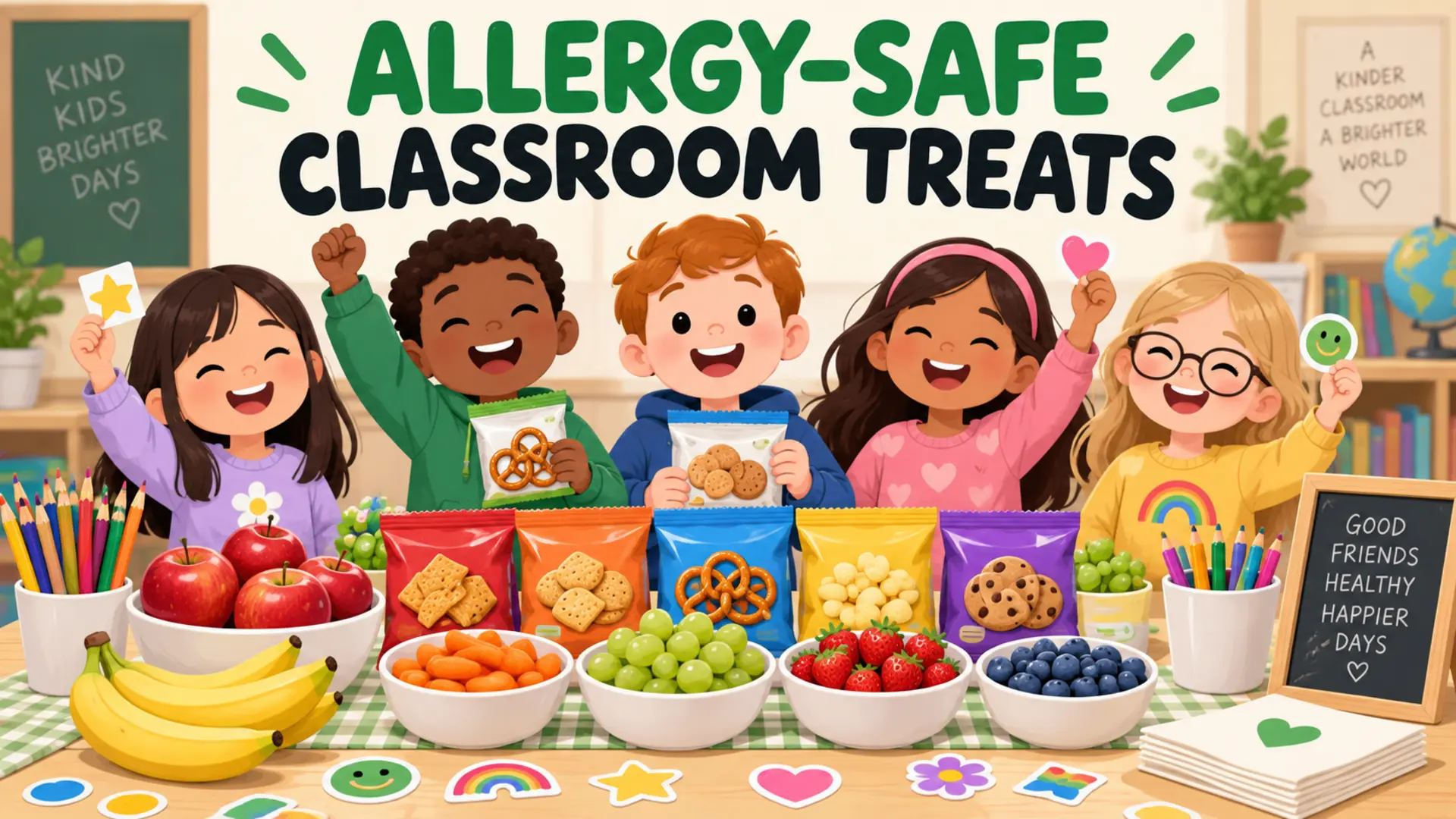
Allergy-safe classroom treats require more than choosing a brand or food that appears free from common allergens. School rules, individual allergy plans, ingredient changes, cross-contact, age-related choking risks, and local regulations must all be considered.
Allergy-safe classroom treats start with school approval
Ask the teacher or administrator whether outside food is permitted and what documentation is required. Follow each student’s established allergy plan rather than assuming one “top allergen-free” list covers everyone.
Confirm needs before shopping
Request guidance through the school’s approved process without asking families to disclose private medical information publicly. Account for allergies, celiac disease, religious requirements, diabetes plans, and other needs the school identifies.
Check every package label
Ingredients and manufacturing practices can change. Read the label every time and avoid relying on historical brand claims. Keep products sealed in their original packaging so school staff can verify ingredients.
Prevent cross-contact
Do not repackage treats at home unless the school specifically permits it and safe procedures are established. Bakery foods and bulk-bin items may have uncertain cross-contact controls.
Be cautious with fresh food
Fruit is not automatically safe for every student. Wash and prepare it hygienically, avoid cross-contact, and modify grapes, hard pieces, skewers, or other choking hazards according to the children’s ages and school rules.
Consider non-food celebration options
- Stickers approved for the age group
- Pencils or bookmarks
- Temporary tattoos
- A class game or special activity
- A shared book for the classroom
Use trustworthy allergy guidance
For household shopping practices, read allergy-friendly grocery list guidance and this guide to managing food allergies at home. Retain authoritative information from Health Canada’s food-allergy resource while following local school policy.
The safest classroom treat is the one approved by the school and compatible with every relevant student plan. When certainty is not possible, choose a suitable non-food celebration.
Frequently Asked Questions
What does “allergy-safe” mean for a classroom party?
It means compatible with the school’s written policy and every relevant student health plan—not simply nut-free or free from one ingredient. Because allergies differ, no product is universally safe. Obtain approval from school staff before buying, preparing, or sending food.
Should parents send homemade treats to a classroom with allergies?
Only if the school permits them and can verify ingredients and cross-contact controls. Many schools require sealed, labeled commercial products because homemade food is difficult to assess. When requirements are unclear, choose an approved non-food activity instead.
Do food labels need to be checked every time?
Yes. Ingredients, facilities, package sizes, and precautionary statements can change. Check the exact product and flavour each time, keep the original package with the food, and do not rely on a previously approved photo or shopping-list entry.
Is “nut-free” enough for an allergy-safe classroom treat?
Not necessarily. Students may have allergies to milk, egg, wheat, soy, sesame, fish, shellfish, or other foods, and local labeling rules differ. A nut-free claim also does not replace the school’s approval process or an individual allergy plan.
What is cross-contact when preparing classroom food?
Cross-contact is the unintended transfer of an allergen through hands, utensils, cutting boards, counters, shared spreads, baking equipment, or crumbs. Removing a visible ingredient afterward does not make the food safe. Use the school’s approved preparation and packaging requirements.
Can fruit be a safer classroom party option?
Fresh fruit may suit some plans, but it is not automatically risk-free. Cross-contact can occur during cutting and serving, and some students have fruit allergies or other restrictions. Ask the school whether whole, prepackaged, or staff-prepared fruit is permitted.
How should approved treats be served in class?
Keep original labels available, wash hands and surfaces as directed, avoid shared serving utensils, prevent trading, and follow staff instructions. The teacher or designated adult—not visiting children—should manage distribution and know how to access each student’s emergency plan and medication.
What are good non-food classroom celebration ideas?
Stickers, pencils, bookmarks, small craft materials, a class game, music, extra reading time, a themed activity, or a donation to the classroom can avoid many food-allergy complications. Check choking, latex, sensory, school, and age restrictions before choosing items.
What should be included on an allergy-safe treat shopping list?
Record the exact approved product, package size, flavour, store, ingredient-label requirement, number needed, and whether substitutions are forbidden. Add serving supplies only if the school approves them. A substitute should never be guessed when a student’s health plan is involved.
Where can schools and families find reliable food-allergy guidance?
Use the student’s clinician-approved emergency plan, school policy, and local public-health guidance. The CDC provides food-allergy resources for schools. In an allergic emergency, follow the individual plan and call emergency services as directed.