
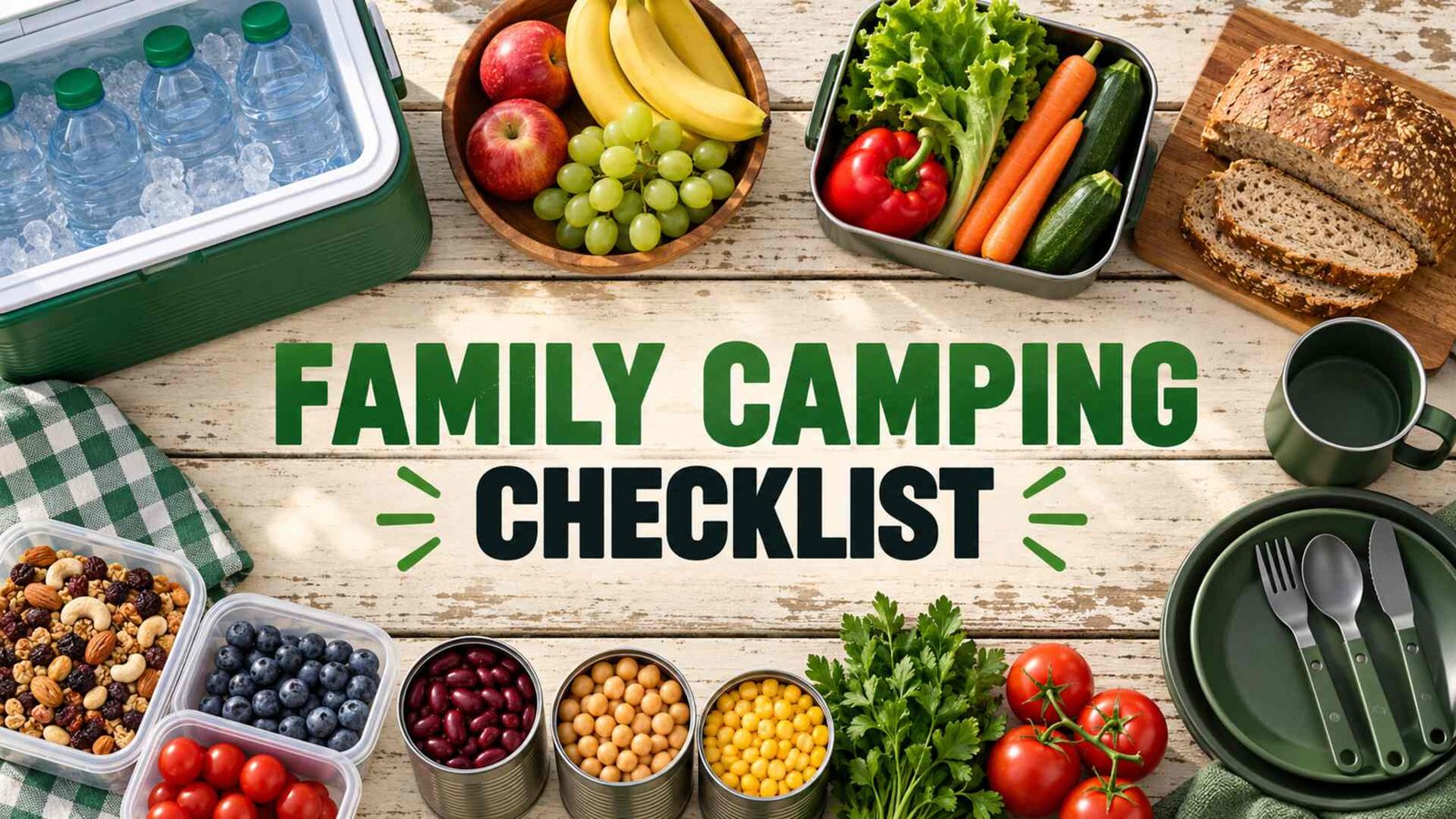
A family camping grocery checklist helps prevent forgotten ingredients and unsafe food storage. Plan meals around the campsite’s facilities, fire restrictions, weather, trip length, dietary needs, and reliable access to clean water.
Family camping grocery checklist essentials
- Drinking water and refillable bottles
- Fruit and vegetables suited to available storage
- Bread, tortillas, oats, rice, or other grains
- Beans, canned fish, eggs, meat, tofu, or other protein foods
- Milk, cheese, or alternatives when cold storage is reliable
- Oil, seasonings, condiments, and snacks
- Food-safe containers, utensils, soap, and waste bags
Plan simple campsite meals
Choose tested recipes with manageable ingredients, such as oatmeal and fruit, sandwiches, bean bowls, pasta, foil-packet vegetables, or fully cooked ingredients reheated safely. Check this family road-trip snack list for portable ideas.
Pack coolers safely
Use enough ice or frozen packs and monitor temperature with an appliance thermometer. Separate raw animal foods from ready-to-eat items in leakproof packaging. A second drinks cooler can reduce how often the food cooler is opened, but it is optional.
Respect campsite cooking rules
Check local fire restrictions before the trip. Use only approved equipment and designated cooking areas. Never rely on universal campfire cooking times; heat varies widely. Use a food thermometer for animal products.
Avoid risky shortcuts
Do not treat melted cooler water as drinking water unless the container remained sealed and sanitary. Avoid eating directly from shared packages when it complicates hygiene or allergen control.
Organize for children and allergies
Keep knives, fuel, matches, raw food, and choking hazards secured. Label allergen-safe items and prevent cross-contact. A flexible family snack checklist can help with options.
Pack out leftovers and waste
Refrigerate leftovers promptly when safe cold storage is available; otherwise discard them according to campsite rules. A practical family camping grocery checklist supports enjoyable meals without promising zero preparation problems.
Frequently Asked Questions
What food should be on a family camping grocery checklist?
Plan each meal, snack, drink, condiment, and cooking supply by day and person. Choose simple foods suited to the campsite’s water, fire, storage, and wildlife rules. Include allergy-safe options and one shelf-stable backup meal in case weather or equipment changes the cooking plan.
How much food should I pack for a camping trip?
Count people, meals, travel time, activity, and the final day, then add a modest emergency buffer. Portion ingredients instead of carrying full pantry packages. Too much perishable food strains cooler capacity and creates waste; too little safe shelf-stable food leaves no backup.
How do I keep camping food cold safely?
Keep perishables at 40°F/4°C or below in an insulated cooler with plenty of ice or frozen packs. Pre-chill food, pack the cooler full, limit opening, keep it shaded, and use a thermometer. Separate frequently accessed drinks into another cooler when possible.
How should raw meat be packed for camping?
Freeze it in advance when practical, seal it in leakproof packaging, and place it at the bottom of the cooler so juices cannot drip onto ready-to-eat food. Use separate utensils and cutting surfaces, then cook to the safe temperature shown on an official chart.
What camping meals require minimal cooking?
Oatmeal, sandwiches, wraps, canned bean salads, shelf-stable tuna packets, pasta, soup, quesadillas, and pre-cooked frozen meals can reduce campsite work. Verify that each option can be stored safely and that the site permits the required stove, fuel, or fire.
Can food be left outside overnight at a campsite?
No. Cool air, a tent, picnic table, car, or stream is not a reliable refrigerator or wildlife barrier. Store food, trash, toiletries, and scented items according to the campground’s bear and wildlife rules, using required lockers or approved containers.
How much drinking water should a family bring camping?
Needs vary with heat, activity, age, cooking, hygiene, and whether the site provides tested potable water. Check the campground before leaving and bring a backup treatment plan appropriate to the location. Do not assume clear stream or lake water is safe to drink.
What snacks are safest for children while camping?
Choose familiar, age-appropriate foods and supervise children while seated. Modify grapes, cheese, meat, raw vegetables, nuts, popcorn, and other choking hazards for the child’s abilities. Keep allergy-safe snacks separated and retain labels for ingredient checks.
What should I do with camping leftovers?
Refrigerate leftovers within two hours—one hour above 90°F/32°C—only if the cooler can keep them at 40°F/4°C or below. Otherwise discard them according to campsite rules. Never taste food to decide whether unsafe temperature exposure has occurred.
How should camping food waste be handled?
Pack trash in sealed bags and use designated animal-resistant bins or carry it out. Do not burn packaging, grease, or food scraps unless the site explicitly permits it. Clean the cooking area, strain dishwater if required, and follow Leave No Trace and local campground rules.