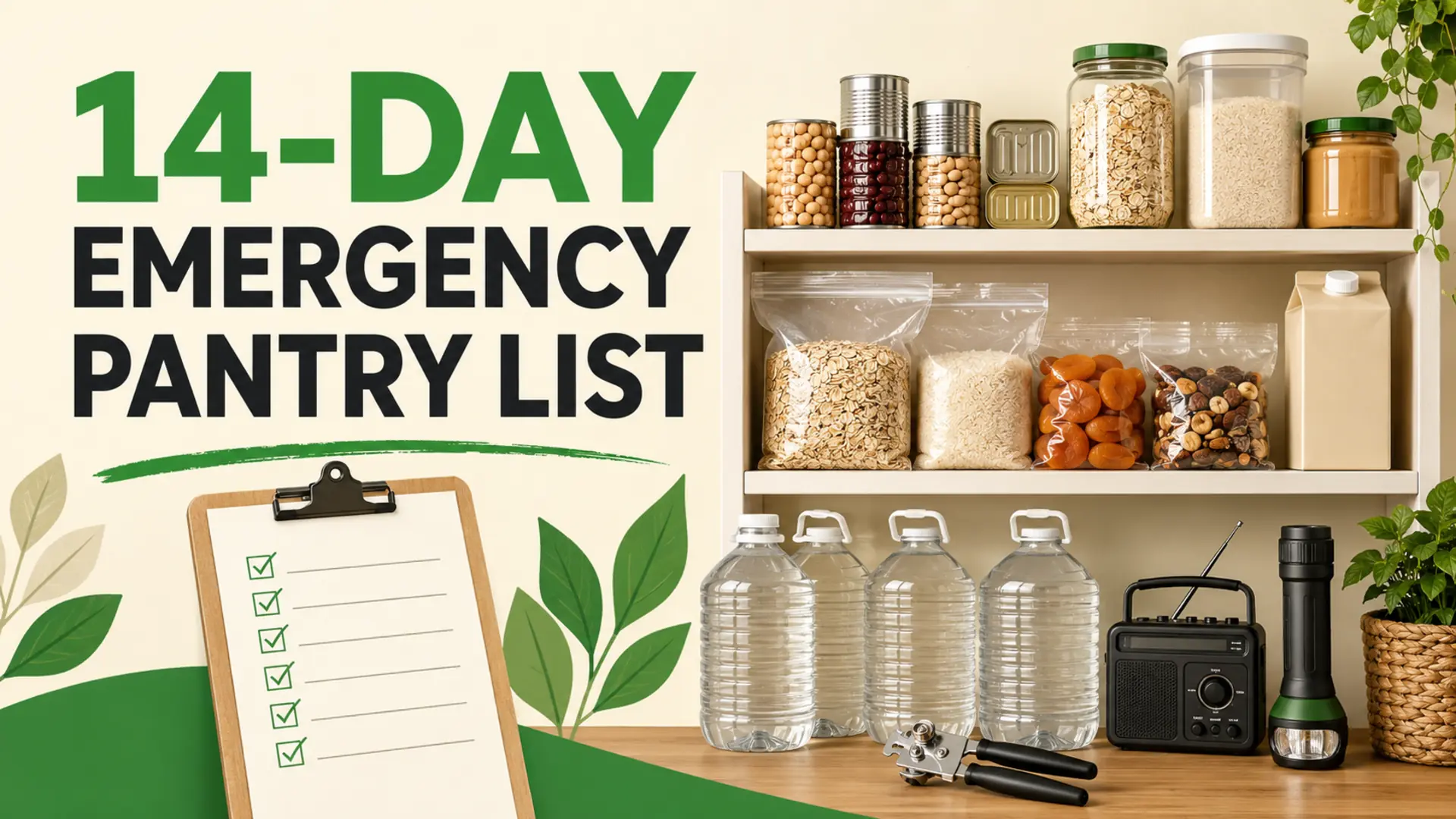
A 14-day emergency pantry list should match the people, pets, dietary needs, water requirements and cooking options in your household. Begin with several days of familiar, non-perishable food, then expand toward two weeks if storage space and budget allow. Include safe water, a manual can opener and foods that can be eaten without refrigeration or complicated preparation.
Emergency planning is not a one-size-fits-all nutrition calculation. Energy and nutrient needs vary by age, health, activity, climate and circumstance. Follow local emergency-management advice and any guidance from qualified healthcare professionals, especially for infants, pregnancy, diabetes, allergies or other medical needs.
Plan a 14-Day Emergency Pantry List Around Likely Conditions
Think about the disruptions most relevant to your location: a power outage, unsafe water, severe weather, evacuation, transport interruption or temporary isolation. Your food choices should reflect whether you may lose refrigeration, cooking fuel or access to clean water.
- How many people and pets need supplies?
- Could anyone require formula, medication-related food or texture-modified meals?
- What can be eaten safely without heating?
- Which appliances become unusable during a power outage?
- How much safe storage space is available?
- Can the household move supplies during an evacuation?
Start With Safe Emergency Water
Water usually deserves priority over food. The CDC recommends storing at least one gallon of water per person per day for three days and, if possible, trying to store a two-week supply. More may be needed for hot climates, pregnancy, illness, pets or other circumstances.
Use the CDC’s current emergency water-storage guidance for container, replacement and treatment information. Do not assume that boiling can make water contaminated with fuel, toxic chemicals or radioactive material safe.
- Store unopened commercially bottled water when practical.
- Keep water in a cool location away from chemicals.
- Observe manufacturer dates and inspect containers.
- Include water for drinking, food preparation and basic hygiene.
- Follow official instructions if local authorities issue a water advisory.
Choose Familiar Foods With Minimal Preparation
Emergency food should be acceptable to the household and manageable with limited equipment. Prioritize a mix of ready-to-eat items and foods that require only water or brief heating. Avoid building the entire reserve around dry foods if clean water or cooking fuel may be limited.
- Canned beans, lentils, fish, poultry or other suitable proteins
- Nut or seed butter, where allergies permit
- Canned fruit and vegetables
- Whole-grain crackers, crispbread, cereal or shelf-stable bread
- Oats, rice, pasta or quick-cooking grains when cooking is realistic
- Shelf-stable milk or fortified alternatives appropriate to the household
- Dried fruit, nuts, seeds and familiar snack foods
- Canned soups, stews or complete meals that suit dietary needs
Ready.gov’s updated emergency food guidance recommends at least a several-day supply of non-perishable food and considering special dietary requirements.
Build Meals From Flexible Categories
Instead of assigning the same number of cans to every adult, sketch realistic meal combinations and count servings from the actual labels. Include variety across protein sources, grains or starches, fruit, vegetables and fats according to household needs.
No-cook meal ideas
- Canned beans with vegetables and crackers
- Nut or seed butter with shelf-stable bread and fruit
- Canned fish with crispbread and canned vegetables
- Ready-to-eat cereal with shelf-stable milk
- A familiar canned meal that can be eaten at room temperature if necessary
Meals requiring limited heat
- Quick oats with dried fruit and seeds
- Soup with canned beans or vegetables
- Quick-cooking grains with canned protein
- Pasta with canned tomato sauce, if water and fuel are available
Never use a grill, camp stove or fuel-burning appliance indoors unless it is specifically designed and approved for indoor use. Carbon monoxide can be deadly.
Account for Allergies and Medical Needs
Read labels every time and avoid unfamiliar emergency products that conflict with diagnosed allergies. Keep foods separated when the household’s cross-contact plan requires it. Include safe alternatives for common items rather than assuming one product works for everyone.
Use this allergy-friendly grocery-list framework to add label-checking and substitution notes. People who rely on prescribed nutrition products, refrigerated medicines or powered medical equipment should coordinate emergency planning with healthcare providers and local services.
Include Infants, Older Adults and Pets
Infant feeding requires specific planning. Do not improvise formula dilution or use unsafe water. Store the exact products and equipment recommended for the child, and follow current public-health guidance during an emergency.
Older adults or people with chewing, swallowing or dexterity limitations may need easy-open packages, softer foods and assistance. Pets need their regular food, safe water, feeding supplies and any necessary medication. Keep a practical transport plan for all household members.
Add Essential Non-Food Tools
- Manual can opener
- Clean cups, bowls and utensils
- Flashlights and suitable batteries
- Battery-powered or hand-crank radio
- Hygiene and sanitation supplies
- Copies of relevant emergency contacts and plans
- Food-safe storage bags or containers
- Thermometer appropriate for checking refrigerator temperature
This article focuses on pantry planning, but food is only one part of a complete emergency kit. Consult the current Ready.gov kit checklist, updated July 1, 2026, and equivalent guidance from your local authorities.
Store Supplies Safely
Keep food in a cool, dry location away from pests, household chemicals, flooding risk and extreme temperatures. Inspect packages for damage, swelling, leaks, rust or broken seals. Do not eat food from unsafe or compromised containers.
Keep the manual can opener with the food reserve. Organize supplies so dates and labels remain visible. If storage is limited, build the reserve gradually using foods already part of regular meals.
Prepare for a Power Outage
A pantry reserve should not depend on refrigerated food remaining safe. Keep refrigerator and freezer doors closed during an outage and follow official advice about when to discard perishable food. FoodSafety.gov maintains current food-safety guidance for disasters and emergencies.
Do not taste food to determine whether it is safe. When flooding, fire, chemical exposure or damaged packaging is involved, follow local public-health instructions.
Rotate the Pantry Without a Rigid Calendar
Use first-in, first-out organization, but check each product’s date, condition and manufacturer instructions rather than rotating everything on one six-month schedule. Move foods into normal meals before quality declines and replace them during ordinary shopping.
- Review the kit after household or dietary changes.
- Check water and food packages regularly.
- Replace expired batteries and damaged equipment.
- Update emergency contacts and local instructions.
- Record what was used and needs replenishment.
These long shelf-life meal-planning ideas can help rotate reserve ingredients into regular meals without wasting them.
Build the Supply Gradually
If purchasing two weeks of supplies at once is difficult, begin with a three-day foundation aligned with official guidance. Add a few appropriate items during normal shops, prioritizing water, ready-to-eat meals and special requirements. Compare unit prices only when the larger quantity will be stored and used safely.
For careful quantity decisions, review this waste-aware bulk-buying guide.
A Practical 14-Day Pantry Checklist
- Count every person and pet.
- Record allergies, medical diets and accessibility needs.
- Assess likely access to water, power and cooking equipment.
- Store an official-guidance-based water supply.
- Plan familiar no-cook and limited-cook meals.
- Count actual servings from product labels.
- Add a manual opener, light, radio and sanitation supplies.
- Store everything safely and visibly.
- Rotate supplies into normal meals and replace them.
- Review local emergency instructions regularly.
A useful 14-day emergency pantry list is realistic, accessible and tailored to the household. Build from a reliable three-day base, expand when possible, prioritize safe water and choose foods people can prepare under disrupted conditions. Regular review matters more than fixed calorie tables or oversized quantities that do not fit your needs.