
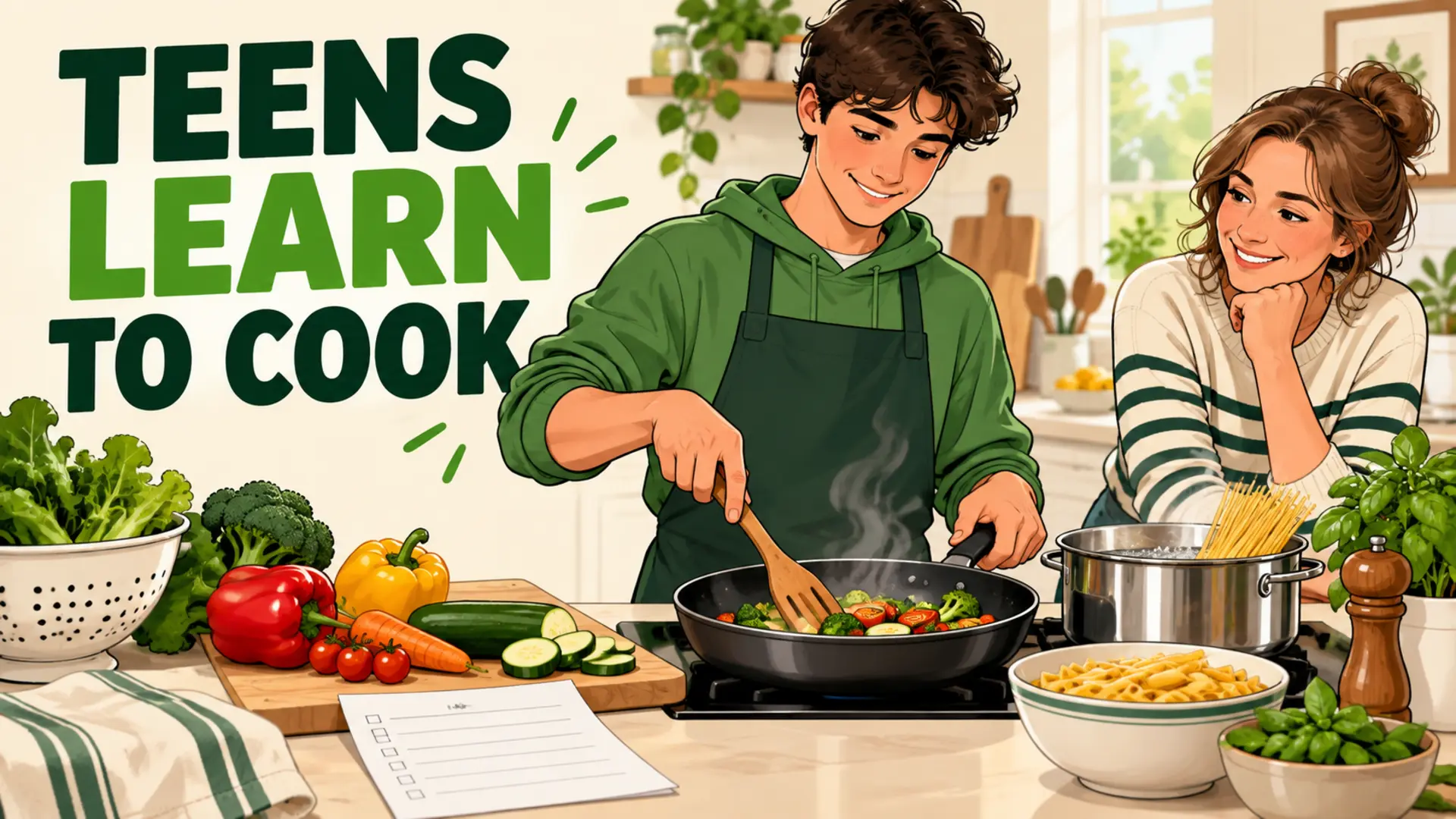
Teaching teens to cook dinner is most effective as a gradual, supervised process. Start with kitchen safety and familiar foods, then increase responsibility as the teenager demonstrates skill, judgment, and confidence.
Help teens cook dinner in manageable stages
- Observe: walk through the recipe, equipment, and safety risks together.
- Cook together: divide tasks while the adult remains available.
- Lead with supervision: let the teen direct the meal while an adult handles unfamiliar hazards.
- Cook more independently: expand responsibility only when readiness is clear.
Age alone does not determine readiness. Consider attention, coordination, reading ability, comfort with heat, and experience with knives and appliances.
Start with foundational kitchen skills
- Handwashing and clean work surfaces
- Reading a recipe from beginning to end
- Using knives with appropriate instruction
- Separating raw foods from ready-to-eat ingredients
- Using a food thermometer correctly
- Turning off appliances and storing leftovers promptly
FoodSafety.gov’s clean, separate, cook, and chill guidance provides a useful foundation.
Choose forgiving first dinners
Build-your-own bowls
Combine a cooked grain, beans or another suitable protein, vegetables, and toppings.
Pasta with vegetables
Use a familiar sauce and practice safe boiling, draining, and stovetop control with supervision.
Sheet-pan dinner
Arrange appropriately cut ingredients, follow recipe temperatures, and verify doneness with a thermometer where required.
Soup and sandwiches
Practice measuring, gentle heating, and simple assembly.
The five-ingredient family meal guide and easy slow-cooker meal ideas provide adaptable starting points.
Connect menu planning to grocery shopping
Let the teen choose from an agreed set of meals, check the pantry, write missing ingredients, and compare package sizes or unit prices. Discuss substitutions before shopping so the recipe remains workable.
Set clear responsibility without a rigid rule
A weekly cooking night can help some families, but it should not automatically make one teenager responsible for feeding everyone regardless of schoolwork, disability, stress, or other commitments. Agree on the task, supervision level, cleanup, and backup plan.
Give specific, supportive feedback
Focus on safety, planning, and one skill to improve next time. Minor cosmetic differences are part of learning, but adults should intervene when burns, cuts, raw food, cross-contact, or appliance misuse are possible.
Build independence over time
When teens cook dinner regularly, they can learn planning, budgeting, food safety, and adaptability. Progress should be paced to the individual, with supervision reduced thoughtfully rather than removed all at once.