
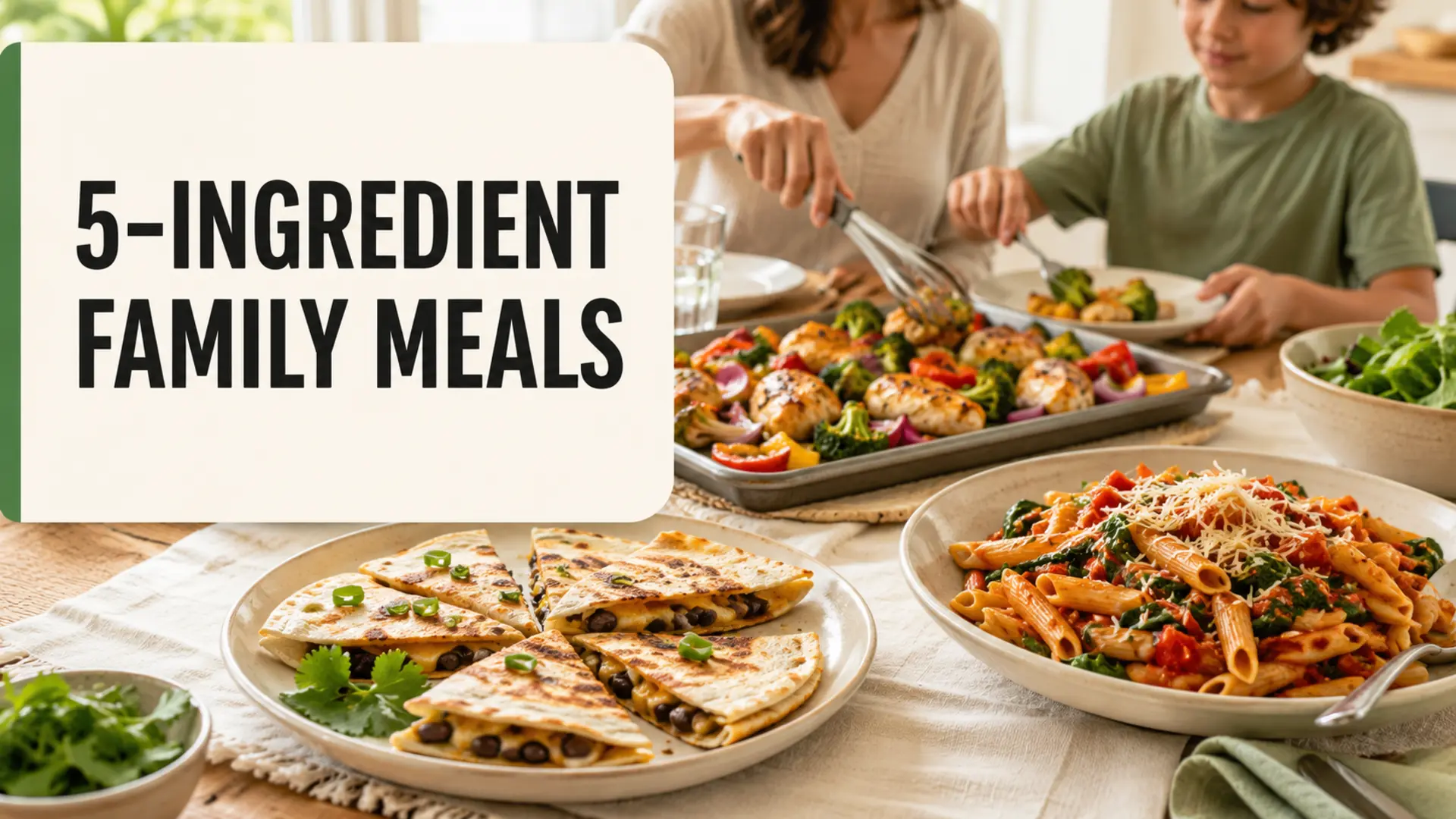
Five-ingredient kid-friendly meals can make busy evenings easier without turning dinner into the same dish every night. The ten flexible ideas below use familiar ingredients, include simple ways to add produce, and avoid unrealistic promises about exact cooking times. For this guide, water, salt, pepper, and a small amount of cooking oil are treated as basic pantry staples rather than counted ingredients.
How to plan five-ingredient kid-friendly meals
Choose recipes around ingredients your household already enjoys, then vary textures or toppings gradually. Ingredient counts are helpful for simplifying a grocery list, but they do not determine whether a meal is balanced or suitable for every child. Adjust portions, seasoning, and textures for age, allergies, dietary needs, and family preferences.
Cooking time depends on ingredient size, appliance performance, and starting temperature. Use package directions where relevant and check meat with a food thermometer. FoodSafety.gov lists 165°F (74°C) as the safe minimum internal temperature for chicken, turkey, and other poultry.
1. Sheet-pan chicken and vegetables
Ingredients: chicken tenders, sweet potato, broccoli, olive oil, and mild seasoning blend. Cut the vegetables into similar-size pieces, coat everything lightly, and roast until the vegetables are tender and the chicken reaches 165°F (74°C). Keep some pieces lightly seasoned for children who prefer familiar flavors.
2. Tomato-spinach tortellini
Ingredients: cheese tortellini, tomato pasta sauce, baby spinach, mozzarella, and Parmesan. Cook the tortellini according to its package, warm it with the sauce and spinach, then add the cheeses. Chop the spinach if large leaves are likely to be difficult for younger eaters.
3. Black bean quesadillas
Ingredients: tortillas, canned black beans, cheddar, salsa, and avocado. Rinse and lightly mash the beans, spread them with cheese inside each tortilla, and cook until the cheese melts. Serve salsa and avocado beside the wedges so each child can choose how to combine them.
4. Turkey meatball sliders
Ingredients: fully cooked turkey meatballs, slider rolls, tomato sauce, provolone, and baby spinach. Heat the meatballs according to the package, assemble the sliders, and warm them until the cheese melts. Finely chop the spinach into the sauce or serve it separately.
5. Baked salmon fingers
Ingredients: salmon fillet, Dijon mustard, panko breadcrumbs, olive oil, and lemon. Cut the salmon into evenly sized strips, brush lightly with mustard, coat with crumbs, and bake until safely cooked. Remove all bones and adapt the shape and texture for the child’s age.
6. Sausage, apple, and sweet potato tray
Ingredients: fully cooked mild chicken sausage, sweet potato, apple, olive oil, and cinnamon. Slice everything into suitable pieces and roast until the sweet potato is tender and the sausage is heated through. Check the sausage label for allergens and heating instructions.
7. Butternut macaroni and cheese
Ingredients: macaroni, cheddar, milk, plain butternut squash puree, and butter. Cook the pasta, warm the remaining ingredients into a smooth sauce, and combine. The squash should complement the meal rather than be used to pressure or trick a child into eating vegetables.
8. Vegetable egg fried rice
Ingredients: cooked rice, frozen peas and carrots, eggs, reduced-sodium soy sauce, and sesame oil. Heat the vegetables, add the rice, then cook the eggs thoroughly while stirring everything together. Refrigerate cooked rice promptly and reheat leftovers safely.
9. Bean-and-cheese potato boats
Ingredients: baking potatoes, low-sodium canned beans, cheddar, plain yogurt, and chives. Bake or microwave the potatoes until soft, split them, and add warmed beans and cheese. Let children choose yogurt or chives as optional toppings.
10. Chicken fajita wraps
Ingredients: chicken breast, bell peppers, red onion, mild fajita seasoning, and tortillas. Slice the ingredients evenly and cook until the vegetables soften and the chicken reaches 165°F (74°C). Serve components separately if a child is more comfortable assembling their own wrap.
Turn the ideas into a practical grocery list
Select two or three meals rather than buying ingredients for all ten at once. Check your refrigerator, freezer, and pantry first, then group the missing ingredients by store section. The weekly grocery routine for busy parents can help you turn meal ideas into a manageable plan.
Look for useful overlap: spinach can work in tortellini and sliders, while cheddar can cover quesadillas and potato boats. For other family-planning ideas, explore the kid-friendly snack shopping guide and the nut-free school lunchbox checklist.
Five-ingredient kid-friendly meals are a framework, not a promise that every child will like every dish. Start with familiar foods, offer components without pressure, follow safe cooking guidance, and repeat the combinations that fit your household.
Food-safety reference: Review the official safe minimum internal temperature chart before cooking meat or poultry.
Frequently Asked Questions
Do five-ingredient meals really count oil, salt, and seasonings?
Recipe writers count differently, so state the rule before shopping. A practical approach is to treat oil, salt, pepper, and water as pantry basics while counting every other ingredient. Check your kitchen first; a five-ingredient recipe is not inexpensive if several assumed staples are missing.
How can I make five-ingredient meals nutritionally balanced?
Think in components: include a protein food, a grain or starchy vegetable, and at least one fruit or vegetable when possible. The balance can happen across the meal, not inside one recipe. Add simple sides such as fruit, frozen vegetables, or plain yogurt without complicating the main dish.
What are good five-ingredient meals for picky eaters?
Component-style meals often work well: bean-and-cheese quesadillas, baked potato bowls, pasta with peas, egg fried rice, or chicken and vegetables on a sheet pan. Serve at least one familiar food and allow components to remain separate without pressuring a child to taste.
Can I substitute ingredients in a five-ingredient recipe?
Yes, if the replacement serves the same cooking role and is safe for the method. Swap one vegetable, grain, cheese, or bean for a familiar equivalent. Changing meat type, thickness, or cooking method may change the safe cooking time, so verify doneness with a food thermometer.
How do I build one grocery list for several five-ingredient meals?
Choose meals that share two or three ingredients, such as tortillas, cheese, beans, rice, or frozen vegetables. List the total quantity needed and check pantry stock first. Shared ingredients lower waste while still allowing different formats throughout the week.
Are frozen and canned foods suitable for kid-friendly meals?
Yes. Frozen vegetables, canned beans, canned fish, and jarred sauces can save time and are useful staples. Compare labels when sodium or added sugar matters, drain or rinse beans when appropriate, and choose products that fit household allergy and dietary needs.
How do I cook meat safely in a simple family meal?
Use a food thermometer rather than color alone. Minimum temperatures differ by food; consult the official FoodSafety.gov temperature chart. Prevent raw meat and its juices from contacting ready-to-eat ingredients.
What can I serve with a five-ingredient dinner?
Use a no-recipe side already on the list: sliced fruit, steamed frozen vegetables, bagged salad, plain yogurt, or whole-grain bread. The side can add variety without turning dinner into another cooking project. Choose age-appropriate textures for younger children.
How can children help prepare these meals?
Young children can rinse produce, tear greens, or add measured ingredients; older children can grate, stir, assemble, and learn supervised stovetop skills. Match the task to ability, keep knives and heat under adult control, and wash hands before and after handling food.
How do I keep a five-ingredient meal from becoming repetitive?
Change the format or seasoning while keeping the same core groceries: rice can become bowls, fried rice, or a side; beans can fill quesadillas or potatoes. Rotate one vegetable or sauce each week. Familiar structure plus one change gives variety without a long list.