
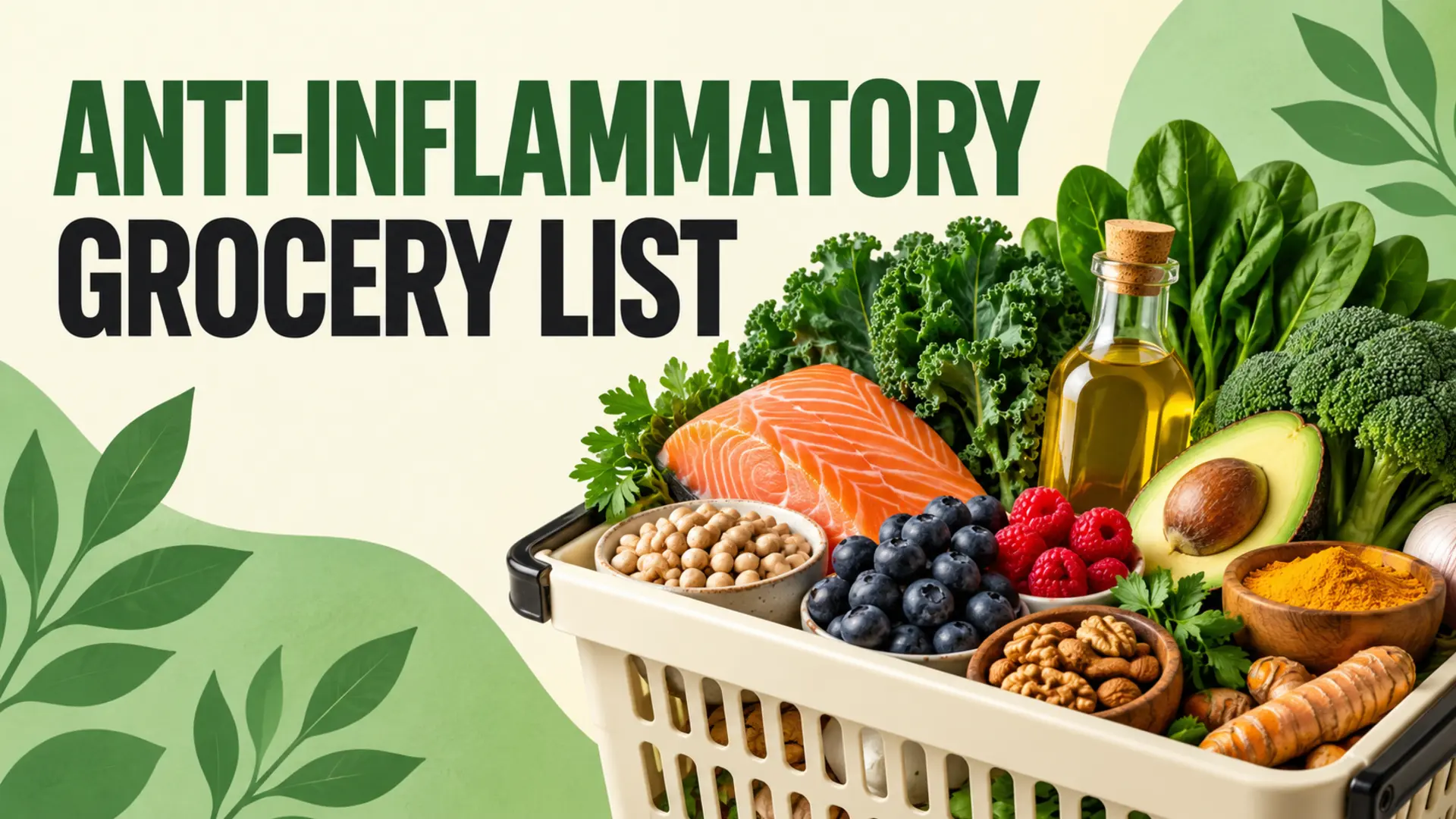
An anti-inflammatory grocery list can support an overall eating pattern rich in vegetables, fruit, whole grains, legumes, nuts, seeds, fish, and unsaturated fats. No single food switches inflammation on or off, and food should not replace treatment for a diagnosed condition.
Anti-inflammatory grocery list: 25 practical foods
- Salmon
- Sardines
- Extra-virgin olive oil
- Walnuts
- Almonds
- Blueberries
- Strawberries
- Oranges
- Tomatoes
- Spinach
- Kale
- Broccoli
- Cabbage
- Carrots
- Sweet potatoes
- Beans
- Lentils
- Chickpeas
- Oats
- Brown rice
- Plain yogurt or a suitable alternative
- Garlic
- Ginger
- Turmeric
- Herbs and spices
This is a flexible starting point, not a required prescription. Choose foods that fit your culture, allergies, budget, medical needs, and availability.
Build meals around the whole pattern
Try oats with berries and nuts, lentil soup with vegetables, a bean-and-grain bowl, or fish with potatoes and greens. Fresh, frozen, canned, and dried foods can all contribute. Compare labels on canned and prepared products when sodium or added sugars matter to you.
Avoid unnecessary elimination rules
There is no sound reason for everyone to eliminate seed oils, sugar, dairy, gluten, or processed foods completely. Restrictive rules can make eating more expensive and less varied. Focus on what you can add consistently, while limiting foods only when personal preference or qualified medical guidance calls for it.
Use spices as flavour, not medicine
Ginger, turmeric, garlic, and herbs can make meals enjoyable, but culinary amounts should not be presented as substitutes for medication. Supplements may interact with medicines or be unsuitable for some people, so discuss concentrated products with a clinician.
Plan and store food safely
Choose a few ingredients that work across several meals, freeze extras before they spoil, and keep raw animal foods separate from ready-to-eat ingredients. Our family grocery reset offers a flexible planning framework, and the plant-based protein and iron checklist can help diversify meals.
Conclusion
An anti-inflammatory grocery list is most useful when it supports a varied, enjoyable dietary pattern. Start with familiar foods, make gradual changes, and use individualized professional advice for medical concerns.