
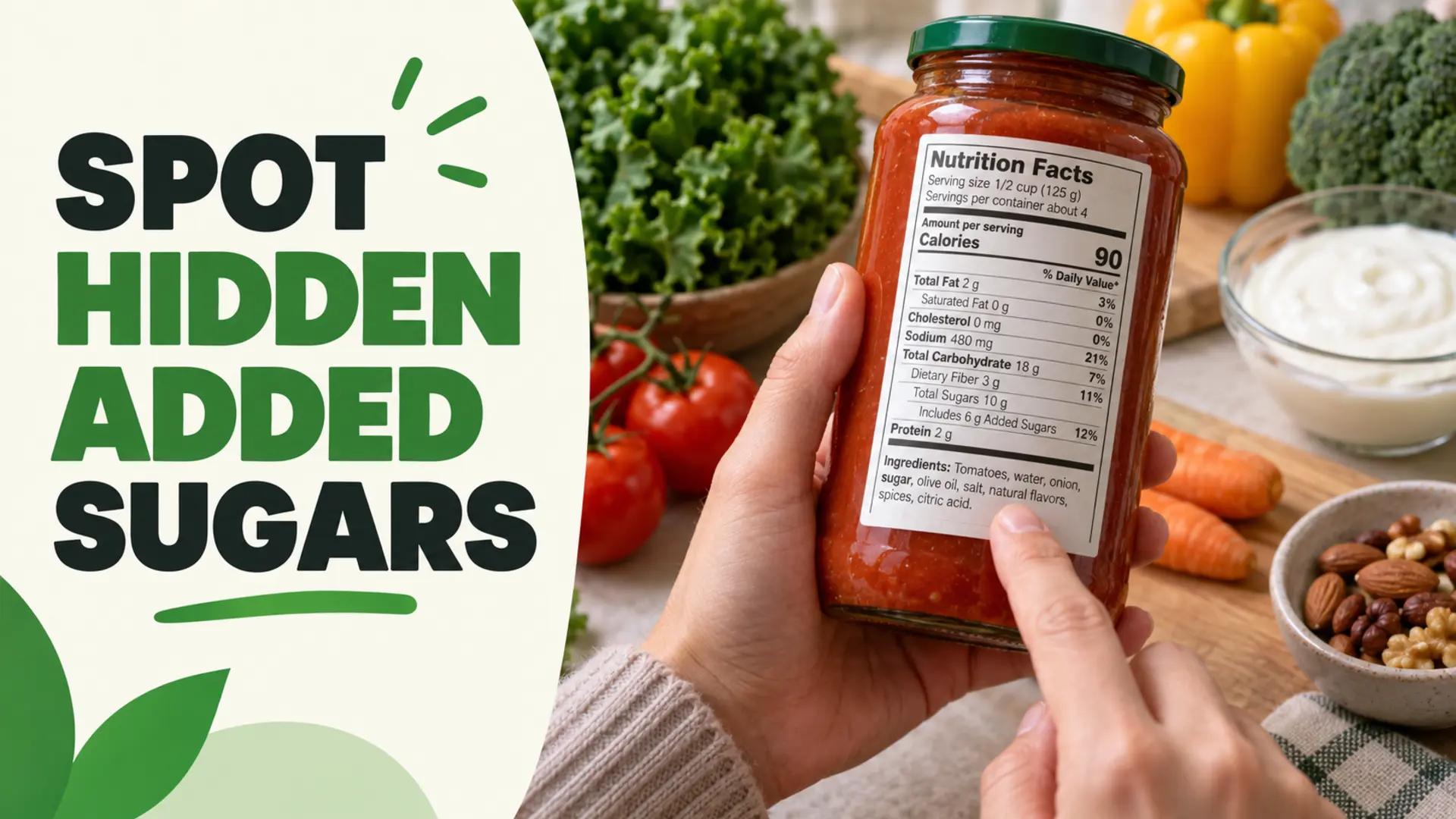
Hidden added sugars can appear in both sweet and savoury packaged foods, but finding them does not require fear-based rules or a list of dozens of “chemical” names. Use the ingredient list, the nutrition panel available in your country, and the serving size to compare products in context.
How to spot hidden added sugars
Common added-sugar ingredients include sugar, syrups, honey, molasses, fruit juice concentrates, glucose, dextrose, and maltose. Names and labelling rules vary internationally. Ingredients are generally listed by weight, so their position can offer useful context, while the nutrition panel shows the amount for the stated serving.
Some labels distinguish added sugars from total sugars; others do not. Total sugars may include naturally occurring sugars in milk and whole fruit as well as added ingredients, so read both parts of the label.
Compare similar products, not isolated numbers
- Check the serving size and compare the same amount.
- Look at the full ingredient list and overall carbohydrate content if that matters to your plan.
- Consider fibre, protein, sodium, allergens, taste, price, and how you will use the food.
- Choose the product that fits your goals rather than assuming any amount above zero makes it unsuitable.
Packaged foods worth checking
Added sugars may be present in sauces, salad dressings, flavoured yogurt, breakfast cereals, granola, plant-based drinks, marinades, and some breads. The amount varies widely by product and region, so fixed numbers are not reliable. “Natural,” “organic,” or “uncured” language does not automatically mean sugar-free.
Sugar alcohols and low-carb claims
Sugar alcohols can affect people differently and may cause digestive symptoms in larger amounts. Rules for calculating “net carbs” are not standardized everywhere, and individual glucose responses can vary. If carbohydrate management is part of diabetes care or another medical plan, use advice from your healthcare team rather than a universal subtraction formula.
Simple shopping strategies
- Keep a few minimally processed staples for easy meals.
- Choose unsweetened versions when you prefer them, then add flavour yourself.
- Use herbs, spices, citrus, vinegar, or plain yogurt for sauces and dressings.
- Keep foods you enjoy; a sustainable pattern does not require perfect avoidance.
Our beginner keto shopping guide discusses medical considerations for very low-carbohydrate eating, and the store-comparison guide can help with value comparisons.
Conclusion
Spotting hidden added sugars is a label-reading skill, not a purity test. Compare equivalent products, interpret serving sizes, and choose foods that fit your overall eating pattern and any individualized medical guidance.