
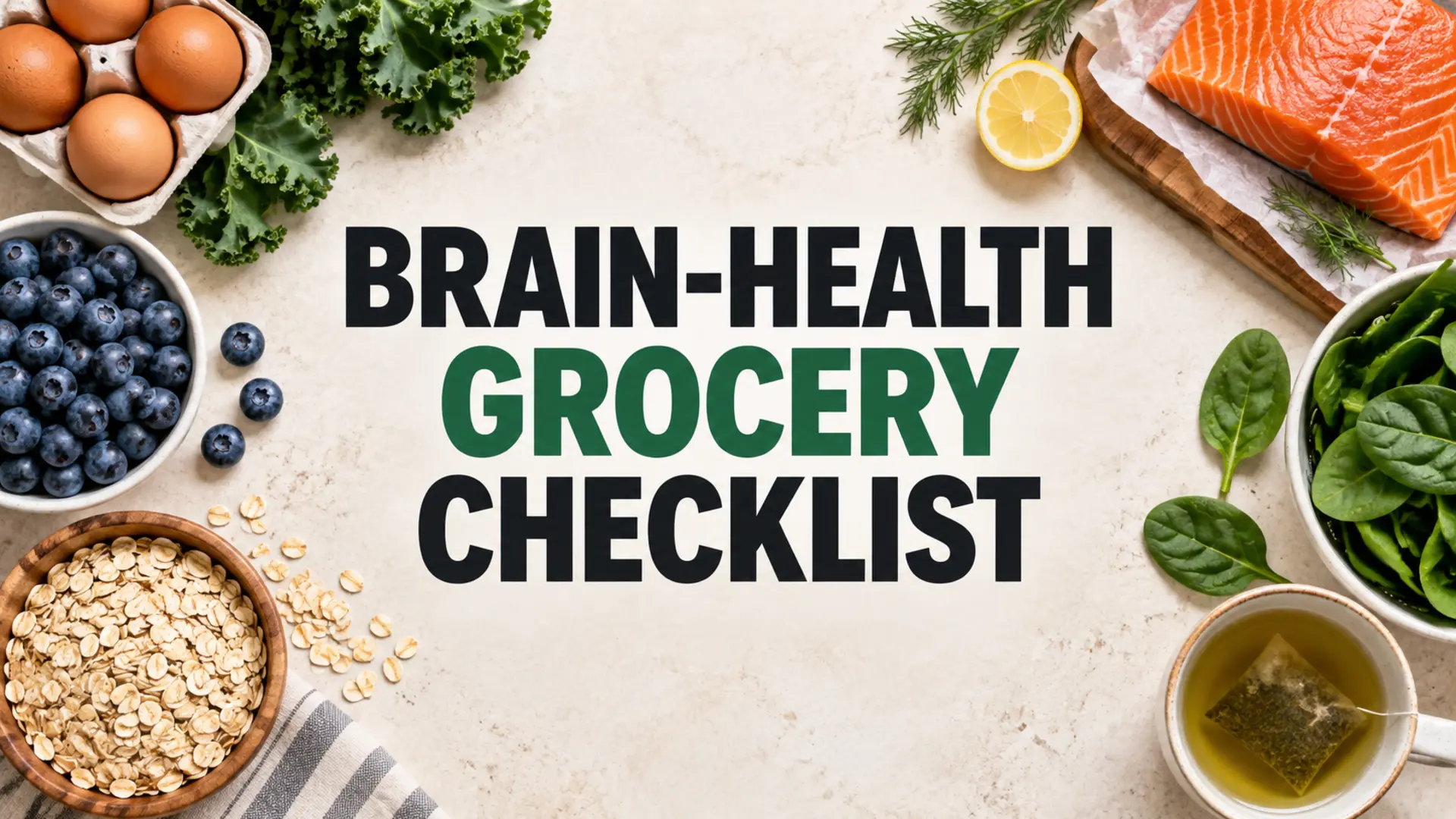
A brain-health grocery checklist can support varied, nourishing meals without promising sharper memory or “laser focus.” Food is one part of overall health; sleep, movement, medical care and learning habits also matter.
Brain-health grocery checklist staples
- Fish, eggs, tofu, beans or poultry
- Oats, brown rice and other whole grains
- Berries, leafy greens and varied produce
- Nuts, seeds and suitable cooking oils
- Tea, coffee or caffeine-free drinks according to tolerance
No individual food acts like a guaranteed nootropic. Product quality, serving size, allergies, availability and the rest of the diet are more useful considerations than premium labels such as “ceremonial,” “wild” or “pasture-raised.”
Build practical meals for busy days
Try eggs with whole-grain toast and fruit, a bean-and-grain bowl, or fish with potatoes and vegetables. The balanced grocery list provides a wider foundation, while the healthy-fats shopping guide can help compare oils, nuts, seeds and fish.
Use caffeine thoughtfully
Caffeine responses vary. Consider timing, serving size, sleep, pregnancy, anxiety, heart conditions and medication interactions. Energy drinks or supplements should not replace rest or professional assessment.
Keep expectations realistic
Use this brain-health grocery checklist for convenient meal planning, not cognitive treatment. New confusion, severe headaches or persistent memory changes require appropriate medical care.