
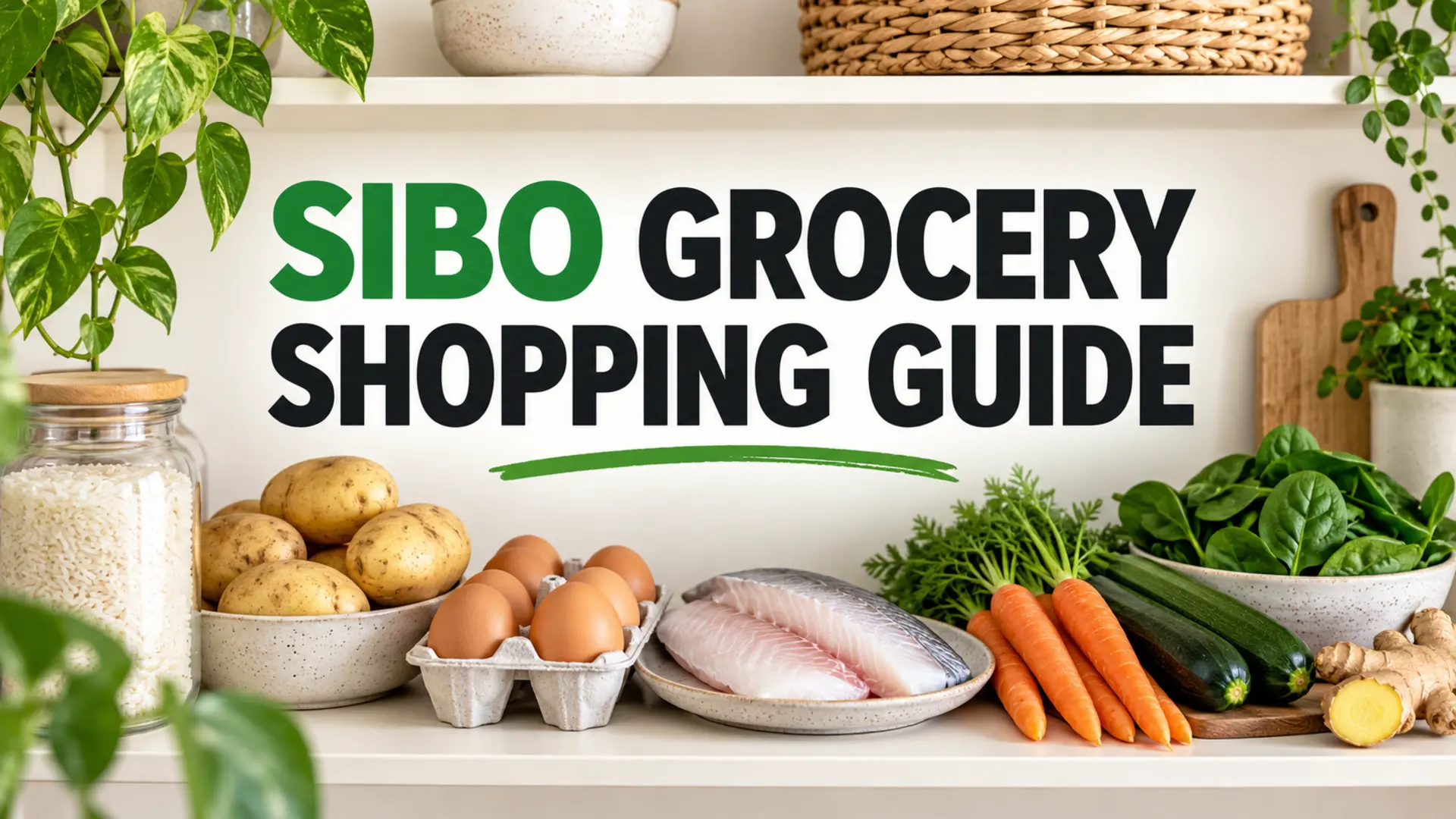
This SIBO grocery shopping guide is a planning aid for people receiving qualified care for small intestinal bacterial overgrowth. Symptoms overlap with many conditions, and diet alone should not be presented as a way to diagnose, “starve” or cure SIBO.
SIBO grocery shopping guide: flexible staples
- Rice, potatoes, oats or other tolerated starches
- Eggs, tofu, fish, poultry or meat
- Vegetables and fruit in individually tolerated portions
- Lactose-free or other suitable dairy alternatives when needed
- Simple herbs, spices and oils that fit the clinical plan
Food tolerance varies, and many online SIBO lists conflict. A low-FODMAP or lower-fermentation phase may be considered by a clinician, but broad exclusions can reduce fibre, variety and nutritional adequacy.
Check labels and prepare foods safely
Seasonings, sauces and marinated foods may contain ingredients relevant to a structured trial. Our nutrition-label guide helps with comparisons, and the low-FODMAP grocery guide explains temporary restriction and reintroduction.
Avoid rigid meal-spacing rules
Do not force long gaps between meals or eliminate snacks if that conflicts with hunger, medication, diabetes, pregnancy or other needs. Meal timing should be personalized.
Plan for review and reintroduction
A SIBO grocery shopping guide should support a time-limited plan with clinical follow-up. Persistent pain, vomiting, bleeding, weight loss or signs of dehydration require prompt medical assessment.