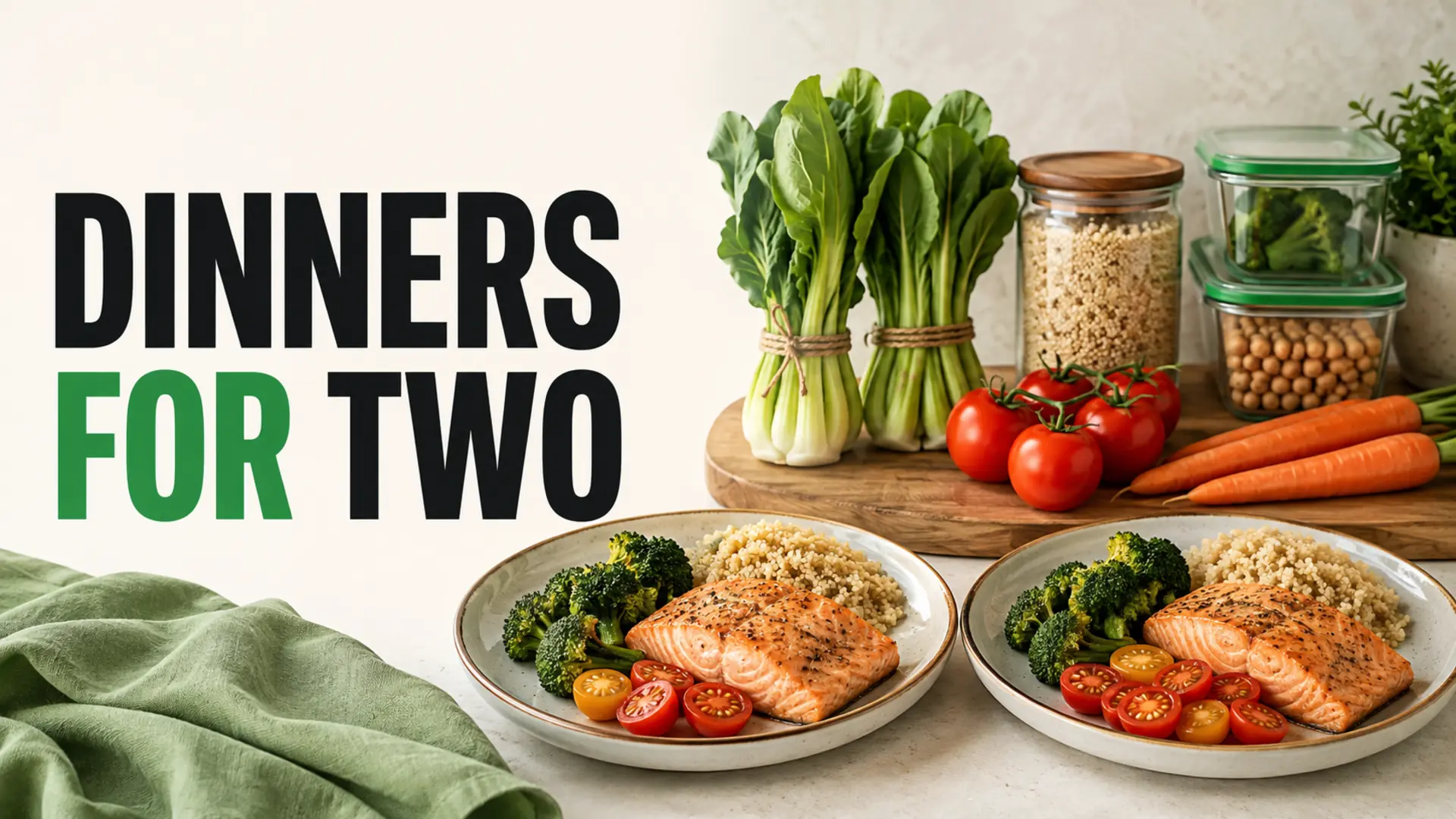
Planning dinners for two becomes easier when portions, package sizes and produce are considered before shopping. The goal is not to buy the smallest package every time. It is to choose amounts that fit two appetites and give every ingredient a useful role.
A flexible plan can include two-serving meals, intentional leftovers and freezer portions. This guide explains how to compare value, manage fresh food and build a practical grocery list without relying on rigid serving rules.
Plan dinners for two around real portions
Begin with the meals you will realistically cook, then decide whether each recipe should make two portions or extra food for another meal. Portion needs vary by person, appetite, ingredients and activity, so recipe serving labels are a starting point rather than a guarantee.
- Cook two portions when the meal is quick, best served fresh or unlikely to be enjoyed again.
- Cook three portions when one person needs lunch the next day.
- Cook four portions when both people want planned leftovers or part of the batch will be frozen.
Label leftovers with the dish and date, refrigerate them promptly, and follow local food-safety guidance for storage and reheating. A larger batch is useful only when you have a clear plan to eat or freeze it.
Use a simple dinner framework
Choose a flexible combination for each dinner: a protein or other satisfying centre, vegetables, a grain or starchy food, and a sauce or seasoning. This is a planning tool rather than a dietary rule. Adjust it for preferences, culture, allergies and nutritional needs.
For general meal-planning context, Canada’s Food Guide offers one adaptable reference; readers elsewhere can use equivalent guidance from their national health authority.
Build a seven-dinner plan with ingredient overlap
Rather than selecting seven unrelated recipes, choose ingredients that can appear in more than one meal without making every dinner taste the same. Change the cooking method, seasoning or supporting ingredients to create variety.
- Roast peppers for grain bowls, then slice the remainder into wraps.
- Use spinach fresh in a salad and cooked into pasta or eggs later.
- Serve rice with a stir-fry, then use extra cooked rice in a bowl.
- Open a can of beans for tacos and add the remainder to soup or salad.
- Use yogurt in a sauce, breakfast or a fruit snack if suitable for your diet.
If you prefer a compact cooking schedule, this one-pot meals seven-day plan offers adaptable dinner ideas with overlapping groceries.
Compare package price with usable value
A larger package is not automatically cheaper for a two-person household. Compare the unit price, then consider how much you can use while it is fresh and whether the rest freezes well. Paying slightly more per unit can be sensible when it prevents an unwanted surplus.
When a larger package can work
- The product has a long shelf life and you use it regularly.
- You can divide and freeze it safely soon after shopping.
- Several planned meals use the ingredient.
- The larger package still fits your available storage.
When a smaller package may be better
- The ingredient is highly perishable or unfamiliar.
- Only one recipe needs it.
- You have limited freezer or pantry space.
- The apparent saving depends on eating more than you want.
Sales are useful when they match the plan. For a repeatable approach, see how to plan dinners around supermarket sales flyers without letting promotions dictate every meal.
Manage produce for two
Fresh produce is easier to manage when you buy different storage profiles. Combine a few delicate items for early meals with sturdier vegetables and frozen options for later in the week.
Buy delicate produce for the first meals
Plan tender greens, berries, ripe fruit and fresh herbs where they will be used soon. Buy loose pieces when available and practical, especially if a bag is larger than your plan requires.
Choose versatile produce for several uses
Carrots, cabbage, peppers, onions and similar adaptable vegetables can often work raw or cooked. Choose based on local availability and the dishes you enjoy rather than treating any item as universally long-lasting.
Use frozen produce strategically
Frozen peas, berries, spinach and mixed vegetables can help when you need small amounts at different times. Check the ingredient list and select products that suit the planned meals. Frozen food is a complement to fresh produce, not a requirement.
Portion proteins and pantry foods after shopping
If you buy a larger pack of meat, fish, tofu or another perishable protein, divide it into meal-sized portions before freezing. Use freezer-safe packaging, label it clearly and follow the product’s storage instructions. Thaw perishable food safely in the refrigerator, in cold water changed regularly, or in a microwave when cooking immediately—never on the counter.
For grains, pasta, beans and sauces, record what is already open before adding another package. A quick inventory can also help you plan meals from fridge ingredients before they are forgotten.
A practical grocery list for dinners for two
Build the list from your chosen meals and current inventory. Quantities should reflect your recipes and household rather than a universal formula.
- Produce: a mix of early-use and sturdy vegetables, plus fruit you regularly eat.
- Proteins: enough for the planned dinners and any intentional leftovers.
- Grains or starches: options that can support more than one meal.
- Flavour builders: herbs, spices, sauces, citrus or aromatics already assigned to dishes.
- Backup items: one convenient frozen or pantry meal for a changed schedule.
Review the plan before checkout
- Confirm that every perishable has at least one planned use.
- Check whether large packages can be divided and stored.
- Remove duplicate ingredients already at home.
- Make sure leftover meals fit the week’s schedule.
- Keep one flexible dinner for unexpected changes.
Conclusion
Good dinners for two depend on flexible portions, realistic package choices and produce with planned uses. Mix fresh meals with intentional leftovers, compare unit price with usable value, and review what you already have. A focused plan makes shopping easier while leaving room for different appetites and changing schedules.