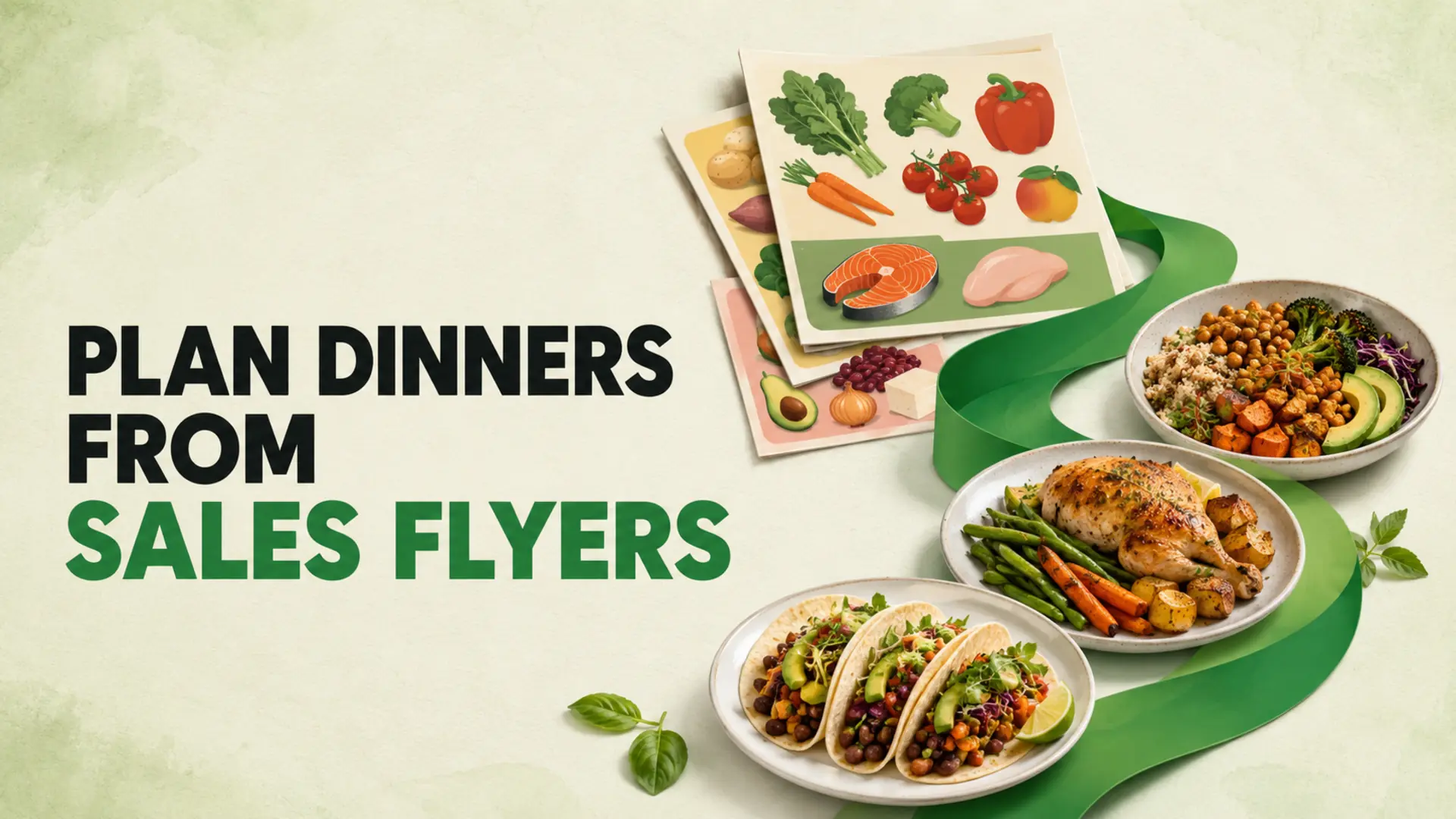
Quick answer: To plan dinners around sales flyers, review the offers available in your area, compare the advertised price with the unit price, and choose two or three flexible ingredients that can support several meals. Then check your pantry, map those ingredients to realistic dinners and buy only the quantities you can use or store safely.
Flyer-based meal planning can make a grocery list more adaptable, but an advertised item is not automatically the best value. Store cycles, flyer dates, package sizes and discounts vary by retailer and location. The goal is to use the flyer as one planning input—not as a reason to buy products you did not need.
How to Plan Dinners Around Sales Flyers
Start with your calendar rather than the discounts. Count how many dinners you will actually prepare at home, note nights that need something quick, and leave space for leftovers. A five-dinner plan may not make sense during a week with travel, events or restaurant plans.
Next, review flyers from stores you can realistically visit. Comparing several stores is useful only when the possible price difference justifies the extra travel, time and effort. One well-planned trip is often more practical than chasing every advertised offer.
Step 1: Identify Useful Sale Ingredients
Look first for ingredients that already fit your household’s normal meals. Proteins, seasonal produce, grains, canned goods and frozen vegetables can all be useful anchors, provided the package size and quality make sense.
Use three questions before choosing an offer
- Would we buy this without the promotion? A discount on an unwanted product is still unnecessary spending.
- Is the unit price competitive? Compare price per kilogram, pound, ounce, litre or other consistent unit where available.
- Can we use or store the full amount? A larger pack offers value only when it will not be forgotten or wasted.
Compare fresh, frozen and canned versions when they serve the same purpose. The best choice may depend on storage space, preparation time, texture and how soon you will cook the meal.
Step 2: Choose One or Two Meal Anchors
A meal anchor is a versatile sale ingredient that can appear in more than one dinner without making every meal feel identical. Examples include chicken thighs, tofu, lentils, beans, mushrooms, cabbage, broccoli or a whole grain.
Avoid building the entire week around one perishable item merely because it is prominently advertised. Select enough variety for nutrition and enjoyment, then use seasonings, cooking methods and accompaniments to create distinct meals.
Step 3: Turn Each Anchor Into Flexible Dinners
Suppose chicken thighs and broccoli are reasonably priced and suit your household. They could support several meal styles:
- Roasted chicken and broccoli with potatoes.
- Chicken and vegetable rice bowls with a pantry-based sauce.
- Shredded chicken tacos with cabbage and beans.
For a plant-based example, lentils and seasonal vegetables could become lentil soup, a grain bowl and a lightly spiced lentil filling. Choose recipes that share ingredients while still changing texture and flavour.
If weeknights are busy, pair the flyer review with these 30-minute dinner plans and choose meals that fit the time you actually have.
Step 4: Check the Pantry Before Adding Extras
Before completing the grocery list, check oils, spices, grains, canned foods, sauces and freezer ingredients. Existing items can fill the gaps between sale ingredients and complete dinners.
Use a monthly pantry audit to keep staples visible. This reduces duplicate purchases and makes it easier to recognize when a flyer item truly complements what you already have.
Step 5: Calculate the Quantity You Need
Estimate portions using the number of people, planned dinners and expected leftovers. Do not multiply every recipe automatically. If one ingredient appears in three meals, calculate its total requirement once and compare that amount with the available package sizes.
Our guide to scaling meal prep recipes explains how to adjust quantities while keeping the original method and appliance capacity in mind.
Step 6: Build the Final Shopping List
Organize the list into three layers:
- Sale anchors: the advertised ingredients selected for specific dinners.
- Supporting ingredients: produce, grains, sauces or staples needed to complete those meals.
- Household essentials: regular items that are genuinely due for replacement.
Add quantities and intended uses when helpful. Then arrange everything in store order using this method for organizing a shopping list by aisle.
When a Flyer Deal Is Not a Good Deal
- The package is larger than you can use or freeze.
- A different size has a lower unit price.
- The promotion requires buying several units you do not need.
- The ingredient does not fit any planned meal.
- A substitute already in your pantry will work.
- Using the offer requires an extra trip that is not worthwhile.
Advertisements are designed to attract attention. Keep the decision grounded in your menu, storage and total basket rather than the size or colour of the promotional label.
Plan for Storage and Food Safety
Large packages require a storage plan before purchase. Divide food into meal-sized portions, label freezer packages and refrigerate perishables promptly. Use official food-safety guidance for handling, cooking and storage times rather than relying on a flyer or general rule.
Balanced meal ideas can also come from your country’s official dietary guidance. For example, Canada’s Food Guide offers a flexible plate model; readers elsewhere can use the equivalent guidance from their national health authority.
A Simple Flyer-Based Dinner Template
| Dinner | Flexible formula |
|---|---|
| Night 1 | Sale protein or legume + seasonal vegetable + grain |
| Night 2 | Sheet-pan meal using overlapping vegetables |
| Night 3 | Soup, curry or stew using pantry staples |
| Night 4 | Tacos, wraps or bowls using planned leftovers |
| Night 5 | Freezer meal or flexible clean-out-the-fridge dinner |
Final Takeaway
To plan dinners around sales flyers successfully, begin with your schedule, choose only useful offers, compare unit prices and connect every purchase to a meal. A flexible plan built around a few versatile ingredients can support variety without turning promotions into overbuying.