
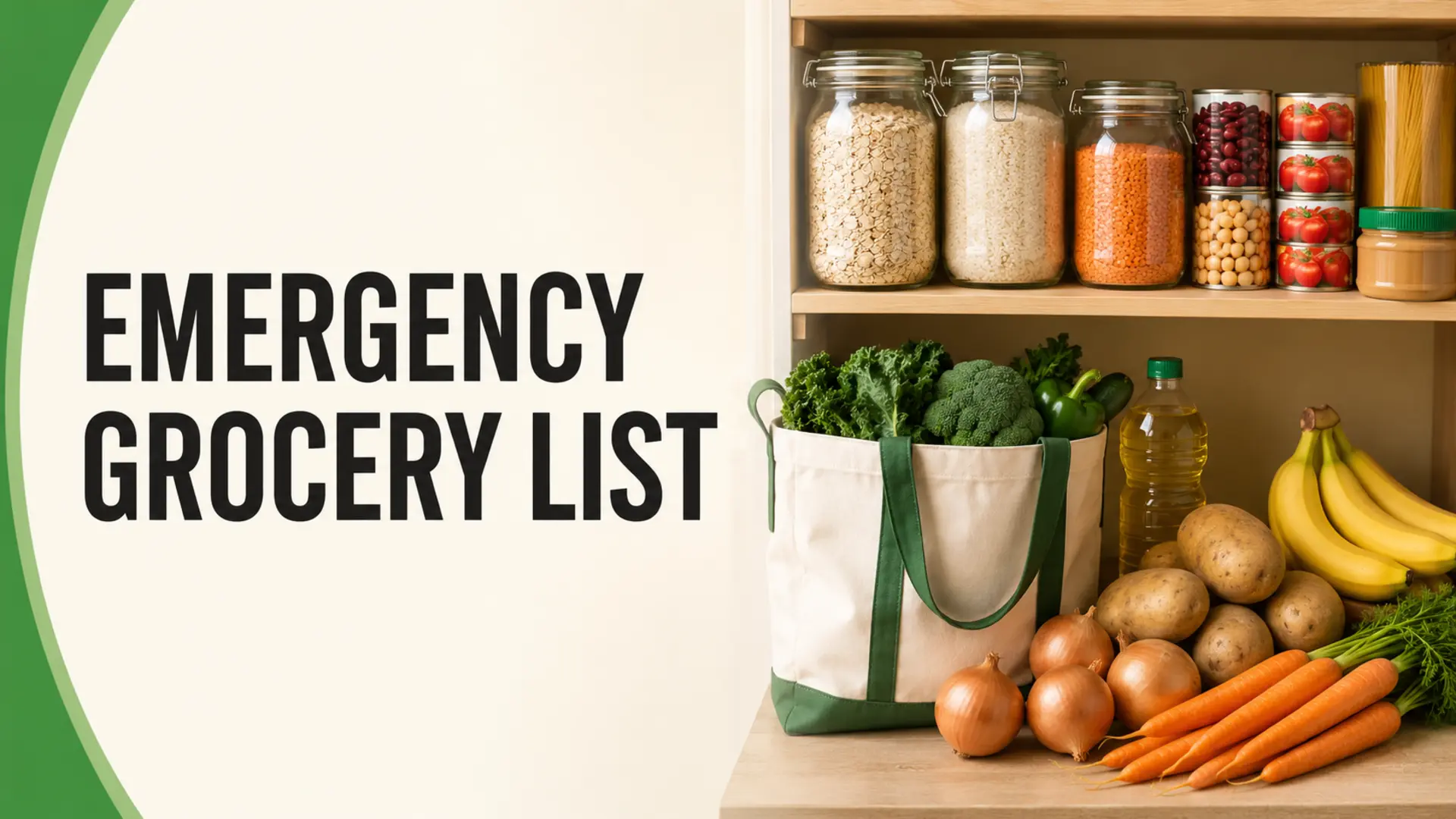
An emergency grocery list helps you cover a short period when money is unusually tight, but no single price or seven-food menu will work everywhere. Start with what you already have, protect essential dietary needs, compare local prices and choose foods that can form several simple meals. If you do not have enough food, use available community support rather than trying to meet an unsafe target.
Build an Emergency Grocery List From What You Have
Check the refrigerator, freezer and pantry before shopping. Write down complete meal ingredients, partial packages and foods that should be used soon. A quick pantry audit can reveal enough rice, pasta, oats, beans, sauces or frozen vegetables to reduce what you need to buy.
Group your inventory into meal bases, proteins, vegetables and fruit, flavour builders and practical extras. The missing categories become the first items on the list.
Set a Realistic Limit, Not a Universal Price
Food prices differ by country, region, store and season. Household size, allergies, medical needs, cooking equipment and transportation also affect the total. Use the money actually available after urgent essentials, then plan within it. Keep a small buffer for a necessary substitution instead of spending every unit of currency in advance.
Prioritize Flexible Meal Components
Choose affordable items that work together in several ways. Good options vary locally, so compare unit prices and buy foods your household will eat.
- Meal bases: oats, rice, pasta, bread, potatoes or another locally economical grain or starch.
- Protein options: lentils, beans, eggs, peanut butter, tofu, canned fish, yogurt or a suitable alternative.
- Vegetables and fruit: hardy fresh produce plus frozen or canned choices that minimize waste.
- Flavour builders: onions, garlic, spices, canned tomatoes, broth or sauces already used in the household.
- Cooking essentials: oil and other basics only when they are genuinely missing.
Use these budget-friendly meal staples as flexible ideas rather than a fixed shopping prescription.
Plan Meals Before Choosing Quantities
Sketch enough breakfasts, lunches, dinners and snacks for the number of people and days involved. Reuse ingredients deliberately: oats can become porridge or simple savoury patties; beans can go into soup, pasta, rice bowls or sandwiches; vegetables can support several meals.
- Breakfast: oats with fruit and peanut butter, eggs with toast, or another familiar low-cost option.
- Lunch: soup, leftovers, bean sandwiches or grain bowls.
- Dinner: lentil stew, pasta with beans and vegetables, fried rice, baked potatoes or a flexible tray meal.
- Snacks: fruit, toast, yogurt, carrots or portions of foods already planned.
Quantities should reflect appetite, age, activity, dietary requirements and what is already available. Avoid claiming that one package size provides a fixed number of adequate meals for every person.
Make a Two-Level Shopping List
Put items required to complete the meal plan in an essentials section. Add a second section for useful extras that can be skipped or substituted if the total is too high. Include a quantity or acceptable size beside each item so promotions do not lead to overspending.
Compare Unit Price and Usable Value
Compare the cost per common unit when package sizes differ, but consider the whole purchase. A larger bag may offer a lower unit price yet exceed the cash available or storage space. Fresh produce may be good value when it will be eaten; frozen or canned produce may be better when spoilage is a concern.
Store brands and discount shops can help, but they are not automatically cheapest. Check the shelf label and ingredient list. Clearance food is useful only when packaging is intact, the food can be used promptly and storage instructions can be followed.
Keep Nutrition and Dietary Needs in View
A temporary budget does not remove the need for enough food, fluids and medically appropriate choices. Include varied food groups when possible and adapt the list for allergies, pregnancy, age, health conditions, cultural preferences and required textures. Canada’s Food Guide offers one general healthy-eating reference; readers elsewhere should use guidance from their local public-health authority.
Do not replace professional advice for a medical diet with a generic low-cost menu. If dietary restrictions make an emergency plan difficult, tell a food program or community service what accommodations are needed.
Use Food Assistance Early When Needed
If available money cannot cover adequate food, contact local food banks, community kitchens, schools, faith organizations, mutual-aid groups or government benefit offices. Rules and services vary by location. Asking early may provide more options and prevent skipped meals.
In the United States, households using food benefits can also review this SNAP meal-planning guide. Readers in other countries should check the relevant local program rather than assuming the same eligibility or purchasing rules.
Cook and Store Food Safely
Prepare only what can be cooled and stored safely. Refrigerate perishable leftovers promptly, use clean containers, label portions and freeze food that will not be eaten soon. Never use damaged, leaking, swollen or recalled packages simply because they are discounted.
Stretch the Plan Without Making It Rigid
Cook ingredients in adaptable batches, but vary the final meals. A pot of lentils can become soup one day and a rice-bowl topping the next. Cooked vegetables can move into pasta, eggs or a stew. Keep seasonings flexible and make substitutions based on price, availability and dietary fit.
For longer-term preparation, build gradually using this frugal pantry-building framework; do not attempt a large stock-up during an already difficult week.
Review What Worked After the Week
- Which foods and meals were actually eaten?
- What remained and can be stored safely?
- Which items offered useful value at local prices?
- Was there enough food for everyone?
- Which pantry basic could be replaced gradually later?
Keep the Emergency Plan Practical and Dignified
An emergency grocery list should reduce immediate pressure without relying on fabricated prices, extreme restrictions or shame. Start with inventory, choose flexible meal components, protect dietary needs and seek assistance when the available budget is not enough. The right plan is the one that safely feeds the actual household through the difficult period.
Frequently Asked Questions
What should go on an emergency low-budget grocery list?
Start with food already at home, then add missing components for simple meals: an affordable starch, suitable protein, vegetables or fruit, cooking fat, and basic flavoring. Include essential dietary and infant needs first. The exact list depends on local prices and the household.
How do I plan groceries when I have almost no money?
Inventory every usable food, count the meals until the next income or benefit, and assign existing ingredients first. Price only the gaps using current local information. If the total cannot provide enough suitable food, seek assistance early rather than forcing an unsafe target.
What are the cheapest foods for a difficult week?
Prices vary, but oats, rice, pasta, potatoes, beans, lentils, eggs, peanut butter, canned tomatoes, cabbage, carrots, and frozen vegetables are often worth comparing. Choose foods the household can prepare, safely store, and willingly eat.
How can I make an emergency grocery list without sacrificing nutrition?
Use flexible meal categories and include available produce, protein foods, grains or starches, and fats that meet household needs. Frozen, canned, dried, and fresh forms can all help. Protect medically required foods and ask a healthcare professional when a condition limits substitutions.
Should I buy in bulk during a broke week?
Usually only for a frequently used staple when the unit price is lower and the package fits cash flow, storage, and immediate meals. A large package can consume money needed for variety. Buy the useful quantity, not the largest apparent bargain.
What meals work with a very small emergency grocery budget?
Soups, lentil pasta, bean-and-rice bowls, oatmeal, egg-and-vegetable skillets, baked potatoes, curries, and simple sandwiches can be flexible. Build around ingredients already available and one or two bridge purchases rather than starting every recipe from zero.
How do I prevent food waste during an emergency week?
Plan exact meal uses, prioritize perishables, serve modest portions with seconds available, and freeze suitable extras promptly. Keep a visible “use first” area. Avoid experimental bargains because even cheap food is costly when it is discarded.
Where can I get immediate food help?
In the United States, the official USA.gov food assistance page links to SNAP, WIC, school meals, and emergency resources. In Canada, 211 and provincial services can identify local help. Other countries have their own government and community programs.
Can I use coupons to stretch an emergency grocery budget?
Yes, when a coupon lowers the final price of an item already needed or a practical substitute. Compare unit prices and required quantities. Do not spend extra to earn a rebate, reach a threshold, or buy food with no planned use.
How can I prepare for another financially tight week?
After the immediate period, note which meals worked and gradually keep one or two shelf-stable backup meals when affordable. Maintain a small inventory, not a fear-driven stockpile. Broader debt or income problems may require benefits advice or qualified financial counseling.