
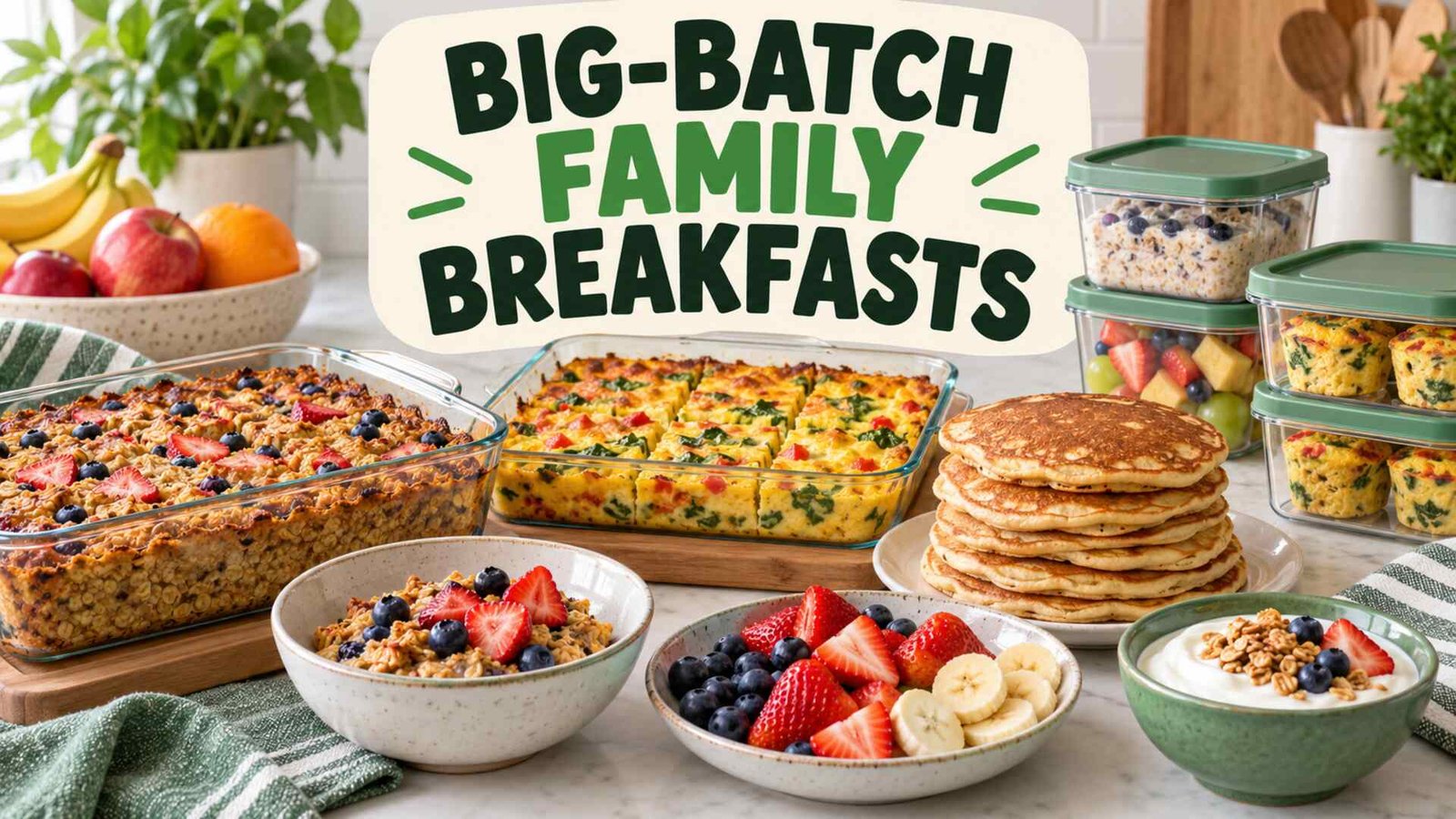
Family breakfast prep can make school mornings calmer, but preparation and reheating times depend on the recipe, batch size, equipment, and storage method. These five flexible ideas can be adapted for household preferences, allergies, and the ingredients already available.
Family breakfast prep starts with one or two recipes
You do not need to prepare five dishes every weekend. Pick the breakfasts your family is most likely to eat, check refrigerator and freezer space, and make a focused grocery list.
1. Sheet-pan pancakes
Use a tested sheet-pan pancake recipe and add fruit, seeds, or other suitable toppings. Cool fully before portioning. Serve with yogurt, fruit, eggs, or another side if desired.
2. Vegetable egg bake
Combine eggs with cooked vegetables and pasteurized cheese according to a reliable recipe. Cook until safely done, then cool and portion promptly. Offer a dairy-free or egg-free alternative when required.
3. Baked oatmeal
Rolled oats, milk or a fortified alternative, fruit, spices, and optional seeds can form an adaptable baked breakfast. Keep nuts separate when allergies or school restrictions apply.
4. Freezer breakfast burritos
Fill tortillas with cooked eggs, beans, vegetables, cheese, or fully cooked meat. Allow hot fillings to cool appropriately before wrapping and freezing. Label the package with its contents and date.
5. Yogurt and fruit cups
Portion pasteurized yogurt and fruit into food-safe containers. Add granola immediately before eating to preserve texture. For young children, adapt fruit size and texture to reduce choking risk.
Build the shopping list by category
- Produce: fruit and vegetables for two or more recipes.
- Protein foods: eggs, yogurt, beans, cheese, or alternatives.
- Grains: oats, flour, tortillas, or whole-grain bread.
- Pantry: spices, oil, baking ingredients, and suitable toppings.
Use this breakfast prep checklist to organize ingredients and equipment.
Store and reheat safely
Refrigerate prepared foods promptly, use freezer-safe packaging, and follow local guidance for storage and reheating. Reheating times cannot be universal because appliances and portions vary. Check the center and follow the original tested recipe.
Keep mornings flexible
Let family members choose among two prepared options when possible. A simple family snack checklist can also help reuse fruit, yogurt, vegetables, and crackers later in the day.
Effective family breakfast prep is less about exact protein numbers or one-minute promises and more about safe storage, familiar foods, and fewer morning decisions.
Frequently Asked Questions
What breakfasts can be made in large batches for school mornings?
Baked oatmeal, sheet-pan pancakes, egg bakes, breakfast burritos, and muffins or quick breads can be portioned for later. Yogurt-and-fruit cups are better assembled for a few days rather than frozen. Choose one or two options the family already eats before scaling up.
How many breakfasts should I prepare at once?
Count actual school mornings, household members, freezer space, and existing food. Prepare a mix of refrigerator and freezer portions rather than one enormous batch. Testing one recipe first prevents a week of waste if the texture changes after storage or reheating.
How long does cooked breakfast last in the refrigerator?
Most cooked leftovers should be refrigerated within two hours and used within four days. Individual recipes may have shorter quality windows. Label the preparation date, keep the refrigerator at 40°F/4°C or below, and freeze portions that will not be used promptly.
Can egg bakes and breakfast burritos be frozen?
Yes, many versions freeze well. Cool cooked food promptly, portion it, wrap or containerize it securely, and label the date. Thaw in the refrigerator or use a safe rapid method, then reheat until the centre reaches 165°F/74°C.
How do I prevent reheated breakfast from becoming soggy?
Cool food before wrapping, keep wet toppings separate, and avoid overloading burritos or pancakes with sauce. Reheat using the method suited to the food—oven, toaster oven, skillet, or microwave. Texture is a quality issue; safe storage and thorough reheating still come first.
What can I serve with a batch-prepped breakfast?
Add a simple fresh item such as fruit, milk or a suitable alternative, yogurt, nut or seed butter where safe, or vegetables with an egg dish. The goal is a workable family meal, not making every prepared recipe contain every food group.
How can I prep breakfast for children with food allergies?
Read labels every time, separate safe ingredients and tools, prevent cross-contact, and label individual portions clearly. Follow each child’s medical and school plan. Do not assume gluten-free, dairy-free, nut-free, or vegan packaging makes a product safe for every allergy.
Can children help with big-batch breakfast prep?
Children can measure dry ingredients, mash fruit, whisk in a stable bowl, add toppings, or label containers according to age and skill. Adults should manage heat, sharp tools, raw eggs, heavy pans, and final temperature checks. Wash hands before and after preparation.
How do I create one grocery list for several breakfast recipes?
Combine shared ingredients—oats, eggs, milk, fruit, tortillas, vegetables, and cheese—then total quantities and check current stock. Note which ingredients are recipe-critical and which have substitutes. This prevents buying separate packages for every recipe.
What is a good backup when the prepared breakfast runs out?
Keep one fast shelf-stable or freezer option the family accepts, such as oatmeal, cereal, whole-grain toast, frozen waffles, or a previously frozen portion. A backup protects the morning routine without requiring every weekend prep session to be perfect.