
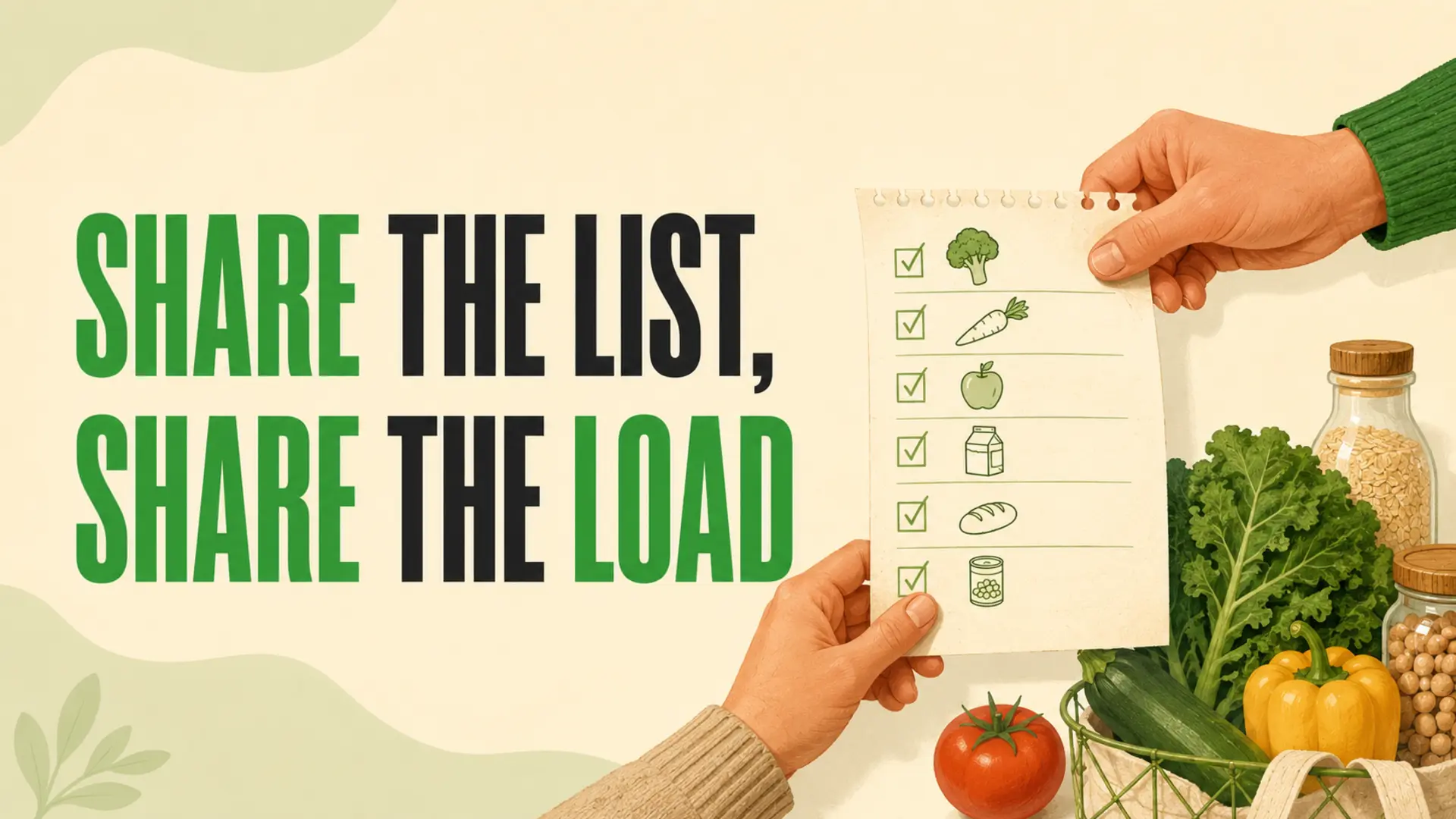
A shared grocery list can reduce the mental load of shopping by giving everyone one visible place to record needs, make decisions, and confirm what has been bought. It does not make household work fair by itself. The benefit comes when each person uses the list and takes ownership of part of the process.
What grocery-shopping mental load looks like
Shopping involves more than visiting a store. Someone notices that food is running low, remembers household preferences, checks the schedule, plans meals, compares priorities, and monitors whether the task is complete. Research on household mental labor commonly describes this work through stages such as anticipating needs, identifying options, deciding, and monitoring progress. A systematic review of mental labor research offers broader context for this often-invisible work.
The problem is not simply that one person shops more often. It is that one person may still have to remember everything, prepare instructions, answer questions, and check the result. A shared list is useful when it moves information out of one person’s head and gives others enough context to act independently.
How a shared grocery list can help
A shared grocery list creates one current source of information for the household. Anyone can add an item when they notice a genuine need. The person who shops can see the same list, mark completed items, and avoid relying on separate texts, paper notes, or memory.
- Needs become visible: household members can record an item when they notice it is low.
- Instructions become clearer: quantities, acceptable substitutes, and intended meals can be added when useful.
- Shopping can be handed over: another person can complete the trip without waiting for a new list.
- Duplicate buying is less likely: one current list is easier to check than several disconnected messages. See the guide to preventing double-buying with a shared list.
Shared access is not the same as shared ownership
If one partner still has to notice every shortage, assign every trip, and remind everyone to update the list, the underlying workload has not changed much. The goal is ownership rather than occasional help. For an assigned part of the grocery routine, one person should be able to notice, decide, act, and follow through.
Couples do not need a perfect 50/50 split for every task. A practical arrangement should reflect time, ability, preferences, and other household responsibilities. The important part is that the division is discussed rather than assumed. This guide to dividing household shopping with a partner provides a useful starting point.
Set simple rules for the list
Agree on a few rules that make the list dependable. Keep them simple enough that everyone can follow them consistently.
- Add an item when you notice it is low rather than waiting for the weekly planning session.
- Include a quantity when “one” could mean different things to different people.
- Add a substitute only when brand, size, dietary needs, or price limits matter.
- Check the kitchen before confirming the final list.
- Mark an item complete only after it is placed in the cart or delivered.
Households moving away from notes or text messages can use this step-by-step guide to transition from paper to a digital grocery list.
Include planning and budget decisions
A list works better when the household has already agreed on the week’s priorities. Decide which meals need to be covered, which staples require replenishing, and which purchases can wait. If spending decisions repeatedly fall to one person, create a shared household grocery budget with clear categories and room for adjustments.
These details give the shopper authority to make reasonable choices. They also reduce the need to call or message the person who normally manages the groceries.
Review the system without keeping score
After a few shopping cycles, take five minutes to review what worked. Were items missing? Were quantities unclear? Did one person still carry most of the remembering and follow-up? Change the rule or ownership boundary that created the problem.
A shared grocery list is a coordination tool, not a relationship cure. Used consistently, it can make responsibilities more visible and help both people participate with less prompting. The useful next step is small: choose one list, agree on who owns each part of the routine, and start adding needs as they arise.
Frequently Asked Questions
What is the mental load of grocery shopping?
It is the ongoing work of noticing shortages, remembering preferences, planning meals, tracking budgets, checking schedules, choosing substitutes, and making sure food appears—not merely the physical trip.
How can a shared grocery list reduce mental load?
It creates one visible place for needs, quantities, and updates, so information does not depend on one person’s memory. It helps only when all responsible household members use it consistently.
Does sharing an app mean grocery work is shared equally?
No. Access is not ownership. Partners still need to divide inventory checks, meal planning, list maintenance, shopping, putting food away, and reviewing waste and spending.
What rules make a shared grocery list easier to use?
Use one list, add quantities, mark priorities, note substitutions, and check inventory before adding items. Keep the rules short enough that everyone will actually follow them.
Who should add an item when it runs out?
A practical rule is that the person who notices the shortage adds it immediately. Household members should not assume one partner will inspect every cupboard and translate every request.
How can families avoid vague grocery requests?
Write the product, quantity, size or acceptable range, deadline, and substitute limits. “Snacks” or “something for dinner” transfers the decision rather than sharing the work.
Can a shared grocery list help with meal planning?
Yes, when meals or intended uses are noted beside key ingredients. This makes priorities clearer and reduces removing an item that another person needs for a scheduled meal.
How should couples discuss missed grocery tasks?
Talk outside the stressful shopping moment, describe the specific gap and its effect, and agree on a process change. Avoid scorekeeping, general accusations, or using the app as evidence in an argument.
What if only one person keeps updating the shared list?
The underlying division of responsibility has not changed. Reassign concrete tasks, set a brief weekly planning time, or simplify the system rather than asking the same person to send more reminders.
How do we know whether the shared-list system is working?
Look for fewer duplicate trips, missing essentials, repeated questions, and planning conflicts, plus a fairer workload. Review both convenience and how responsibility feels to each person.