
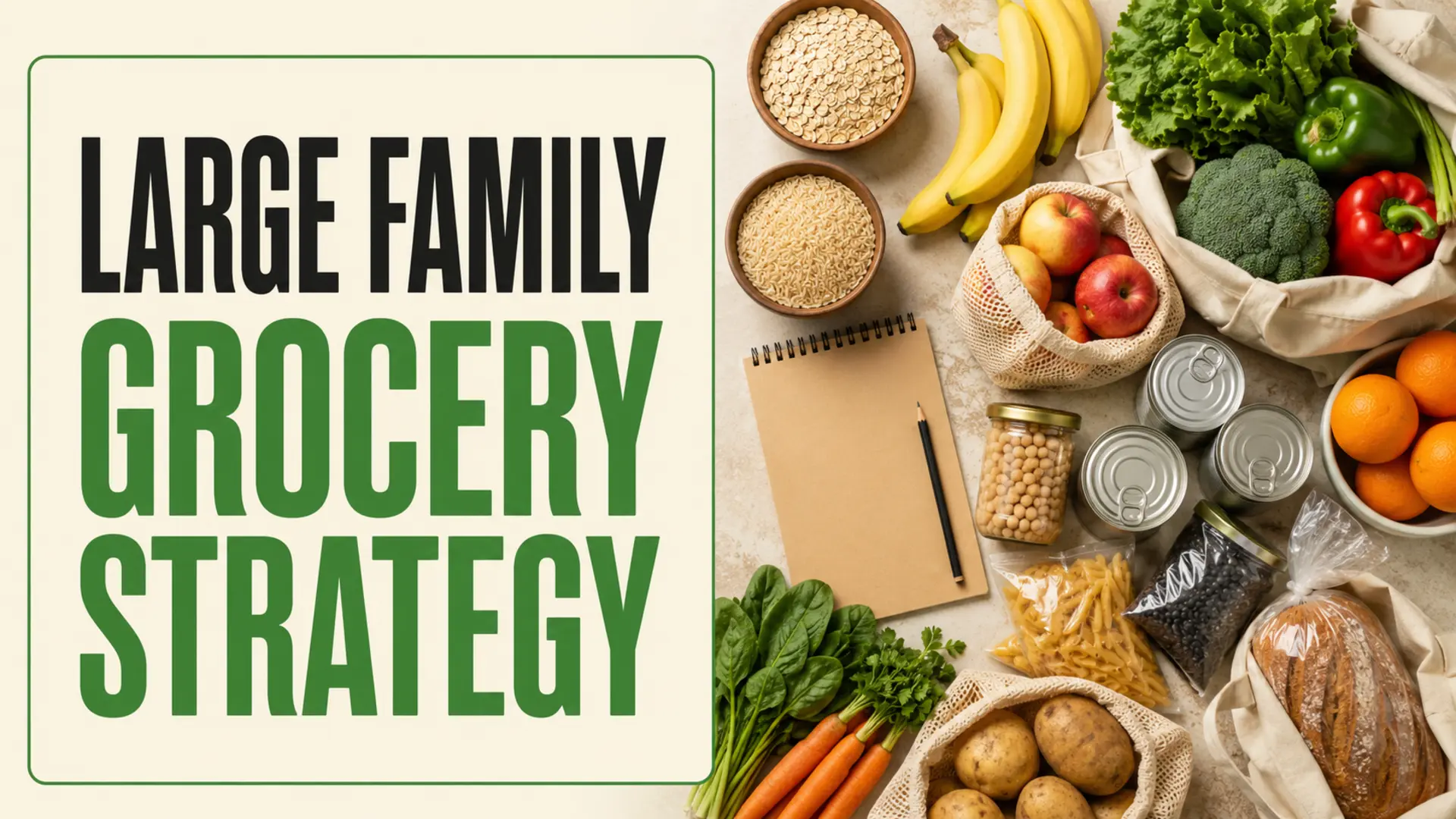
Large family grocery shopping gets easier when the list reflects what your household already has, what everyone will eat, and how much each meal actually requires. A repeatable routine can reduce forgotten items, duplicate purchases, and rushed midweek trips without forcing every family into the same budget or menu.
A practical large family grocery shopping system
The most useful system is simple: check your inventory, map the week, calculate quantities, shop in a logical order, and store food so the oldest items are used first. Adapt each step to your household size, ages, dietary needs, available storage, and shopping schedule.
Start with inventory and the household schedule
Before planning meals, scan the refrigerator, freezer, and pantry. Note ingredients that should be used soon, then check the family calendar for late workdays, school activities, guests, or meals away from home. A regular pantry audit makes this faster and helps prevent buying another package of something already on the shelf.
Choose meals that share ingredients without feeling repetitive. For example, roasted vegetables can accompany one dinner and become part of a grain bowl or soup later in the week. Keep one flexible meal for leftovers or schedule changes.
Write quantities, not just item names
A list that says “apples” leaves room for guesswork. “Twelve apples for lunches and snacks” is easier to shop from and review. Estimate portions using your family’s real eating patterns, then account for ingredients already at home. For frequently purchased items, save preferred quantities in a reusable list and adjust them when routines change.
- List the meal or use beside ingredients when it prevents confusion.
- Include an acceptable substitute for items that are often unavailable.
- Group duplicate ingredients into one total quantity.
- Organize the final list with a supermarket aisle order to reduce backtracking.
Buy in bulk selectively
A larger package is useful only when the unit price is better, the family will use it, and there is safe storage space. Compare the cost per unit rather than the package price; this unit-pricing guide explains the calculation. Bulk purchases tend to work best for familiar staples with predictable demand. Be more cautious with new products, highly perishable foods, and anything that would overcrowd the freezer or pantry.
When a large package is practical, portion it after shopping and label containers with the item and date. That turns bulk buying into usable meal components rather than forgotten stock.
Organize the trip and share responsibility
Set a household routine for adding items to one shared list as supplies run low. Before leaving, one person can do the final inventory check while another reviews the meal plan. A clear shared household grocery budget also helps everyone understand priorities and trade-offs.
At the store, shop from the organized list and compare substitutions against the planned quantity and use. Children can help with age-appropriate tasks such as counting produce or finding a familiar package, while an adult makes price and food-safety decisions.
Store and rotate food safely
Put chilled and frozen foods away promptly, keep raw foods separate from ready-to-eat items, and follow the storage instructions on each product. The FoodSafety.gov four-step guidance provides a useful reminder to clean, separate, cook, and chill. Move older pantry items toward the front and add leftovers to the next meal-planning check.
Make the routine fit your family
Successful large family grocery shopping is not about buying the biggest package or following a rigid menu. It is about making household demand visible before you shop. Start with inventory, plan realistic meals, specify quantities, compare value, and review what was actually used. After a few cycles, your list will become quicker to build and better matched to your family.
Frequently Asked Questions
How do large families create an accurate grocery list?
Start with the household schedule and inventory, plan meals by attendance, and write quantities rather than item names alone. Include school lunches, work meals, guests, and nights when fewer people eat at home.
How much food should a family of five buy each week?
There is no universal amount. Ages, appetites, dietary needs, schedules, and leftovers differ. Use recipe yields and actual consumption from recent weeks to set quantities.
Is bulk buying always cheaper for a large household?
No. Compare unit price, usable quantity, storage, cash outlay, and waste. Bulk works best for frequently used foods and supplies, not products the family likes only occasionally.
How can a large family organize multiple grocery stores?
Assign each store only the items with a meaningful price or availability advantage, group trips geographically, and include travel costs. Too many stops can erase savings and increase impulse buying.
What is the best way to manage family snack spending?
Set a category limit, choose a few planned options, portion larger packages when practical, and avoid buying every preference every week. Track what is eaten rather than what was requested.
How can large households prevent duplicate purchases?
Use one shared list, mark items promptly, assign categories to shoppers, and check pantry zones before ordering. Labeling open packages and keeping like items together also helps.
How should a large family store bulk groceries?
Use food-safe containers, label purchase or opening dates, rotate older stock forward, keep cold foods at safe temperatures, and buy only what fits existing refrigerator, freezer, and dry storage.
How can children help with large-family grocery routines?
Assign age-appropriate inventory, list, unpacking, or meal-prep tasks with supervision. Adults remain responsible for budget decisions, allergen control, safe storage, and hazardous tools.
What meals scale well for a household of five or more?
Soups, stews, curries, pasta bakes, tacos, grain bowls, sheet-pan meals, and bean dishes can scale predictably. Calculate yield and add side dishes instead of simply doubling every ingredient.
How often should a large family audit its grocery system?
Review spending, shortages, waste, and storage monthly. Seasonal schedules and children’s needs change, so quantities that worked several months ago may no longer fit.