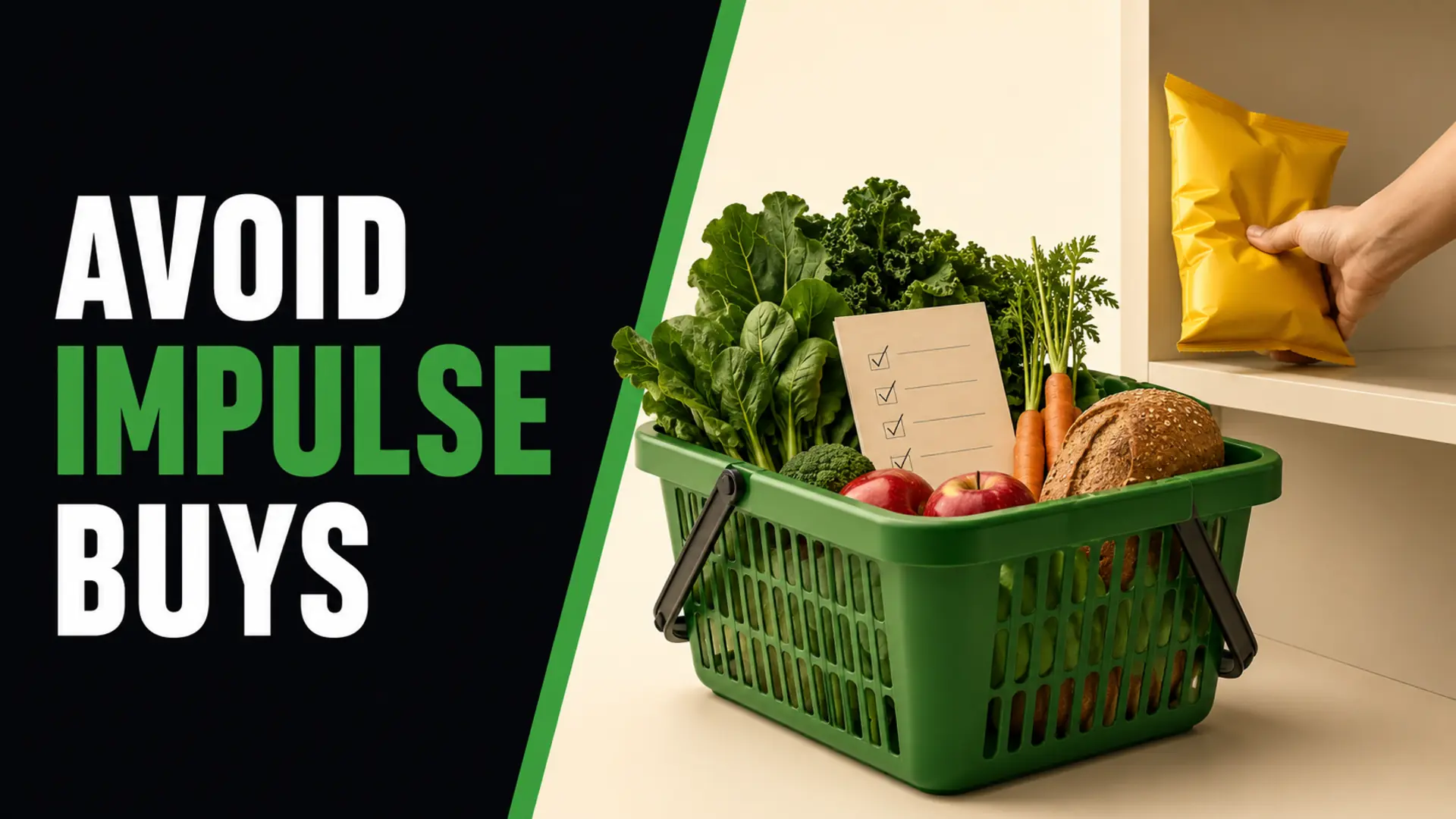
To avoid impulse buys when shopping hungry, make the trip easier before you enter the store: eat if you can, check what you already have, build a short list around planned meals and set a realistic spending limit. If shopping hungry is unavoidable, use a simple route, allow only useful substitutions and pause before checkout.
An unplanned purchase is not automatically a mistake. A good-value substitute, a forgotten essential or an ingredient for a clear meal can be sensible. The goal is to reduce purchases that do not fit your needs, storage space or budget—not to make shopping rigid or stressful.
How to Avoid Impulse Buys When Shopping Hungry
Use three layers of preparation: decisions made at home, a focused routine in the store and a final cart review. Together, they reduce the number of choices you must make while tired, rushed or hungry.
Before Shopping: Remove Easy Triggers
Eat something suitable first
If your schedule allows, have a normal meal or snack before leaving. Choose something you already tolerate and would ordinarily eat; there is no need for a special “anti-impulse” food. Keep food-safety, allergy and personal health needs in mind rather than storing perishable snacks in a warm car.
Check the kitchen
Look through the refrigerator, freezer and pantry before adding replacements. Note open packages and food that should be used soon. A quick check prevents duplicate purchases and helps you plan meals around what is already available. For a deeper reset, use the monthly pantry audit checklist.
Choose a few meals, not an ideal week
Plan the meals you are realistically likely to prepare. Add the missing ingredients, then include breakfasts, lunches, snacks and household essentials. Flexible meals such as bowls, soups, pasta, wraps and sheet-pan combinations make substitutions easier without expanding the list.
Build a List That Is Easy to Follow
A useful grocery list contains enough detail to answer common in-store questions. Add quantities where they matter, note acceptable alternatives and separate essentials from optional items. The step-by-step grocery-list guide provides a simple starting method.
- Essential: required for planned meals or everyday household needs.
- Flexible: choose one suitable item from a short group, such as broccoli, green beans or frozen peas.
- Optional: purchase only if it fits the remaining budget and will genuinely be used.
- Do not buy: duplicates already at home or products repeatedly left unfinished.
Organize the list by the store’s sections so you can move through it without repeatedly crossing the building. Use this aisle-based shopping-list method to group produce, bakery, pantry, refrigerated, frozen and household items.
Set a Practical Spending Boundary
Decide what you can spend before shopping and leave room for normal price variation. Treat the limit as a planning tool, not a guarantee: prices differ by store, package size, season and region. When comparing options, check the unit price and the amount your household can use before it spoils.
Sales are useful only when the product fits your plan. A larger pack is not automatically better value if storage is limited or part of it will be wasted. For more adaptable strategies, see the guide to building a grocery list for rising prices.
In the Store: Follow a Short Decision Routine
Start with the list
Open the list before entering and keep it accessible. Check off items as they enter the cart. If several people contribute, review late additions before shopping so an unexpected item does not look like an error.
Use a planned route
Move through the relevant sections once and leave chilled or frozen food until near the end. You do not need to avoid entire aisles; simply skip sections that contain nothing on the list unless you have a specific reason to visit them.
Pause before adding an unplanned item
Ask four quick questions: What will I use this for? Do I already have something similar? Can I store it correctly? Does it fit the budget? If the answers are unclear, leave it for a later trip. Taking a photo or adding it to a “consider later” note preserves the idea without requiring an immediate purchase.
Allow Sensible Substitutions
A strict “nothing off-list” rule can fail when an ingredient is unavailable, poor quality or unexpectedly expensive. Replace it with a substitution rule: the alternative should serve the same meal, meet dietary requirements and fit the planned quantity and budget.
- Choose frozen vegetables when the fresh option is unsuitable.
- Swap between similar grains, beans or pasta shapes when the recipe allows.
- Select a different package size after comparing unit price and likely use.
- Skip an ingredient rather than buying a substitute that changes the meal completely.
Review the Cart Before Checkout
Stop somewhere that does not block other shoppers and compare the cart with your list. Put unwanted refrigerated or frozen items back in their proper storage area rather than abandoning them at checkout. Review optional products first, then confirm quantities and check whether discounts require conditions you do not want.
- Will every perishable item have a planned use?
- Did you accidentally choose two versions of the same product?
- Does a multi-buy exceed what you can store or consume?
- Did an advertised price require a membership, quantity or expiry condition?
If You Must Shop Hungry and Rushed
Reduce the trip to essentials. Use a basket when the list is short, choose familiar products and postpone browsing for optional purchases. Online ordering or pickup may help some households, but recommendations and promotions can still encourage additions, so review the digital cart with the same questions.
Make the Next Trip Easier
After unpacking, note which unplanned purchases were useful and which remained unused. Add genuine staples to the next list earlier and stop automatically replacing products your household no longer wants. This turns each trip into feedback instead of a test of willpower.
The most reliable way to avoid impulse buys when shopping hungry is to reduce decisions: check supplies, plan a few meals, write a flexible list, follow a direct route and review the cart. The routine should support realistic shopping—not demand perfection.