
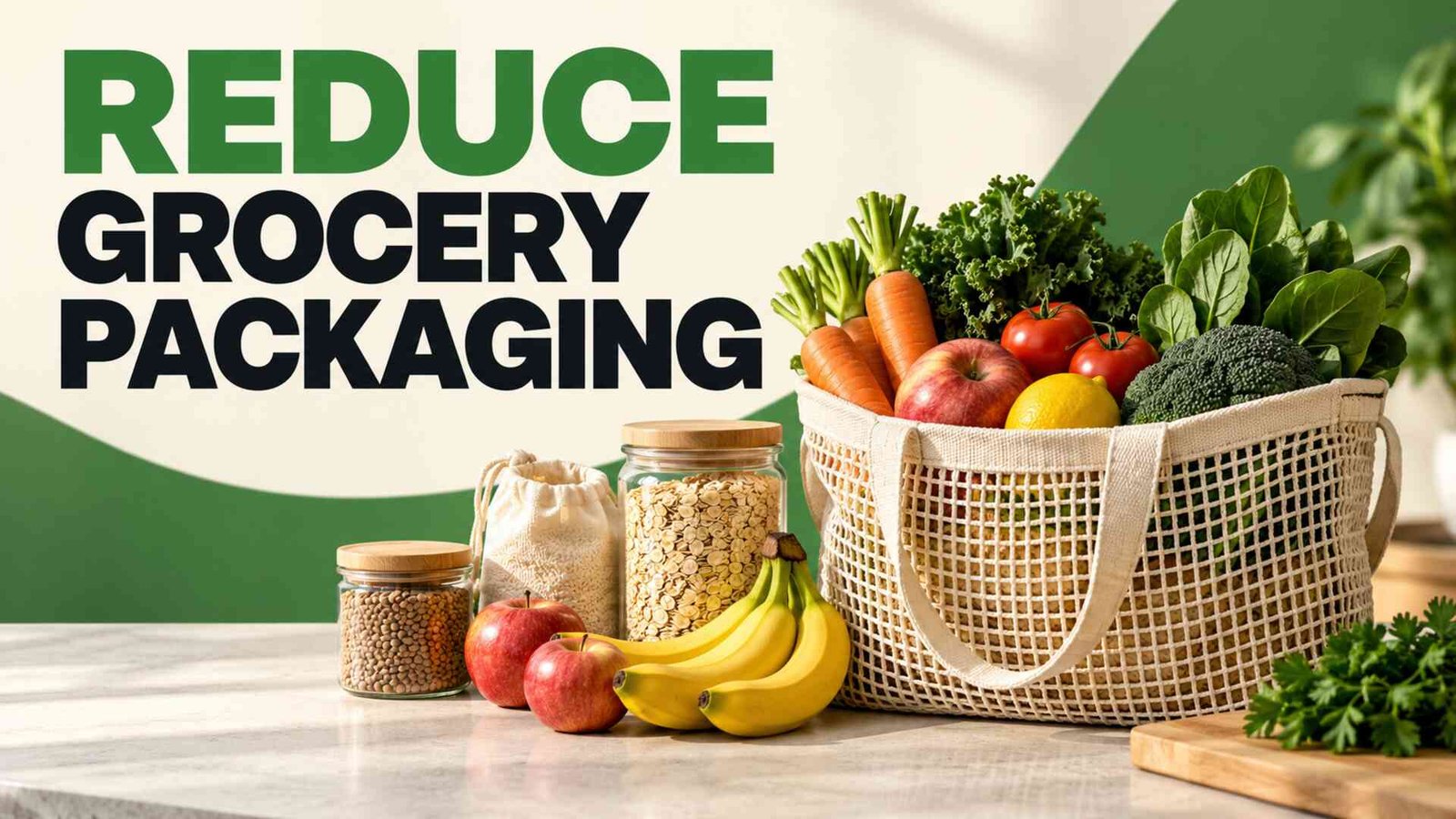
You can reduce grocery packaging without demanding a perfectly package-free shop. The best swaps balance waste, food safety, affordability, accessibility and whether your household will finish the food.
10 ways to reduce grocery packaging
- Choose loose produce when it is practical and permitted.
- Use washable produce bags you already own.
- Compare a larger container with several single portions.
- Select refillable or returnable packaging where a local system exists.
- Use store-approved containers at bulk sections.
- Choose concentrated products when directions and storage suit you.
- Skip unnecessary secondary boxes or trays when alternatives are equivalent.
- Buy bakery items in your reusable bag if store policy allows.
- Choose durable reusable containers for packed meals.
- Prefer a package size you will finish over a larger “value” size.
Check the full trade-off
Loose, glass, paper or bulk options are not automatically better in every situation. Consider product protection, transport, local recycling or return systems, allergens and the risk of food waste.
Follow store and hygiene rules
Ask before bringing containers to deli, butcher or bulk counters. Keep reusable bags clean and separate raw foods from ready-to-eat products.
Make reusable habits convenient
The reusable grocery shopping kit offers a simple starting point. For unpackaged staples, review the plastic-free bulk dry-goods guide.
Choose progress that lasts
To reduce grocery packaging consistently, start with one or two swaps that fit your normal store and budget. Repeatable choices are more useful than an all-or-nothing rule.