
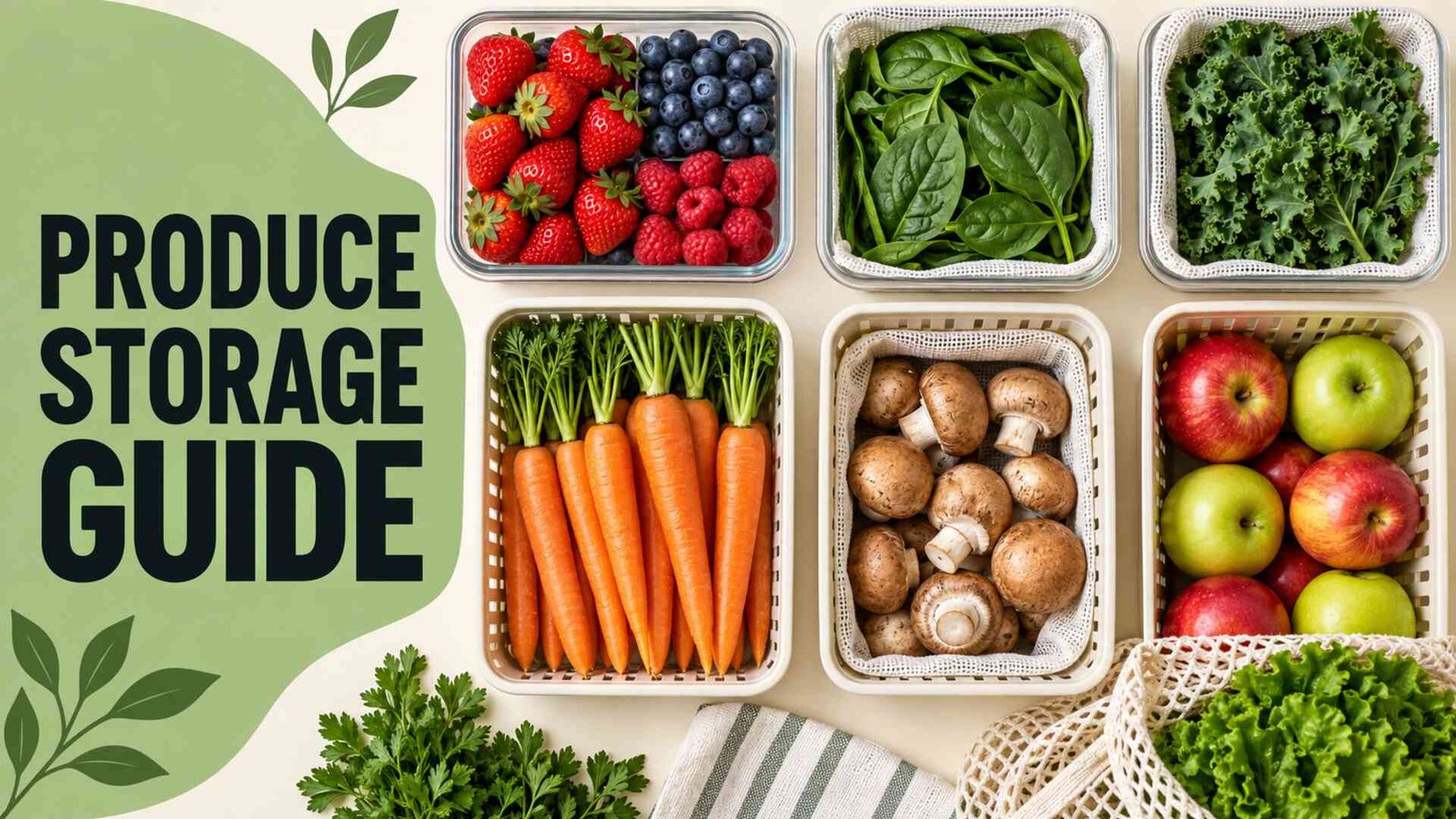
A reliable produce storage guide starts with the individual fruit or vegetable. Temperature, moisture, airflow, ripeness and packaging needs vary, so avoid fixed promises about how long every item will remain fresh.
Produce storage guide by general need
- Ripening produce: keep items such as firm pears or avocados at room temperature, then chill when appropriate.
- Leafy vegetables: refrigerate, limit excess moisture and remove damaged leaves.
- Dry storage crops: keep suitable onions, garlic, potatoes or squash in conditions recommended for each item.
- Delicate fruit: refrigerate berries promptly and handle gently.
Manage moisture and airflow
Condensation can encourage deterioration, while very dry air can cause wilting. Use clean, food-safe containers or breathable packaging suited to the item. Crisper settings and refrigerator layouts differ, so consult the appliance instructions.
Separate produce when useful
Some ripening fruits release ethylene, which can speed changes in sensitive produce. Separation may help, but effects depend on the foods, ripeness and ventilation. Inspect items instead of relying only on a storage chart.
Avoid unsupported storage hacks
Do not assume a vinegar wash removes all mould or bacteria. Wash produce according to current local food-safety guidance, and discard mouldy, slimy or unpleasant-smelling items. Avoid storing cut produce in water unless a trusted source recommends the method and maintenance.
Plan quantities with the produce-by-ripeness guide, then use a weekly refrigerator audit to catch changes early.
Check, adjust and use
The best produce storage guide is flexible: inspect food regularly, adjust conditions and prioritize items that are ready first.