
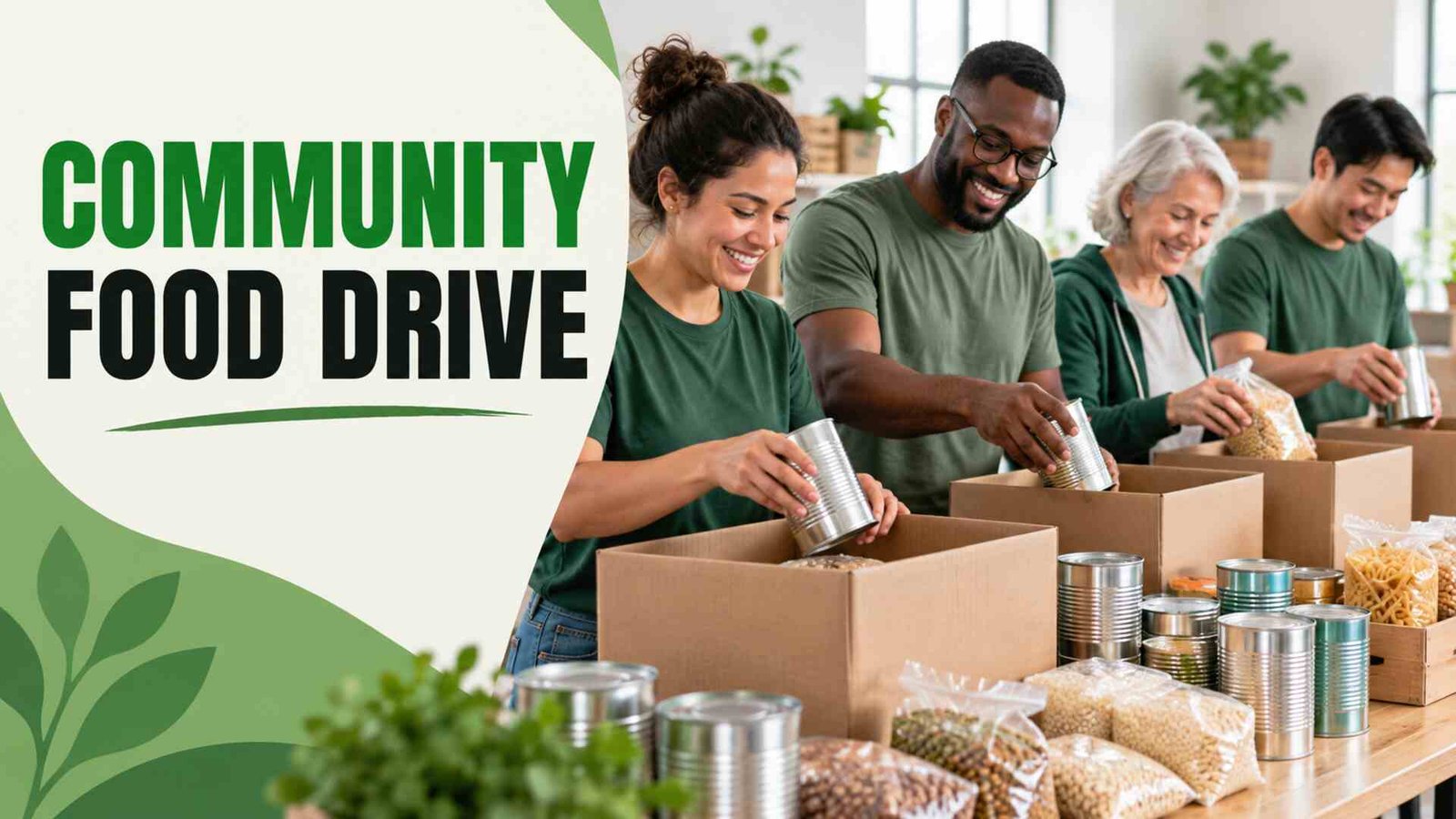
A successful community food drive begins with the receiving organization’s current needs—not assumptions about what people should eat. Contact the partner first and follow its rules for products, dates, packaging, collection and delivery.
Plan a community food drive
- Choose an established food bank, pantry or community organization.
- Ask for a current priority list and items it cannot accept.
- Set clear dates, collection points and volunteer roles.
- Share exact guidance on packaging, allergens and expiry policies.
- Arrange safe, dry transport and a confirmed delivery time.
Select useful low-waste staples
When requested, suitable donations may include unopened canned beans, fish, vegetables or fruit; grains; nut or seed products; shelf-stable milk alternatives; and culturally familiar staples. Include easy-open or low-preparation options if the partner requests them. Do not donate opened, leaking, swollen, damaged or improperly stored products.
The emergency food pantry guide provides ideas for accessible shelf-stable foods, while the high-zinc foods checklist shows varied food sources without immunity claims.
Respect choice and dignity
Avoid ranking donations as morally “good” or “bad.” Consider allergies, religious and cultural needs, preparation access and personal preference. Monetary donations may be more useful when the organization can purchase at scale.
Review the drive
After delivery, ask the partner what worked and update the next community food drive accordingly.