
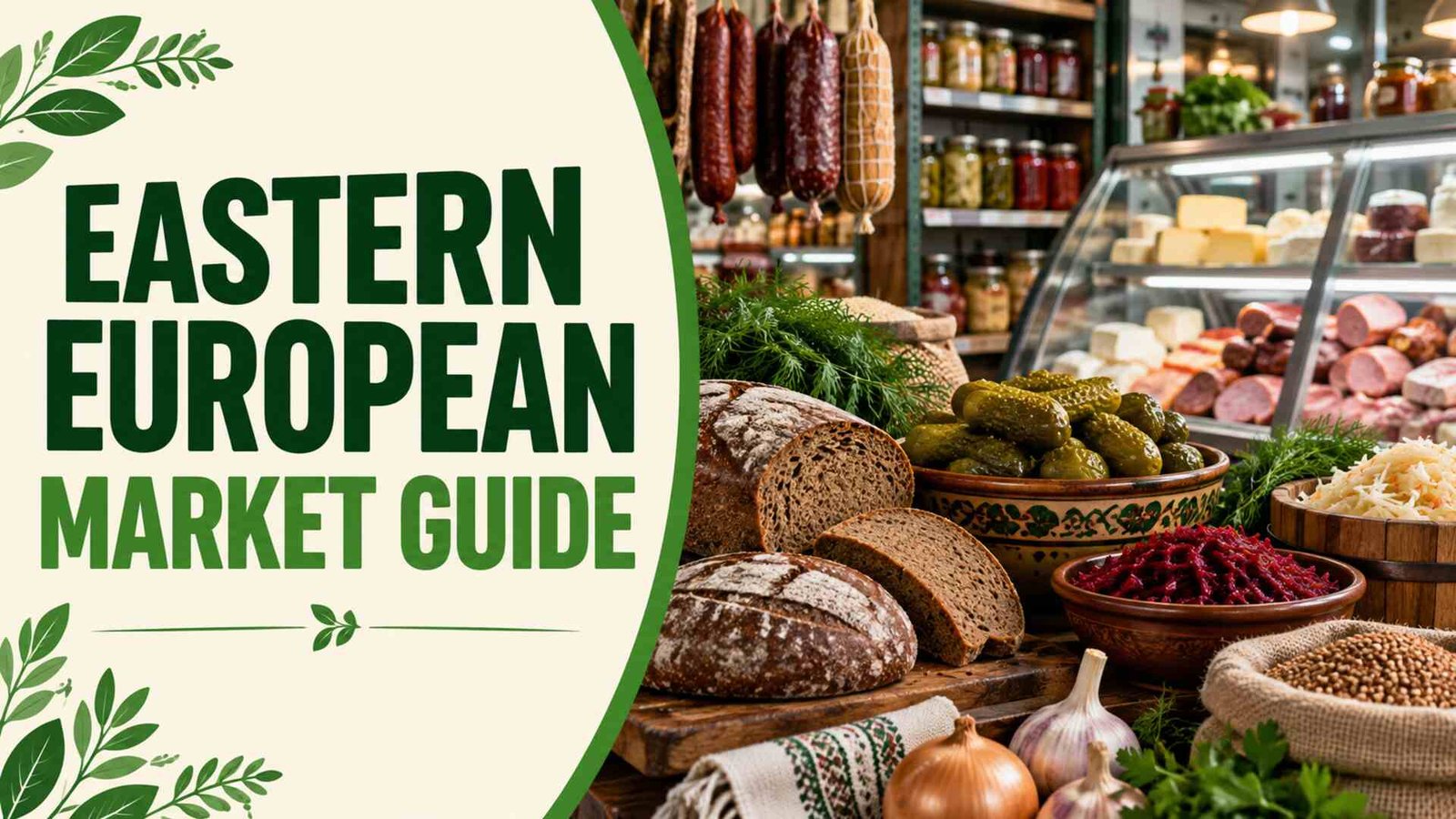
A practical Eastern European market guide starts with the recipes you genuinely plan to make. No short checklist represents every regional or household tradition, so use this as a flexible shopping framework.
Eastern European market guide: useful ingredients
Consider rye and wheat breads, grains, pulses, pickled vegetables, refrigerated dairy foods and clearly labelled deli products. Choose the exact form requested by your recipe, compare package sizes and buy quantities your household is likely to use.
- Read ingredient and allergen labels every time.
- Keep refrigerated and frozen products cold on the trip home.
- Check packaging for damage and follow storage directions after opening.
- Buy specialty ingredients gradually instead of building a large collection at once.
Shop with cultural and food-safety context
Eastern European and Slavic cultures are diverse. Ask neutral questions, avoid assuming products are interchangeable, keep chilled foods cold and verify ingredients before buying.
For related planning help, see the Polish pantry guide and nutrition-label guide.
Build the pantry from real meals
Plan one or two dishes with overlapping ingredients, note what remains after cooking and add new products only when another recipe needs them. This keeps the pantry useful, fresh and respectful of culinary variation.