
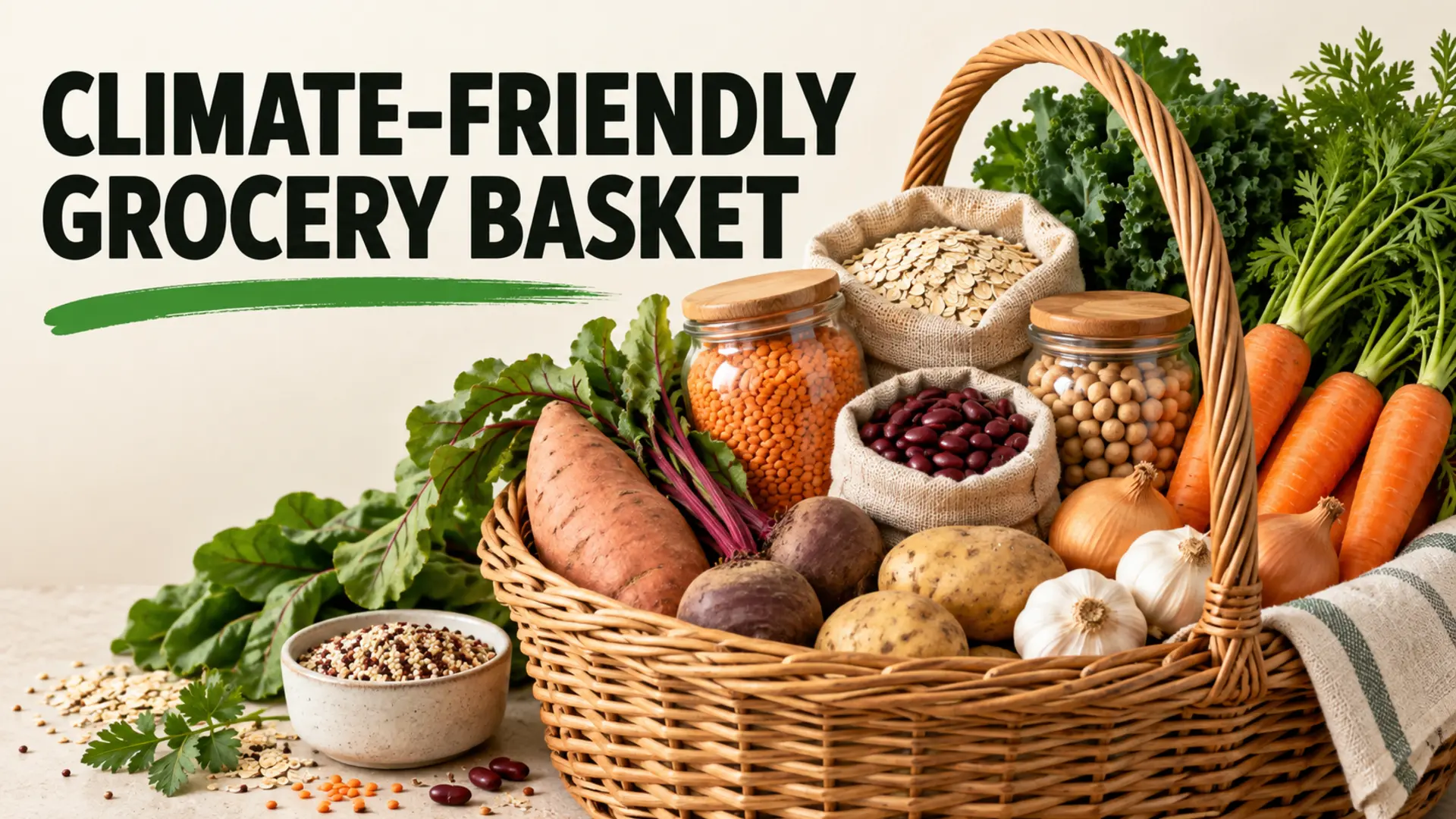
A climate-friendly grocery basket can emphasize foods that generally require fewer resources while remaining affordable, nutritious and practical for your household. Environmental impacts vary by production method, region and supply chain, so avoid treating a single number as universal.
Build a climate-friendly grocery basket
- Choose beans, lentils, peas, tofu or other suitable plant proteins more often.
- Buy vegetables, fruit and grains your household will actually use.
- Consider smaller portions of higher-impact foods rather than an all-or-nothing rule.
- Compare seasonal, frozen and shelf-stable choices based on availability and waste risk.
- Plan storage so perishable food is eaten or frozen in time.
Make flexible meal swaps
Try lentil-and-meat blends, bean-based soups, tofu stir-fries or grain bowls. If choosing plant drinks, compare protein, fortification, allergens and intended use rather than assuming every alternative is nutritionally interchangeable.
The plant-based grocery blueprint offers balanced planning ideas. Pair it with the zero-waste grocery blueprint to avoid buying more than you need.
Look beyond food miles
Distance is only one part of a food’s footprint. Farming, processing, refrigeration, packaging and waste can all matter. Credible life-cycle information is more useful than broad marketing labels.
Choose progress that lasts
A climate-friendly grocery basket should still suit health needs, culture, budget and access. Repeatable shifts are more useful than rigid rules or unsupported carbon-reduction promises.